June 2
Glendalough, County Wicklow
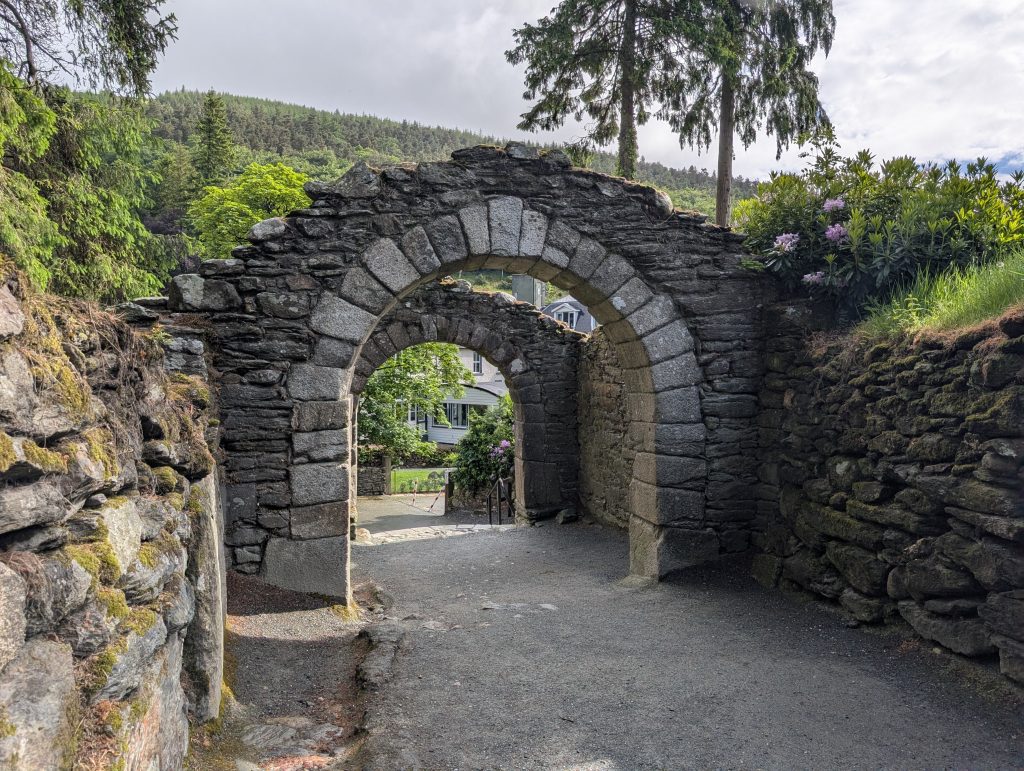
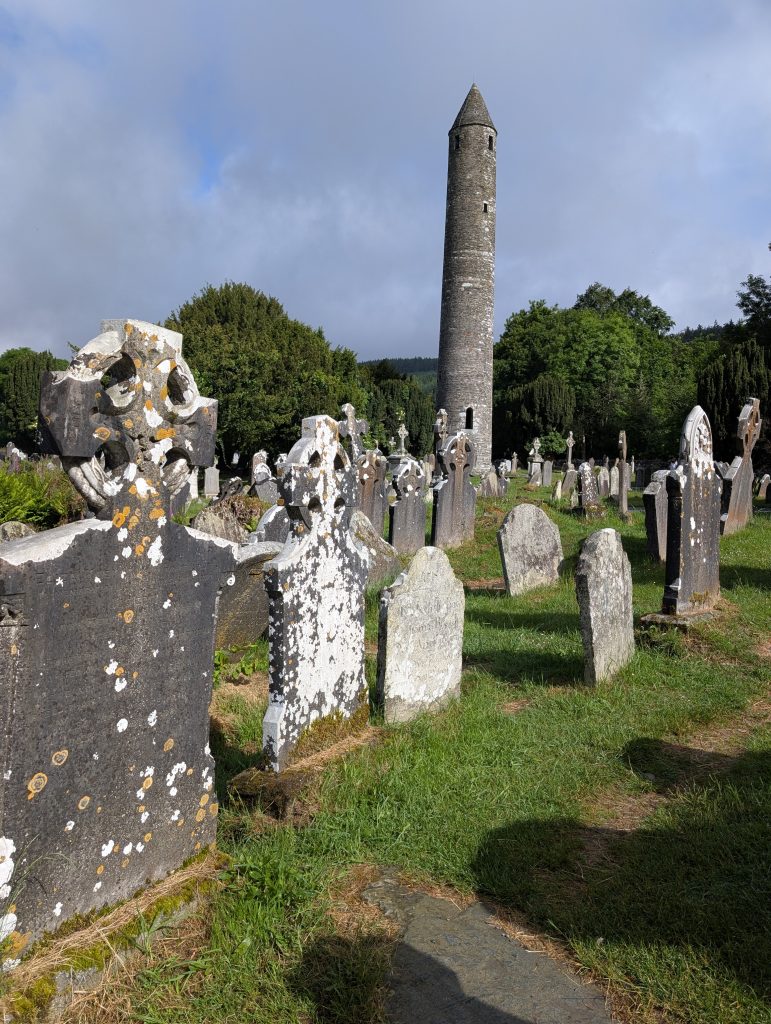
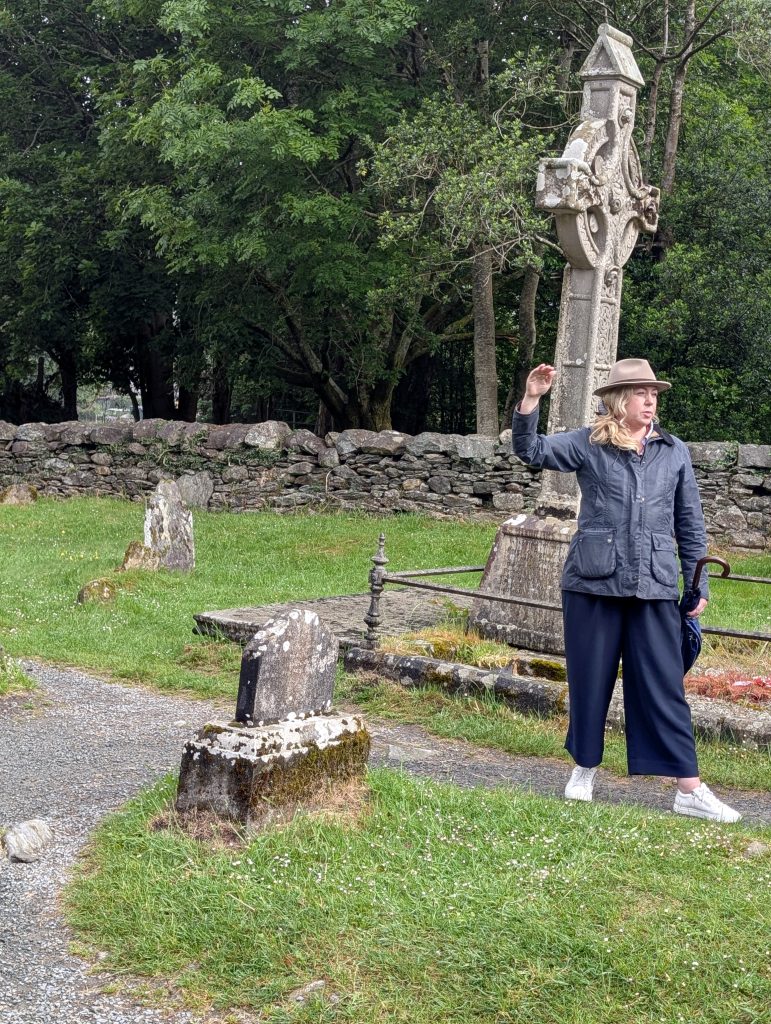
Our tour left the hotel in Dublin at 8am heading to County Wilkow to visit Glendalough. I sat in the back of the bus and enjoyed the space. It rained on and off all day, until we got to Glendalough when the sun came out just as we entered the site. The Glendalough monastic site is an easy day trip from Dublin. It was established in the 6th century by St. Kevin. The site is situated beside two beautiful lakes (Glendalough means valley of the two lakes) near the village of Laragh. It is a very peaceful place with ancient buildings, weathered graves, and is surrounded by mountains and green terrain. There is a 30 meter high tower that was used for defense and has been standing for 1000 years. The remains of several stone structures are still standing – many of these are former churches.
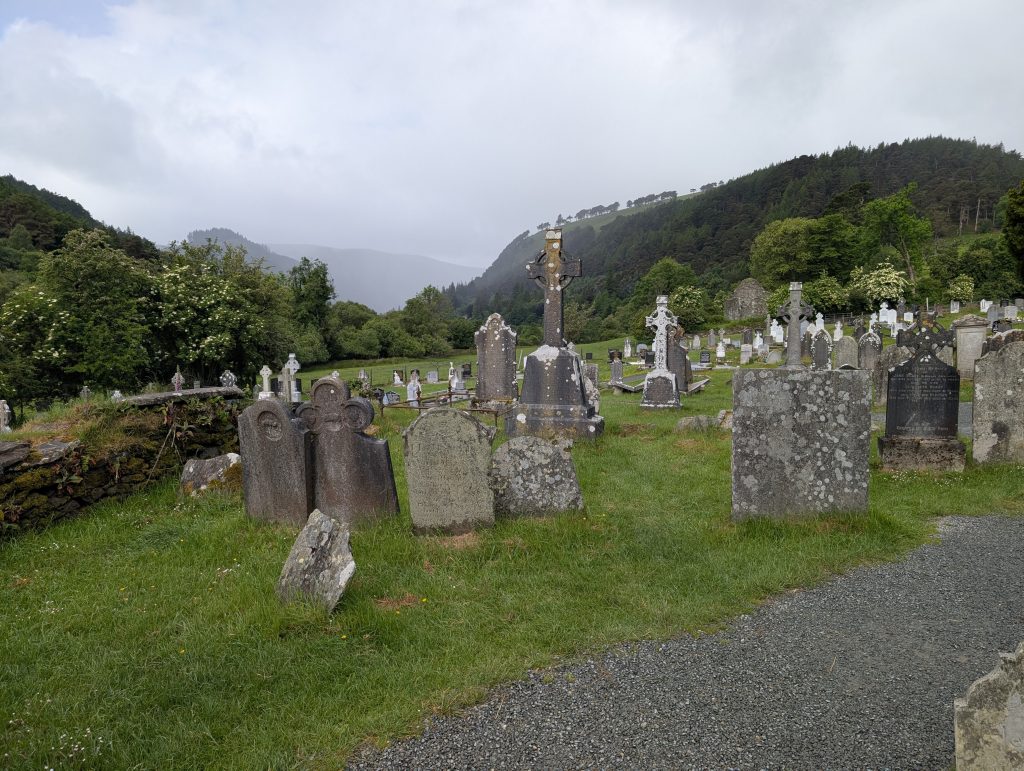
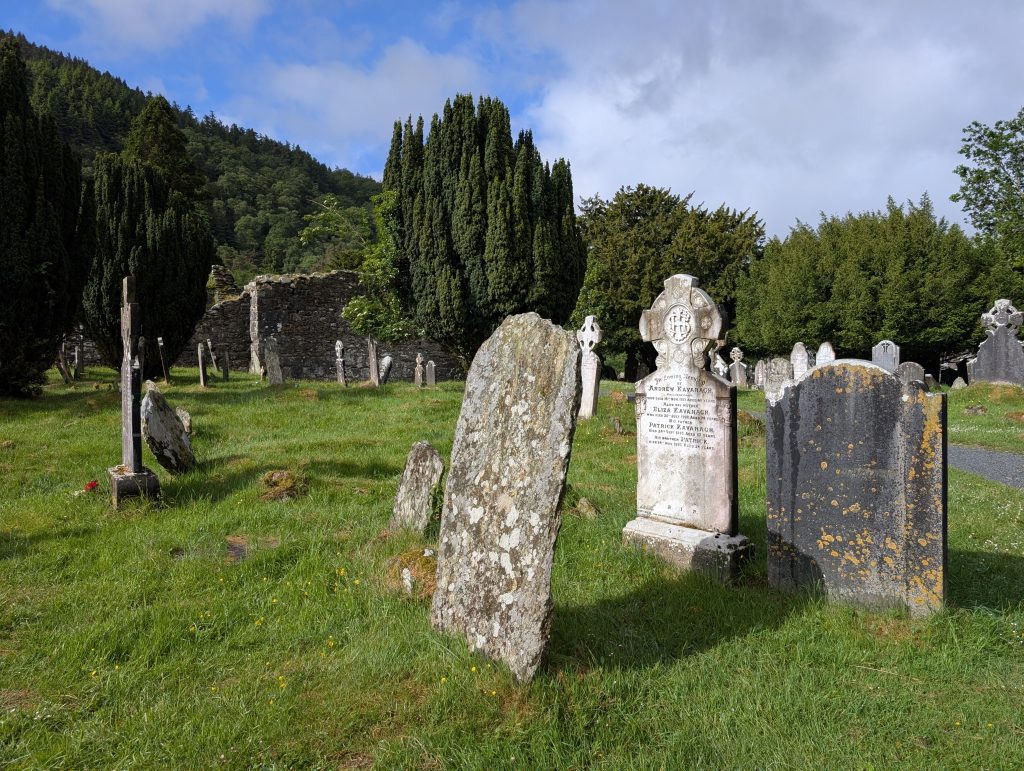
The graveyard was established when it was a functioning monastic site. After the Reformation the churches of Glendalough were abandoned and became derelict. The whole site then became a burial ground inside and outside the ruined buildings. There are many unique and beautifully crafted stones from the eighteenth and nineteenth centuries in the oldest part of the graveyard behind St. Kevin’s Cross south of the Cathedral. A detailed description of “The Graveyard Trail” can be found at https://glendalough.wicklowheritage.org/places/the-glendalough-graveyard-trail.
Pilgrims have visited this site for centuries, until the Monastic City was destroyed by the English in 1398. There is much to do at this site if you had a full day besides wandering the cemetery – there are many hikes and two lakes to visit.
Exploring Kilkenny
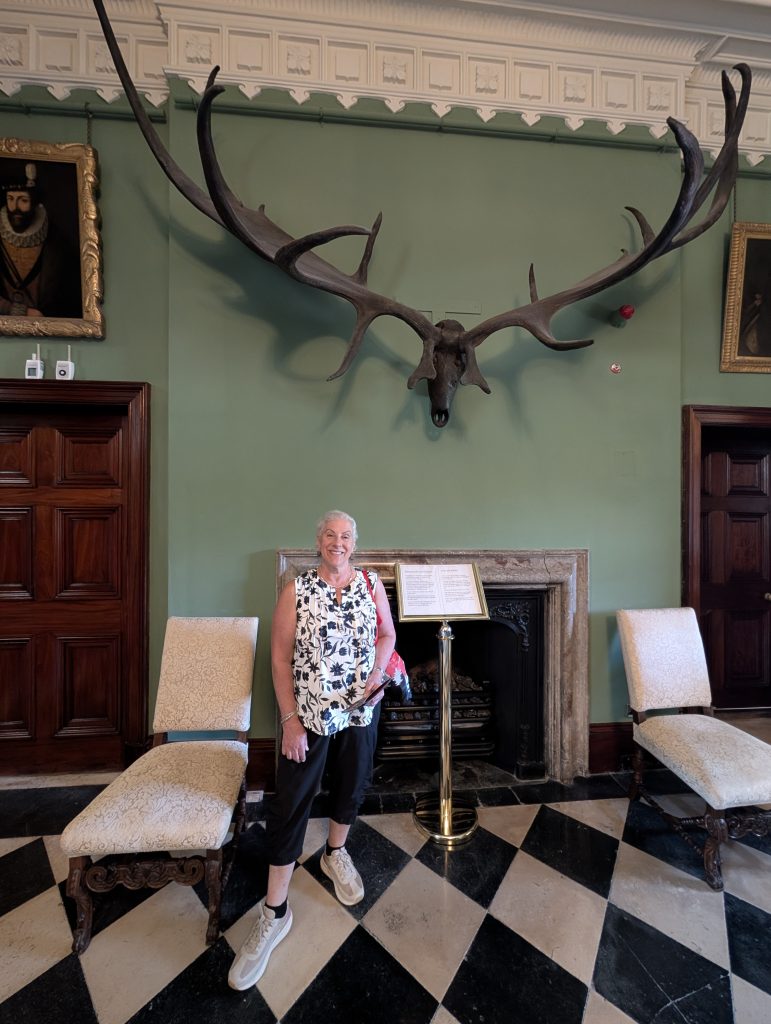
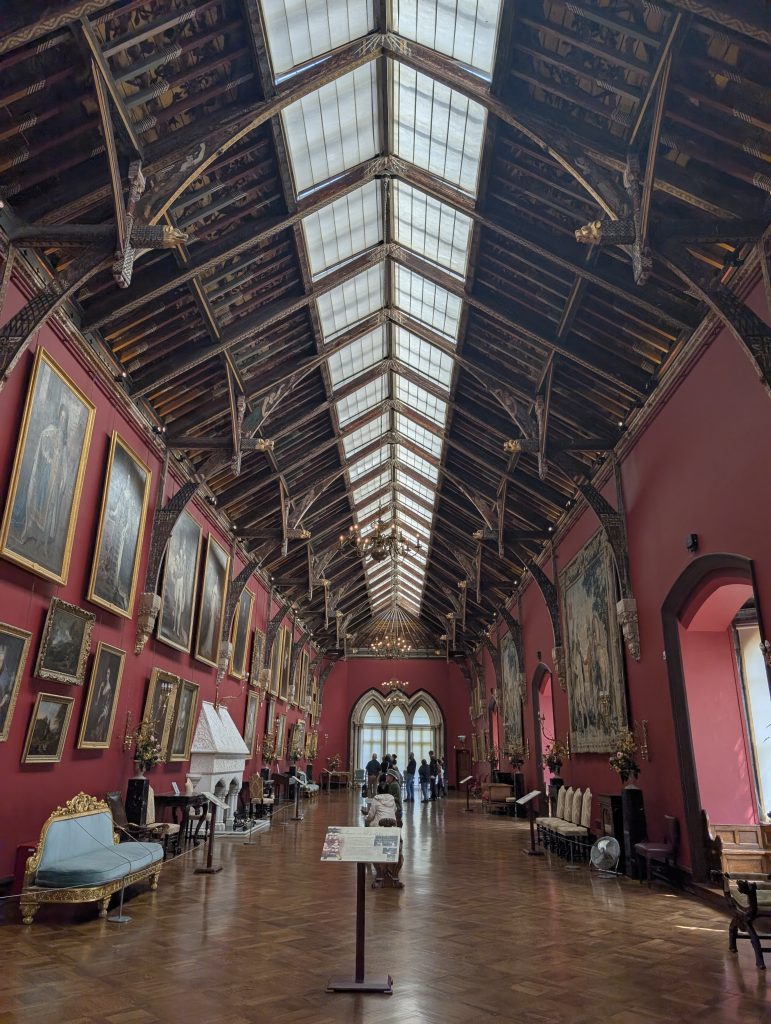
We headed to Kilkenny, a lovely town that is the home of our guide and her husband. Lea and I had a pub lunch with stew and lovely brown bread. Our tour group was able to do a self tour of Kilkenny Castle. This castle was founded soon after the Norman conquest of Ireland in the 12th century. Since then the Castle has been rebuilt, extended and adapted to suit changing circumstances and uses over a period of 800 years. It was occupied by the wealthy Butler family from the 14th century until the 20th century when they sold all of their furnishings and then sold the castle to the government for 50 pounds. The Butler’s were wealthy Anglo-Irish gentry who ruled the region for centuries. Their “castle” fell into disuse after Ireland got independence and many of the Brits left for England. Today, Kilkenny Castle is largely a Victorian remodeling of the thirteenth century defensive Castle. The two things that impressed me in this palace was the Irish Elk antlers and the portrait room.
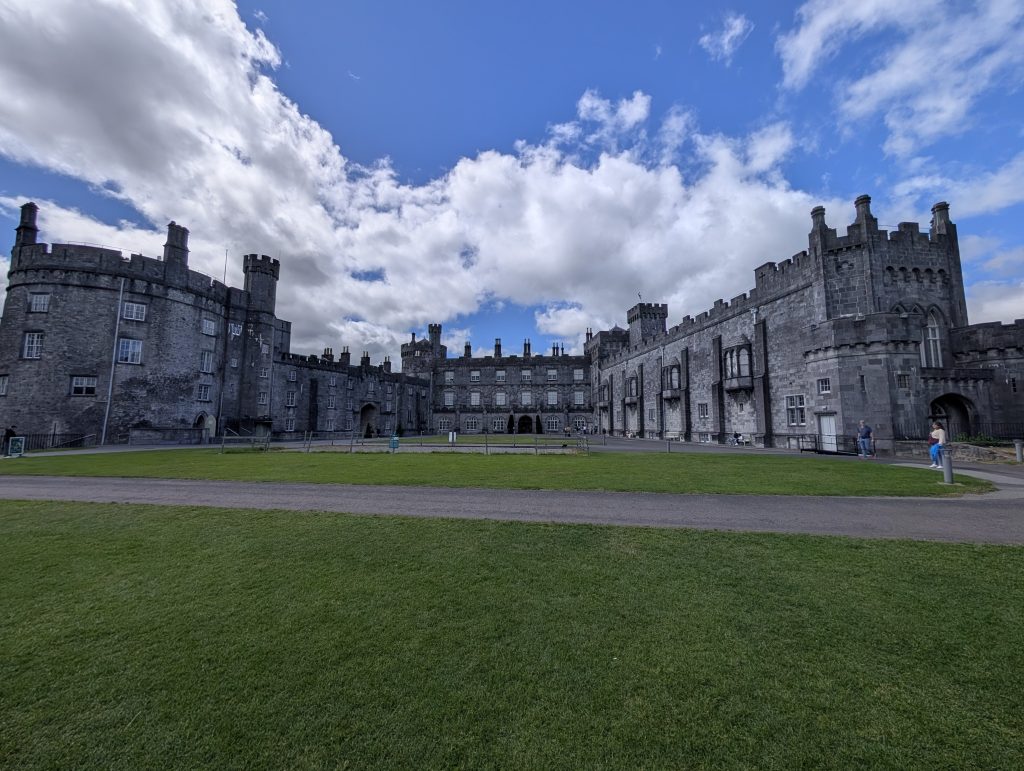
We had some time to explore the town of Kilkenny on our own – nice seafood chowder for lunch and a visit to St. Mary’s Medieval Mile Museum.
Dinner at the hotel was included with our tour. After dinner, Lea wanted to chill so I went to a recommended pub on my own. The pub is called Kyteler’s Inn and has an interesting story. The original owner of this Inn was Dame Alice Kyteler, born in Kilkenny. In her time she gained much notoriety not least because she acquired four husbands all who died sudden deaths. She gained a considerable fortune. Her enemies eventually conspired to accuse her of witchcraft and have her burned at the stake. She fled with her wealth and the town instead executed her maid. I sat with a local couple right by the band (Folk in Time) and had nice chat with them. I really enjoyed this performance. This was the first time I heard the song Caledonia and I now have it on my favorite’s playlist.
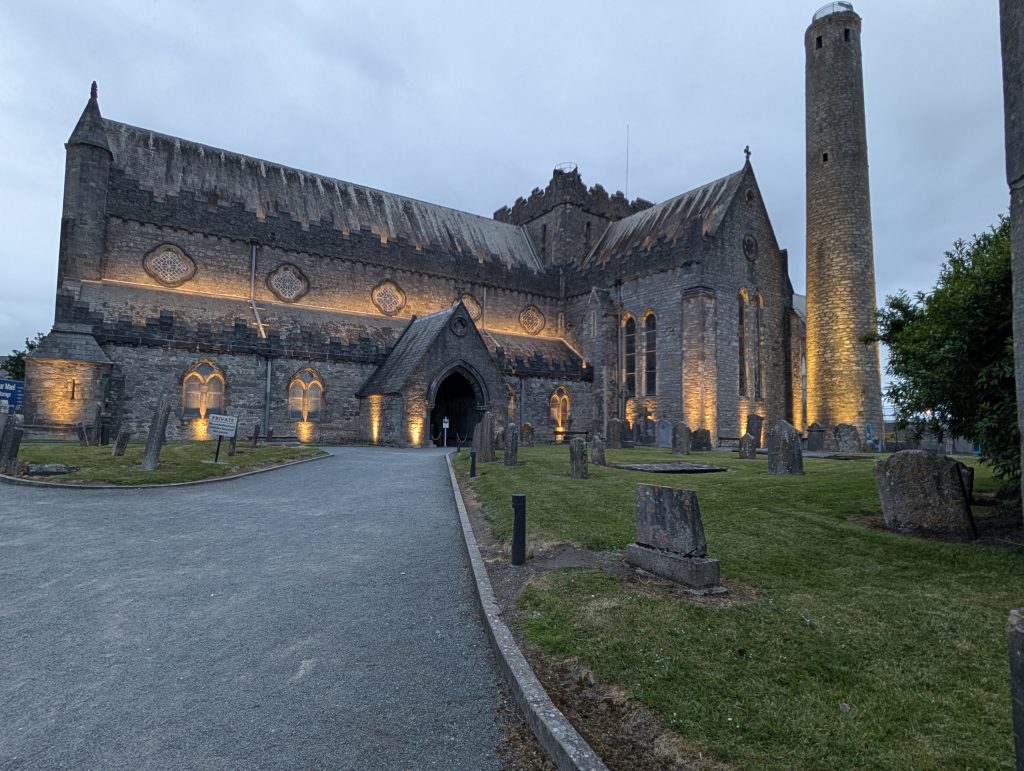
When it was getting dark, I left with a family from Kansas who was on our tour. We took a detour to see the St. Canice’s Cathedral at night. By the time we got back to the hotel, my step count was 12,000 steps – six miles. The Kilkenny Ormond hotel was in a great location but a mediocre hotel.