June 3 was another full day on our way to Cork. Our first stop was in the village (town) of Waterford where a local guide showed us around. Waterford is located on the Southeast coast of Ireland and is the oldest town of that country. It was originally a Viking settlement settled around 914. The name Waterford comes from the old Norse word Veðrafjǫrðr. Waterford is known for its former glassmaking industry, including the Waterford Crystal factory, with decorative glass being manufactured in the city from 1783 until early 2009 when the factory closed. Gate1 took us to a demonstration from a former Waterford employee (Sean Egan) and engraver, who was quite bitter about the closure of the factory.
There is enough things to see in Waterford for maybe a day. The Medieval Museum, Reginald’s Tower, Bishop’s Palace, Waterford Factory. There are also biking trails and gardens to explore and mountains outside the city.
Another event that is tied to Waterford’s history is the marriage of Strongbow to Aoife in 1170. Strongbow was the nickname for a Norman knight. Aoife (Eve) Ní Diarmait of Wateford was an Irish princess, daughter of Dermot MacMurrough, King of Leinster. In the late 1160s, her father was struggling to retain his throne. After being expelled from Ireland he sought Strongbow’s assistance in retaking his kingdom. A deal was struck and Strongbow invaded Waterford on 23 August 1170. Strongbow’s army won a bloody victory against the Vikings and he was allowed to marry the princess in Christ Church Cathedral in Waterford. This battle and subsequent arranged marriage was a pivotal moment in the Norman conquest of Ireland and the death of Gaelic Ireland. A painting in Dublin depicts the battle. There is a statue of the couple outside the Bishop’s Palace in Waterford.
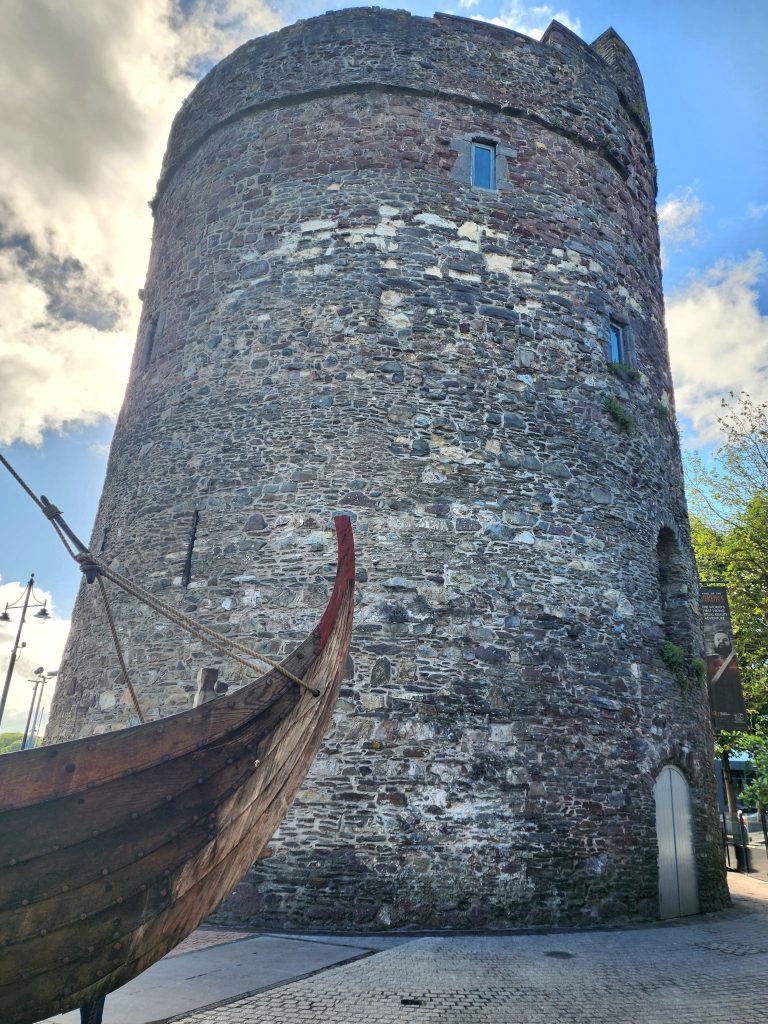
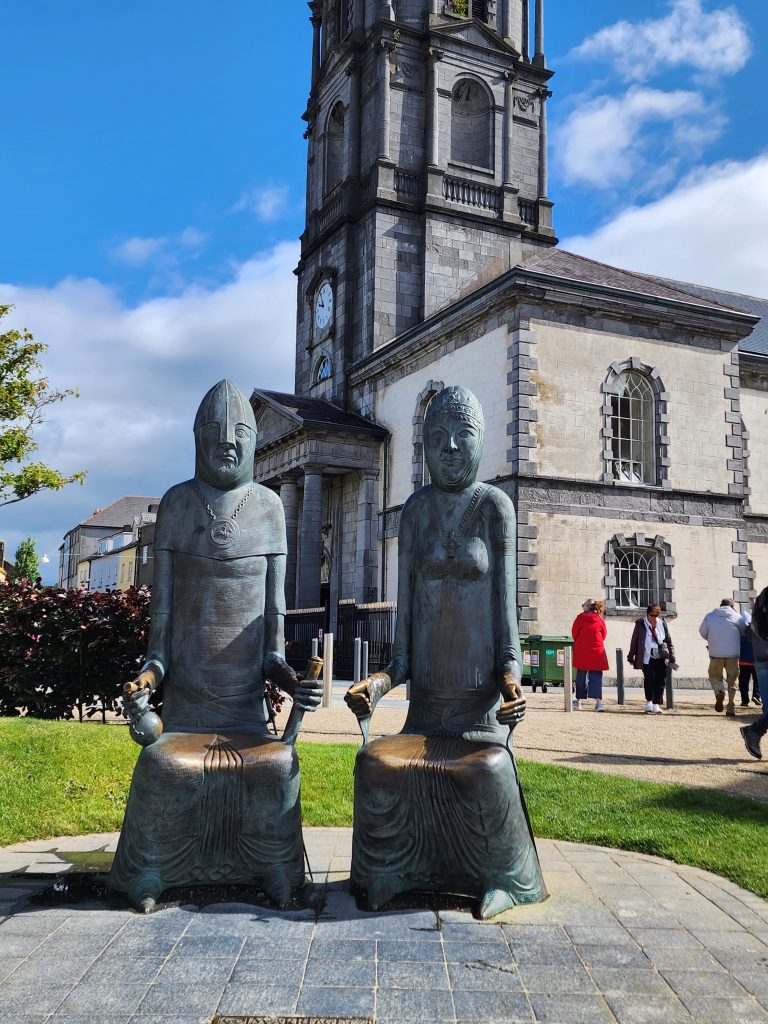
We walked around the old city center and visited the Medieval Museum which houses various treasures from Medieval times. It is worth a 30 or 45 minute visit.
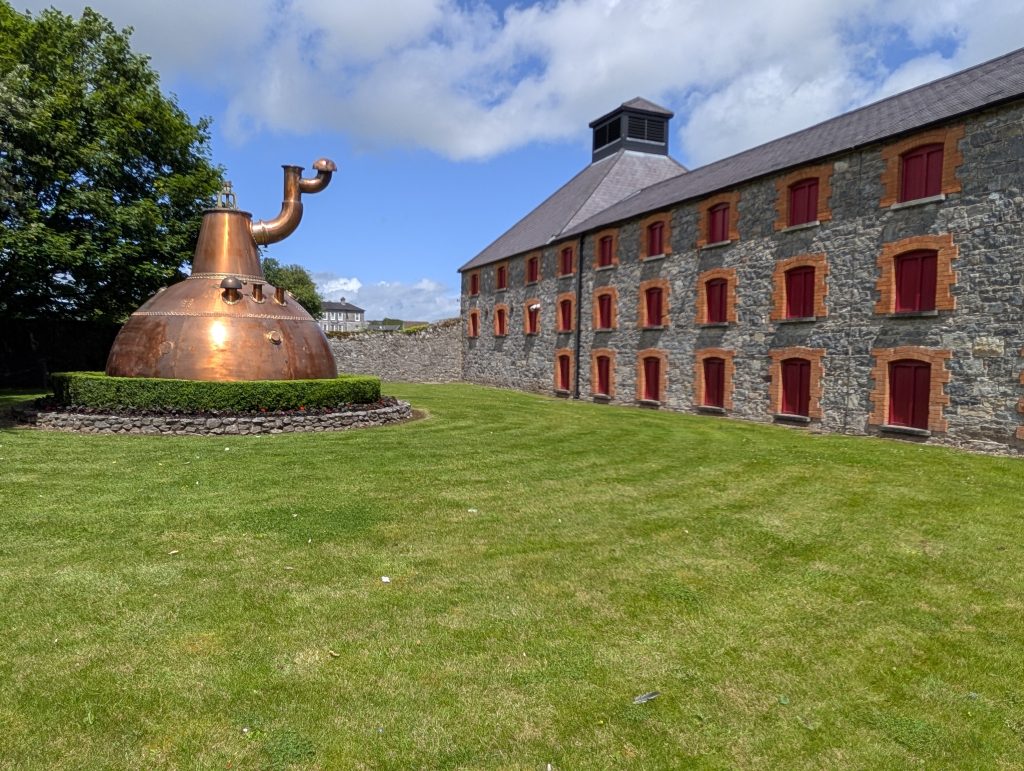
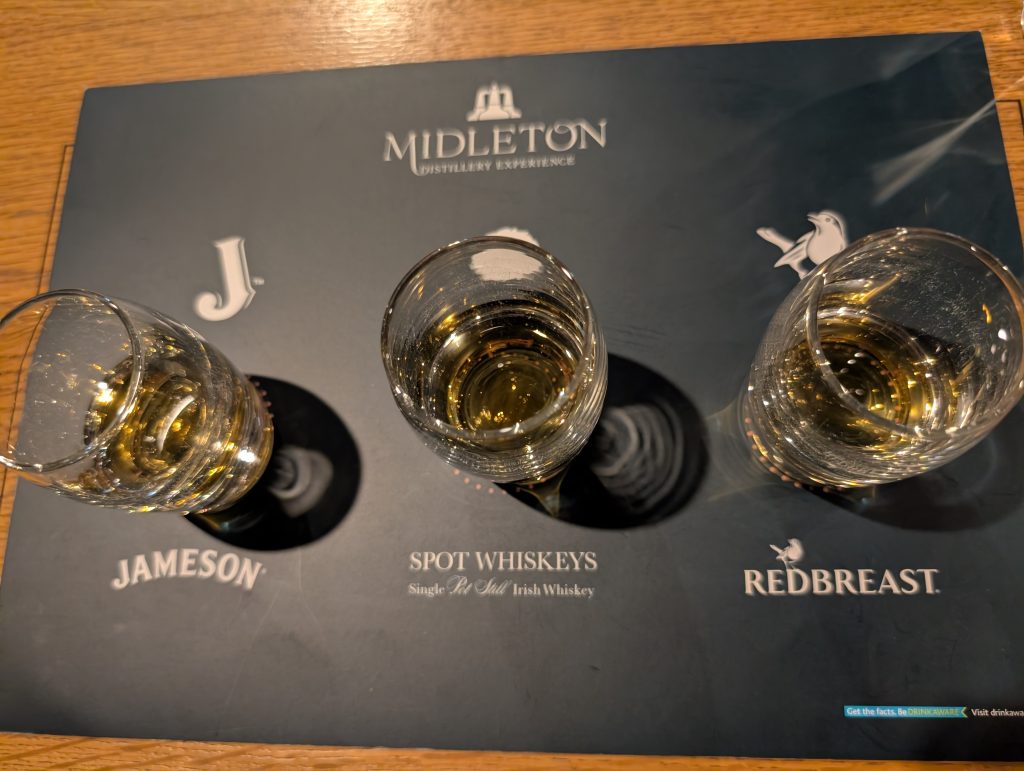
Our bus trip continued on to the town of Midleton for lunch and a tour of the Jameson whiskey distillery. Lea and I had a lovely fancy lunch at Cush – lamb sausage starter and a salad for me. At the distillery our group was given a guided tour of the old and new processes for making whiskey. We ended with a comparative tasting of three whiskeys – a 4 year, Green Spot and Redbreast 12 year. I am not a whiskey, bourbon or scotch drinker but the Redbreast 12 year premium whiskey goes down very smooth. We were also offered a complimentary cocktail – either Redbreast on the rocks or a mixed drink with soda and lime. Supposedly you can only buy this brand at the distillery but I wasn’t interested in carrying a bottle around for another couple of weeks. Apparently you cannot order whiskey to be delivered to the US.
Our final destination for the day was Cork City, a short drive from Midleton. The Metropole hotel was lovely in a central location except for my room – it was hot with no AC and windows that did not open. Even with an oscillating fan it was uncomfortable and stuffy. I should have complained on arrival day.
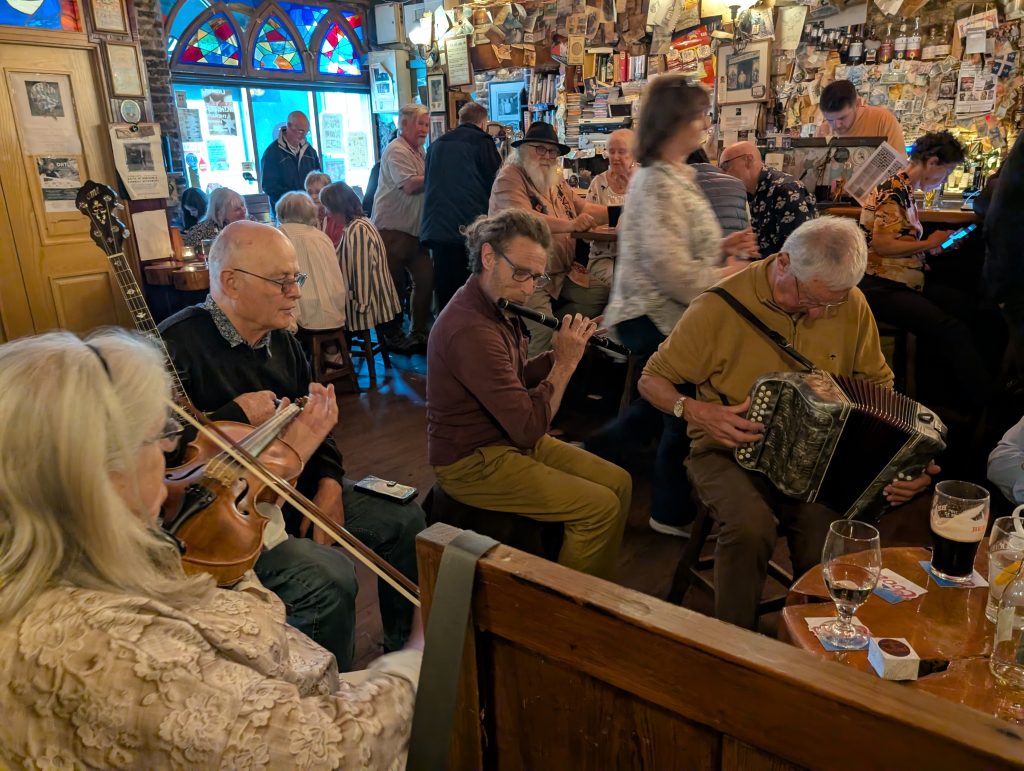
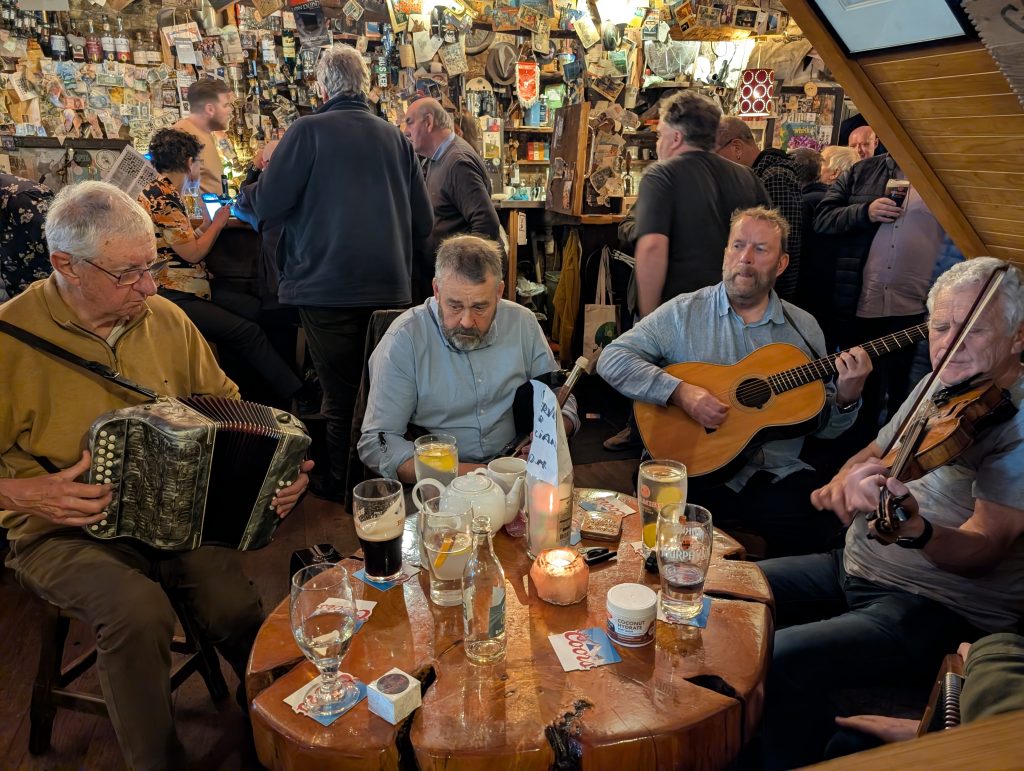
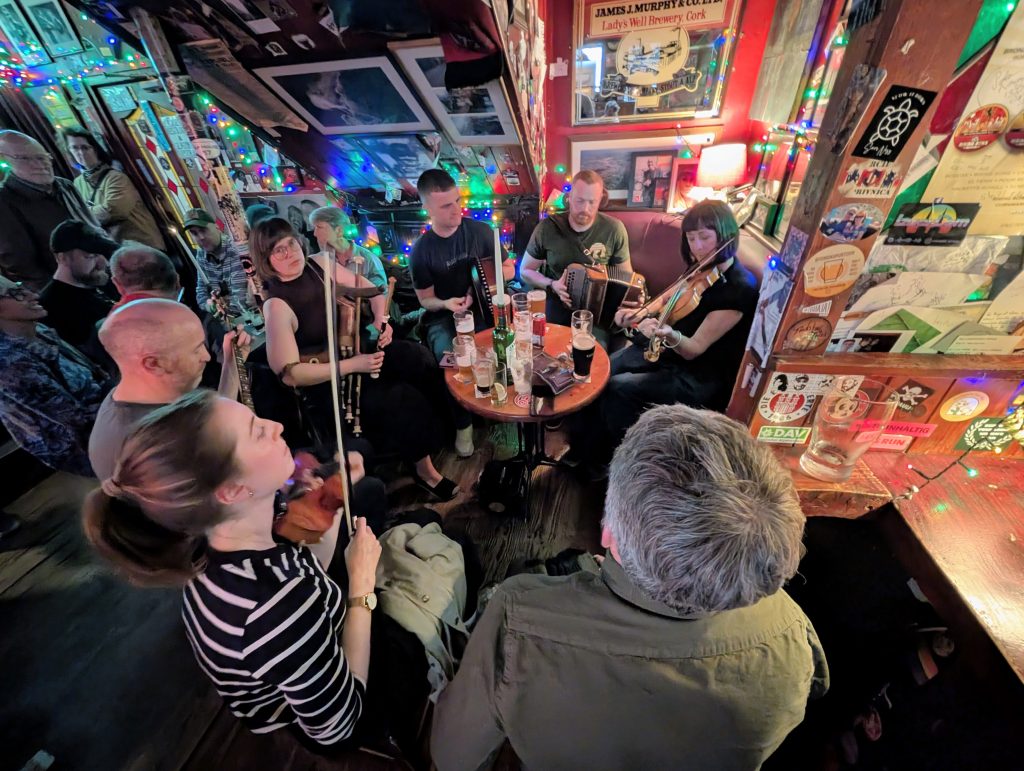
I decided to skip the included hotel dinner and walked to a Syrian restaurant on the river – Habibi Grill. Afterwards a few of us went to nearby Sin É pub for music and local draft beer. We were able to find seats near the band, even though it was very crowded. We stayed for two different groups – the first was a more traditional “trad” session with about seven or eight musicians sitting around a table playing Irish folk music. The second group was only 3 people and their sound was more modern with country twang. Lea attracted the interest of a drunk 30 something year old who was in town for golf with a group of buddies. Even after she told him how old she was, he still kept pestering her.
This pub opened in 1889 and is part of the Cork Pub Trail and home to Irish traditional music seven days a week. The pub’s name Sin é literally translates from Irish to mean ‘That’s it’, in reference to the funeral parlour located next door.
June 4 – Cork
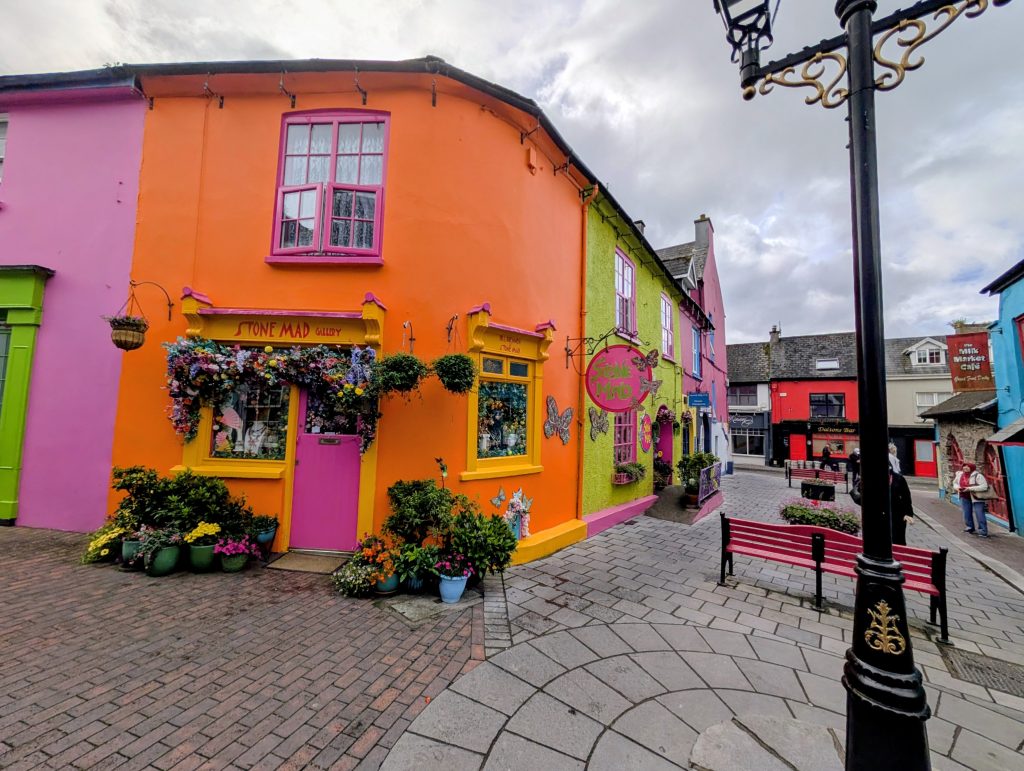
It was nice to have two nights in the same city. We really liked Cork. The included day tour included a bus ride to nearby Kinsale village where a local guide showed us around and then gave us free time to explore. Kinsale Town is located on the coast of Southern Ireland and is the start of the Wild Atlantic Way. It has been a fishing village since Medieval times. There are several forts established by England after an unsuccessful Irish rebellion. The famous ‘Battle of Kinsale’ in 1601 saw the area inhabited with the armies of England, Spain and the Northern Irish Chieftains in contention. It was a turning point in Irish history as the Irish forces and their Spanish allies were defeated and the result, effectively, was the decline of the old Gaelic way of life in Ireland with the breakdown of the power of the Chieftains and Clans. Kinsale is now a tourist destination with restored buildings, outdoor activities, colorful buildings and many restaurants.
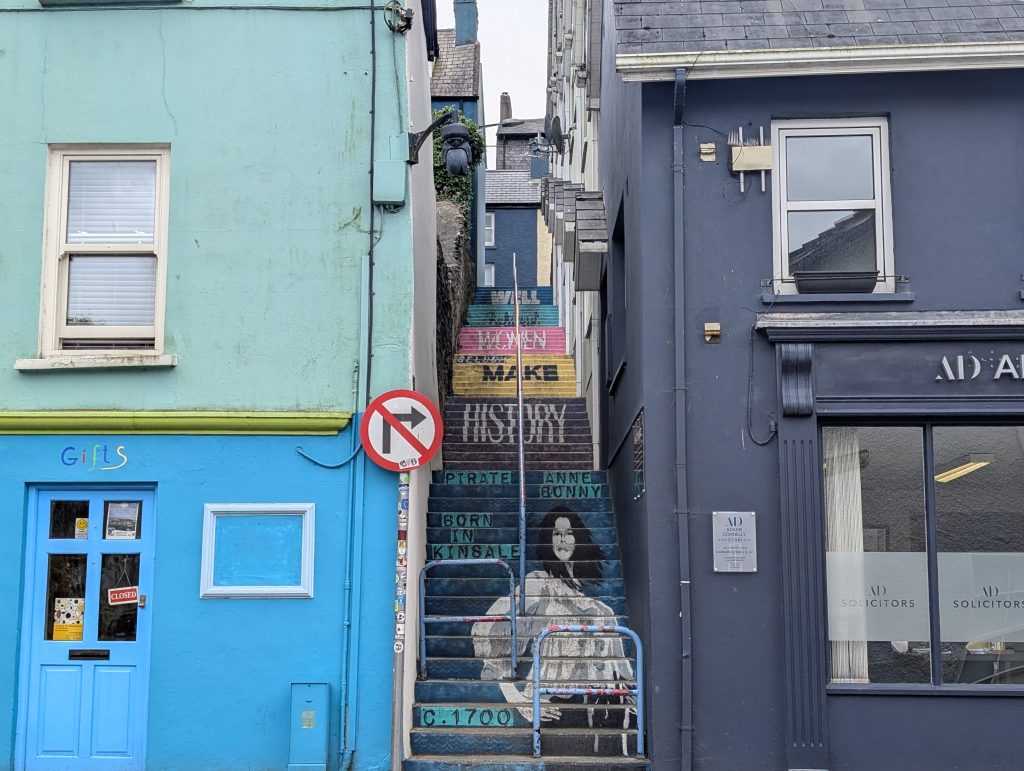
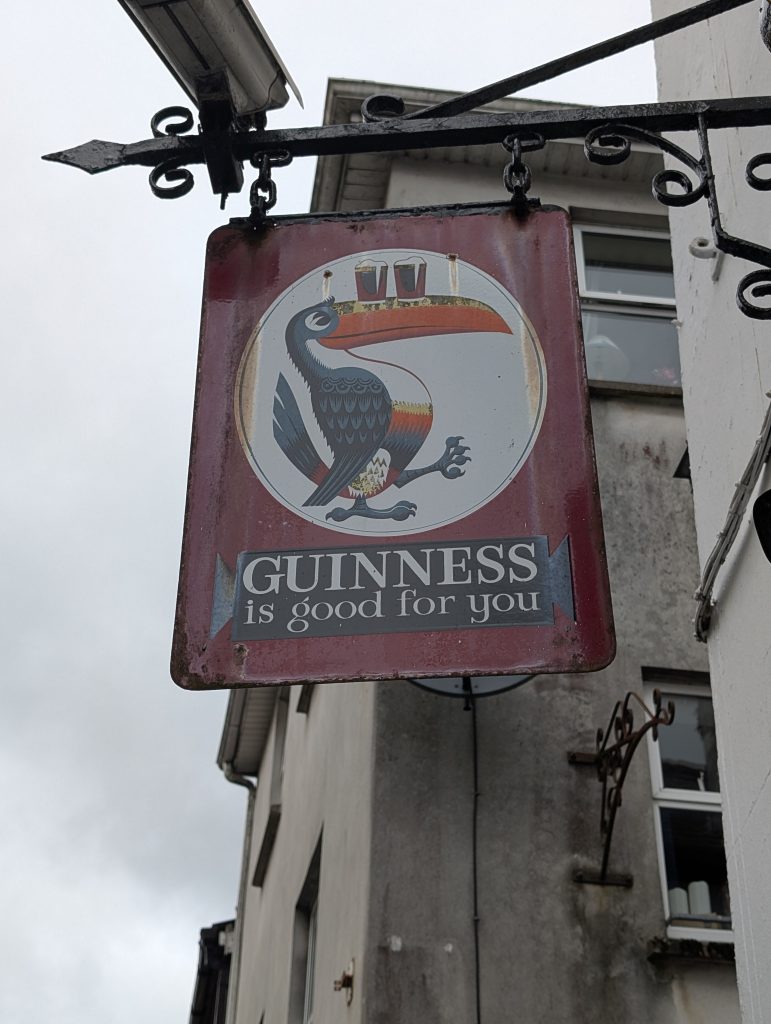
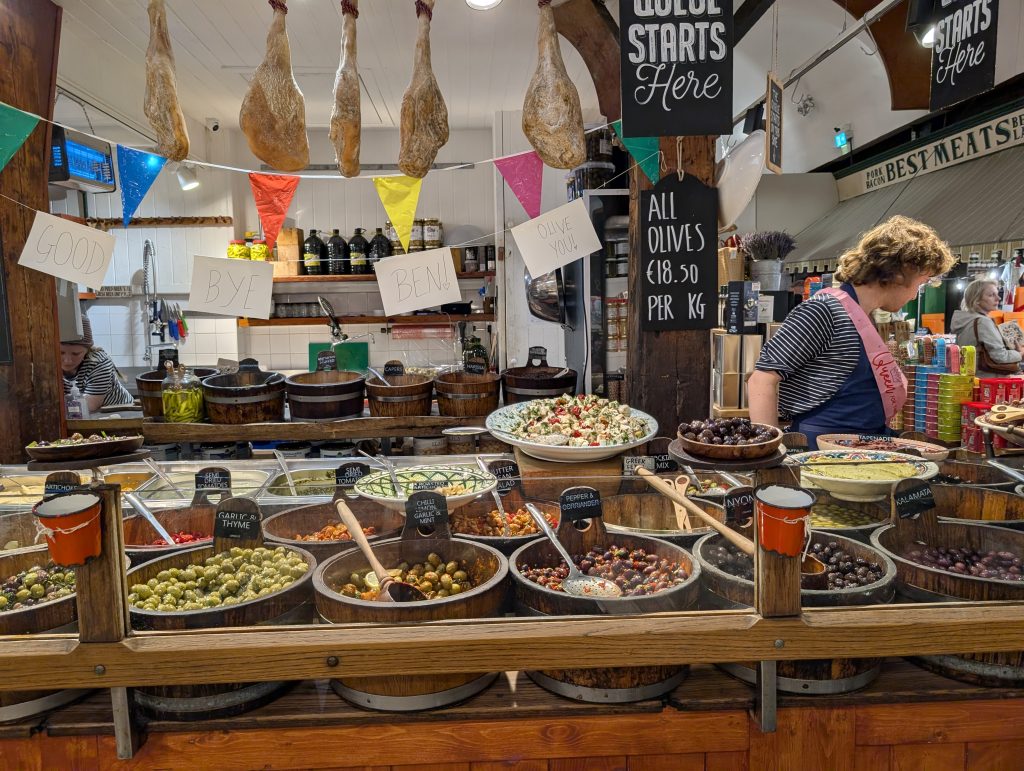
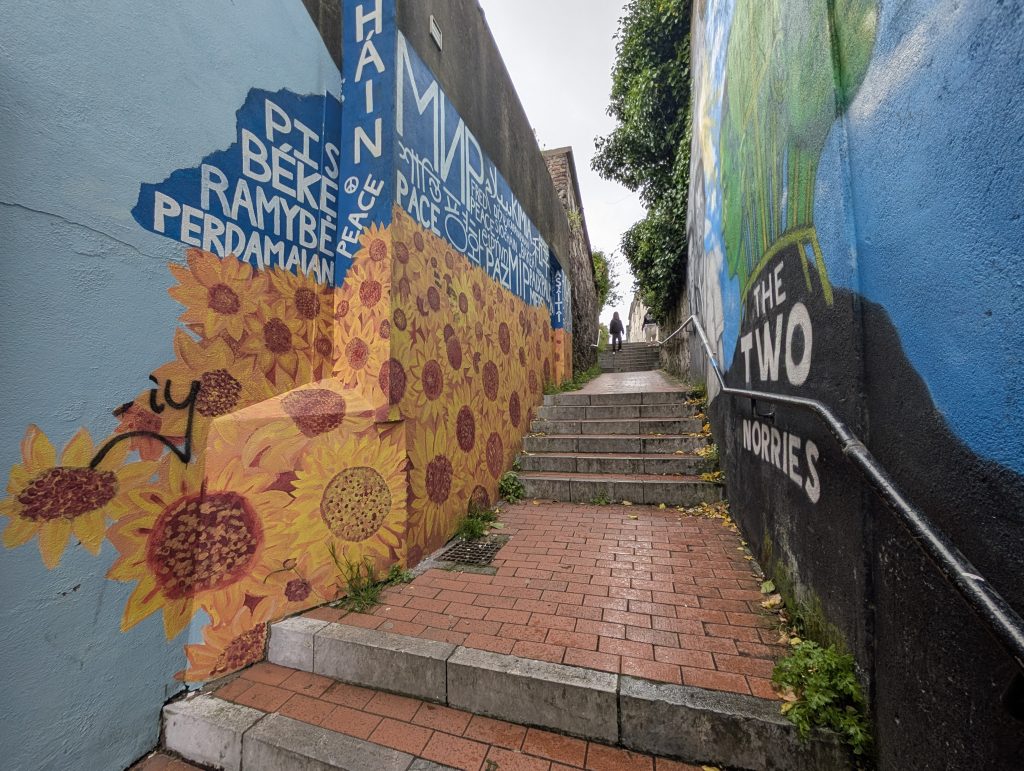
After a Gate1 lunch at Coqbull, we had a free afternoon to explore Cork. Lea and I went to the English Market where we purchased snacks for a charcuterie board. We hiked uphill to visit St. Anne’s Cathedral located in a residential neighborhood. Near the old Butter Exchange and famous for its clock tower. The city of Cork is full of churches with most being Protestant since the Reformation. Cork has many pedestrian-only streets.
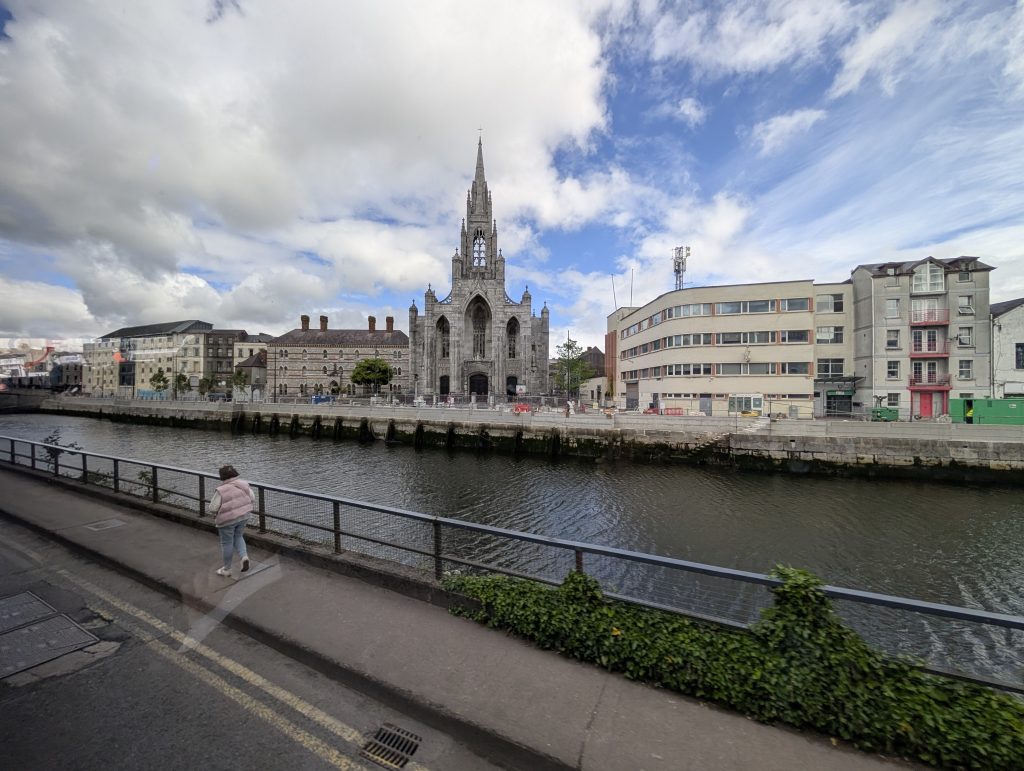
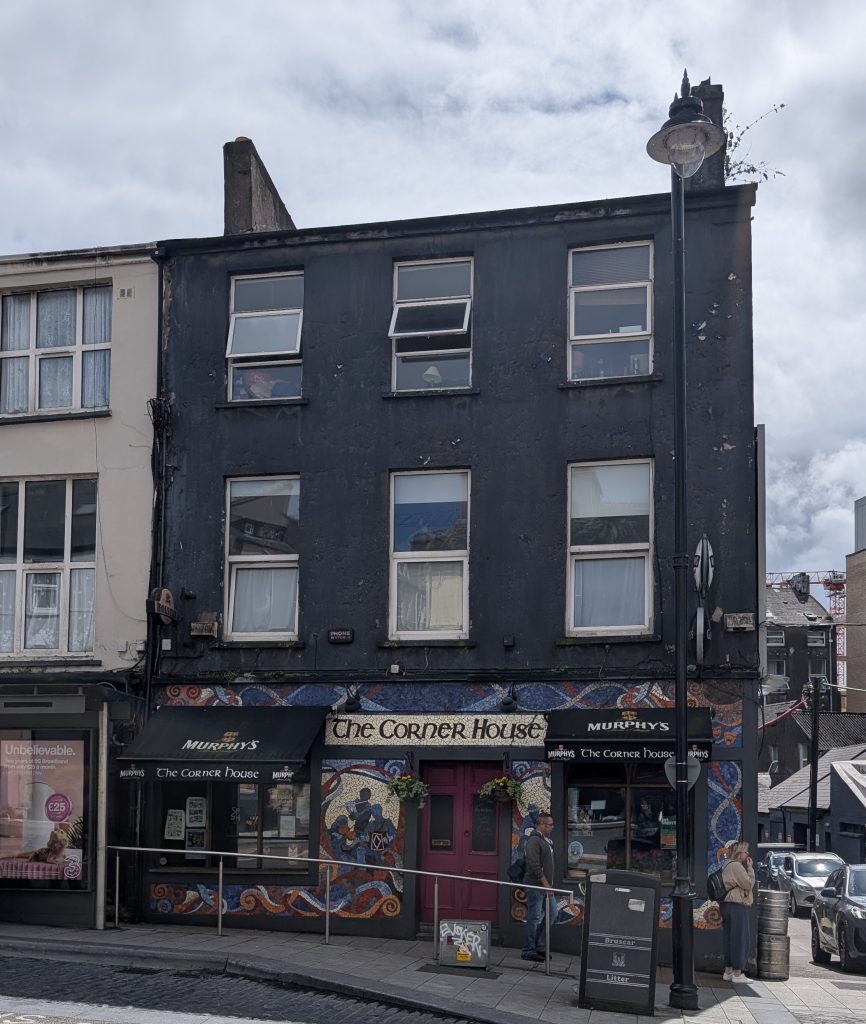
In the evening we went to more pubs for trad music. The first was Corner House, located close to our hotel. A couple of the older musicians turned around on a break to chat with us. They recommended that we visit The Gables Bar for more music. It was a nice 1.5 mile walk through local neighborhoods north of the river. We enjoyed more Guiness, a pizza delivery from neighborhood joint and a trad session with 10 to 12 musicians. By the time we got back to the hotel, I had registered 18,000 steps on my watch.