Bill and I took a bus to the capital city of Sofia from Thessaloniki. We went to the bus station in Thessaloniki an hour early. However, I had not checked the departure location carefully and too late discovered that our bus left out of the train station. We got a taxi to take us there and luckily found another bus leaving 45 minutes later. That was my second mistake of the trip.
The first was at an ATM machine in Thessaloniki where we inadvertently paid the “conversion” upcharge. We had selected no conversion but it asked us twice and preselected Yes to take the expensive option. After that we were very careful not to rush the process. In Bulgaria we never were asked about USD option and their ATM machines at their banks didn’t even charge a fee to use the machine.
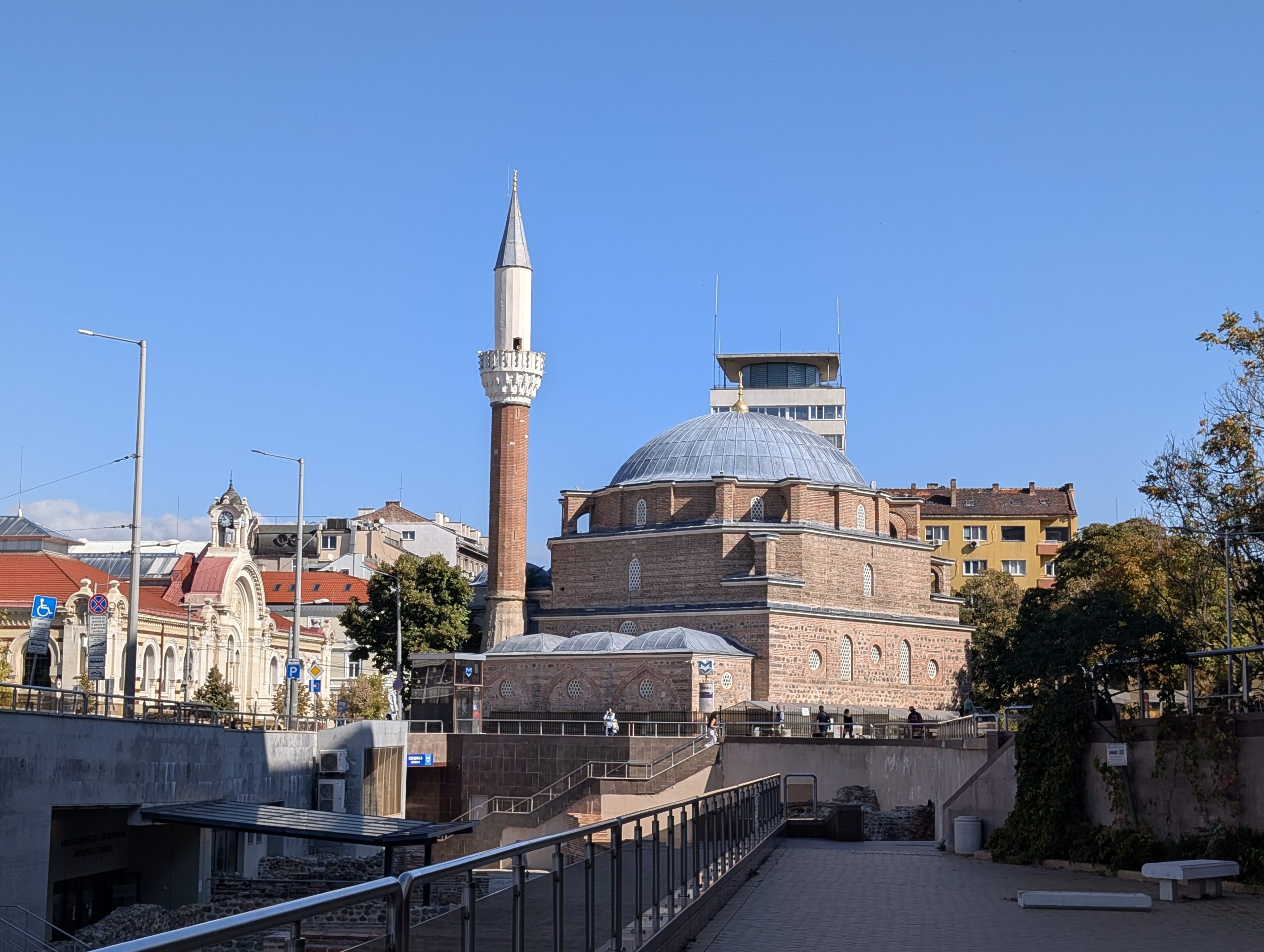
Sofia has been the capital of modern Bulgaria (the Third Bulgarian State) since 1879. The city surprised us. The city center was a mix of modern Central European charm missed with a few Ottoman buildings (none used for their original purposes), communist era buildings and stories, as well as remnants of Byzantine and Roman civilizations.
The city center is well organized and easy to get around on foot. Most of the interesting sights are in the city center, with the exception of the History Museum, the Boyana church and Mount Vitosha. Outside the centre are miles and miles of monotonous Soviet-style high rises along-side modern apartment blocks. The city has lots of green spaces and parks.
We stayed in the five-star Intercontinental Hotel located across the street from several top sites – the Aleksander Nevsky Cathedral and the Hagia (Sveta) Sofia church as well as several parks and the National Art Gallery.
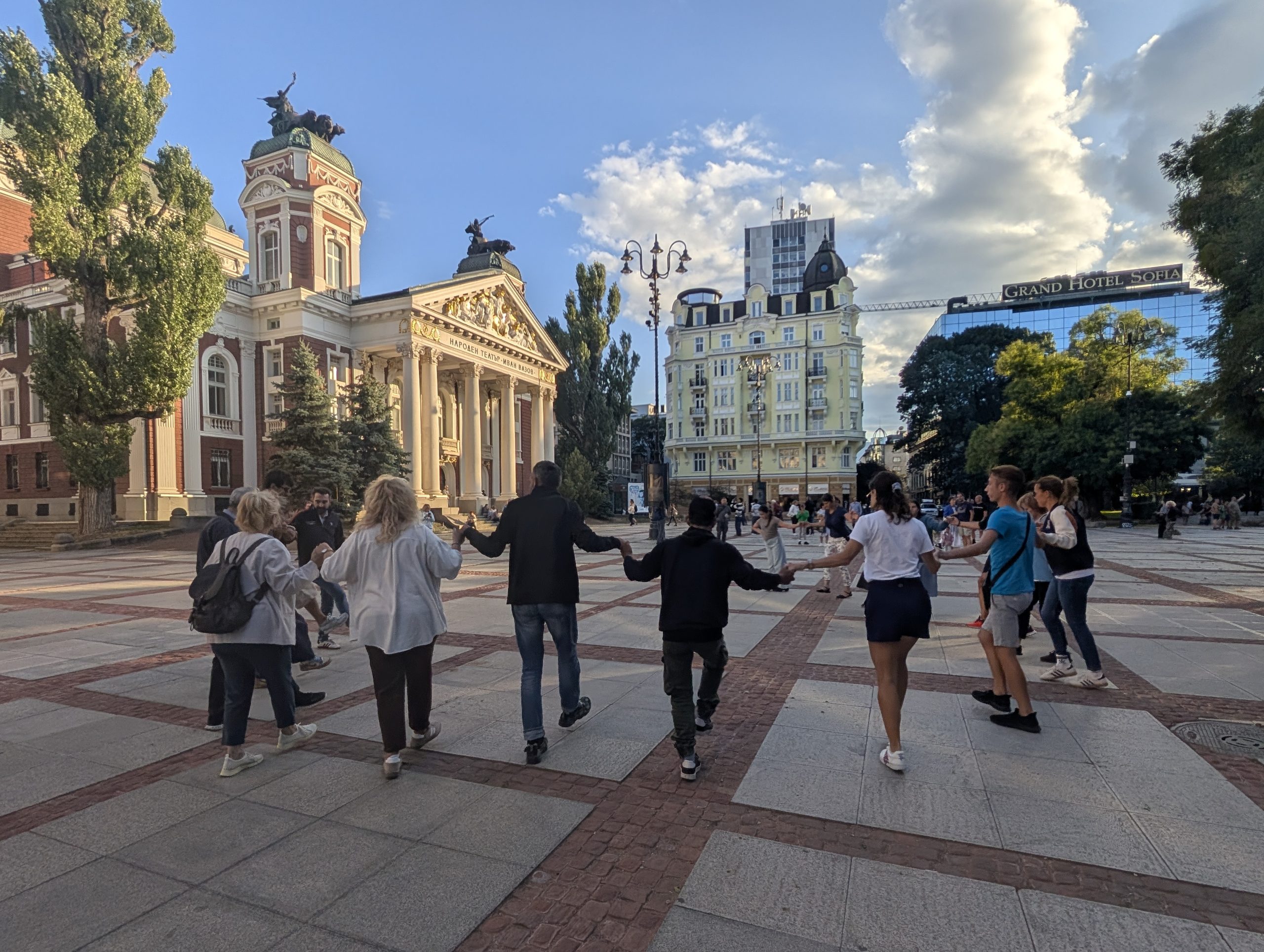
We arrived on Sunday and just wandered around. We encountered a local gathering with Bulgarian music and dancing in the City Park. While wandering the large plaza nearby we saw the flea market – full of communist junk. We wondered why all the churches were ringing their bells at 6pm. When we wandered into the Sveti Nikolai Russian Church they were holding a vespers service for the next day’s celebration of the Elevation of the Cross. There were four priests and about five choir members – their music was so beautiful. This church is fairly new, built in 1914 for the Russian Orthodox community of Sofia.
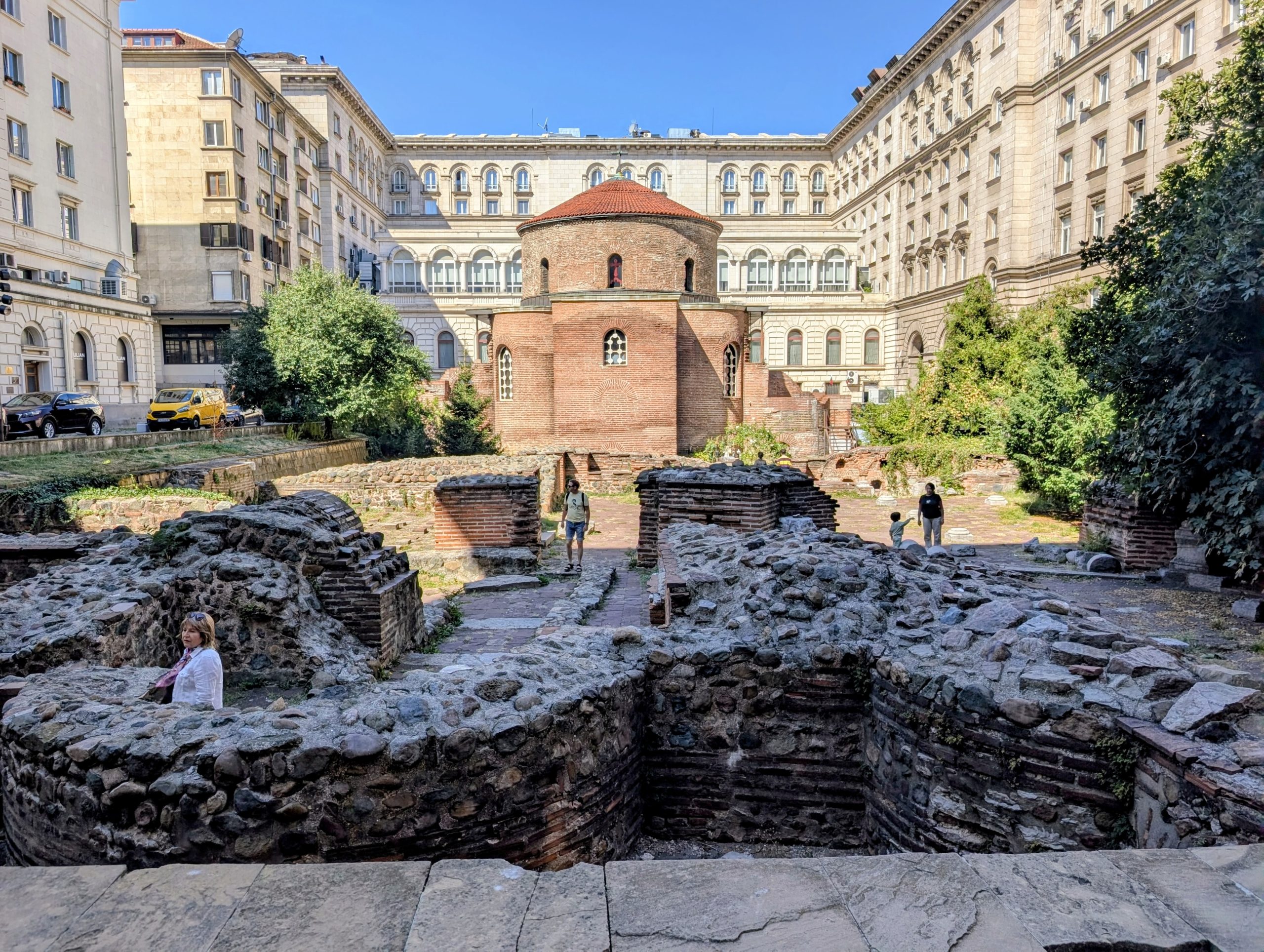
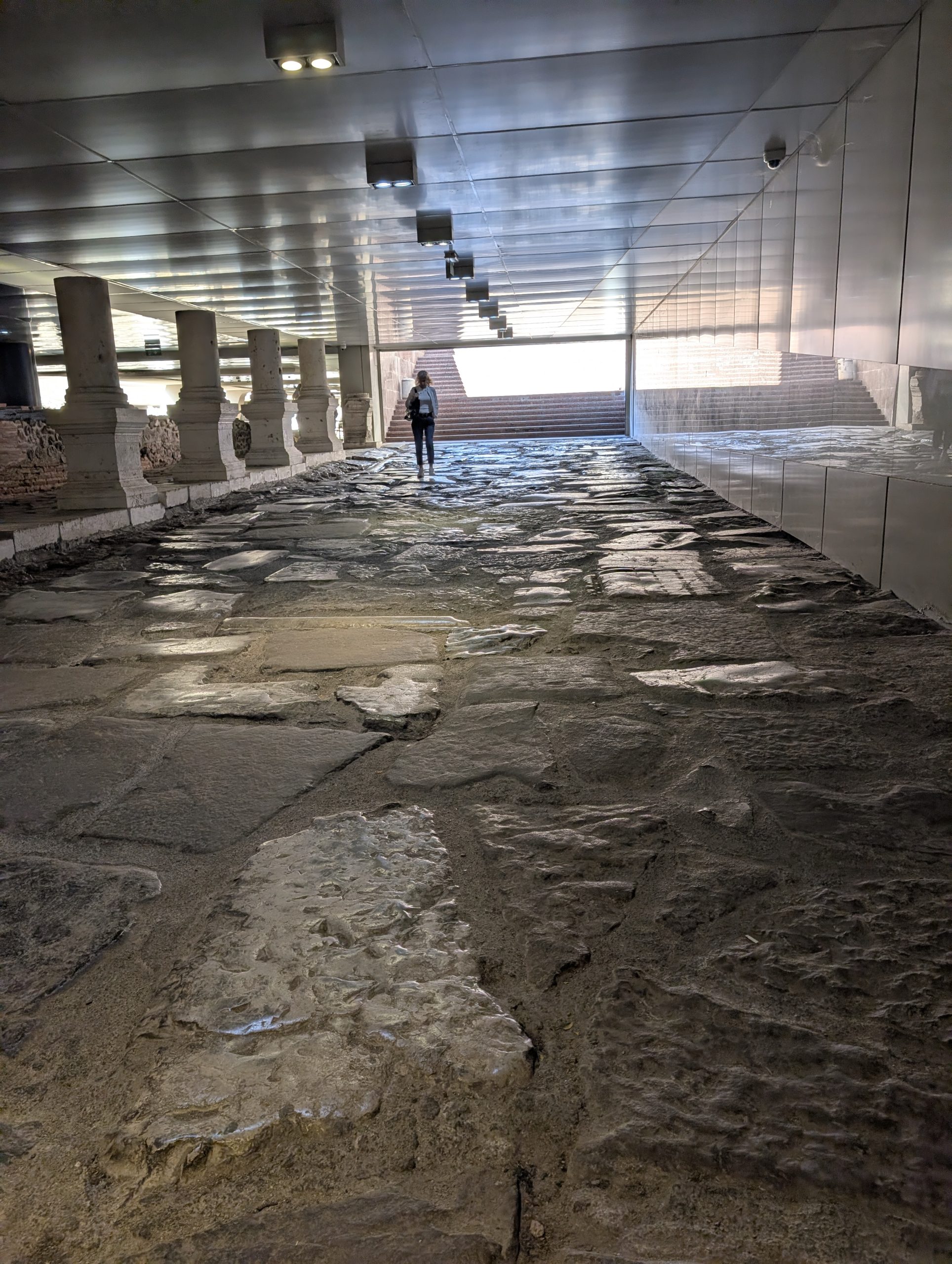
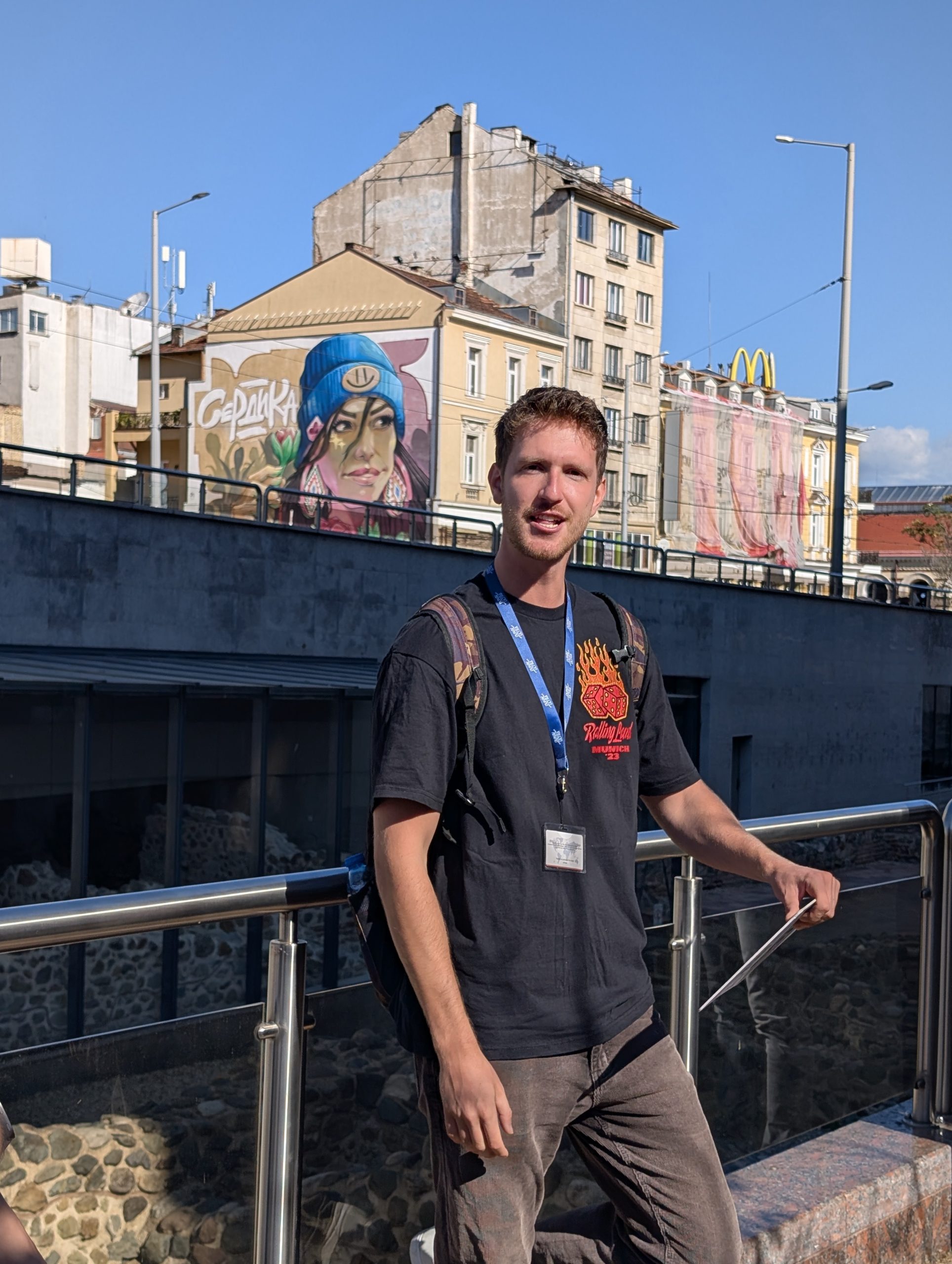
On Monday, we took a “free” tour which gave us a feel for getting around. Our guide gave us a concise overview of the multi-layered history of the country. He took us to the Serdica (pre-Roman city) excavated ruins, the Largo Complex, where three huge Communist era neoclassic buildings surround Independence Square, and stopped at the outside of several churches. He had strong negative opinions on the Communist era, based on his family’s experiences. Outside the Sveta Nedelya Cathedral, our guide told us about a failed attempt by the communists in 1925 to assassinate Tsar Boris III.
The ruins of Serdica (the original name of this city) were found in 2010 when the metro was being constructed. They contain street fragments, an early Christian basilica, baths, and houses from the 4th to 6th centuries. We learned about Bulgaria’s roles in World War II – they first allied with the Nazis and at the end of the war switched sides to fight with the Allies. Despite their king’s support of Hitler, he and the church leaders were able to protect 50,000 Bulgarian Jews from being sent to the concentration camps. That king, Boris III, was later poisoned by Hitler for his role in supporting the Jews.
The food in Bulgaria overall was excellent. In Sofia we ate at two memorable places – Manastirksa Magernitsa and Café 1920. Some Bulgarian dishes that we loved was Kyopolou – a red dip with peppers, Shopska salad (tomatoes, cucumber, peppers and shredded Bulgarian cheese, “Granny” salad, stewed meat dishes and many variations with peppers and eggplant.
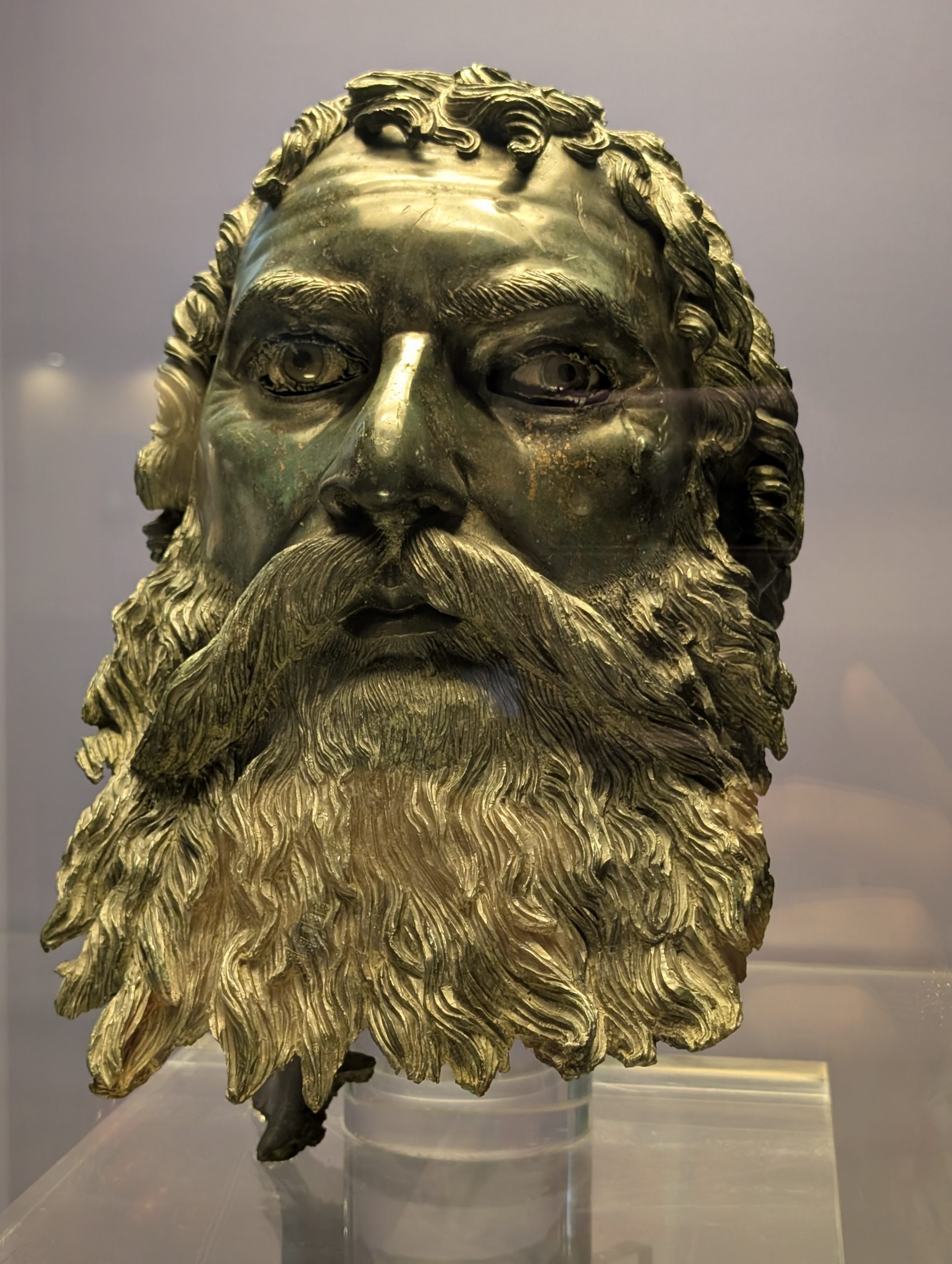
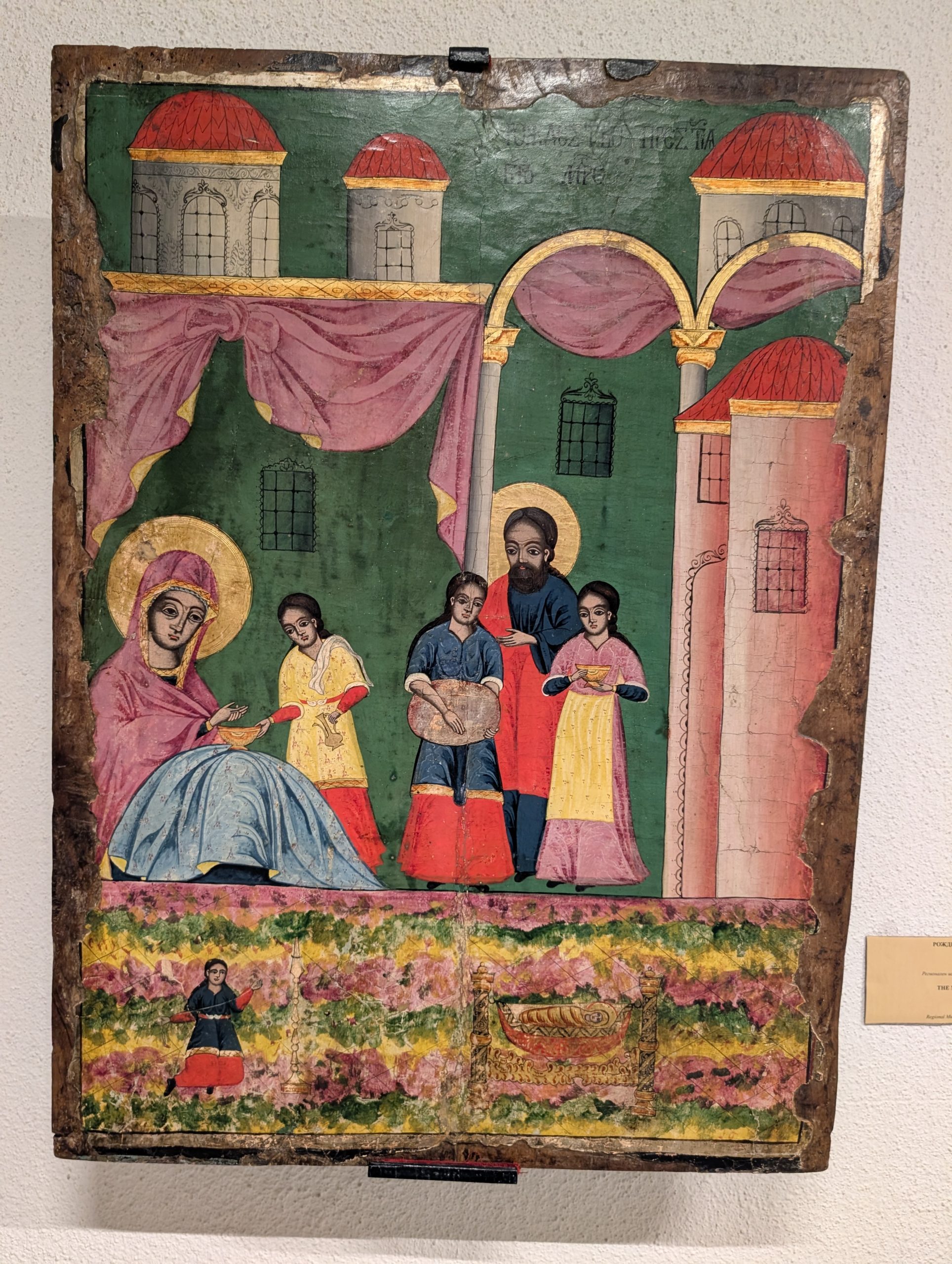
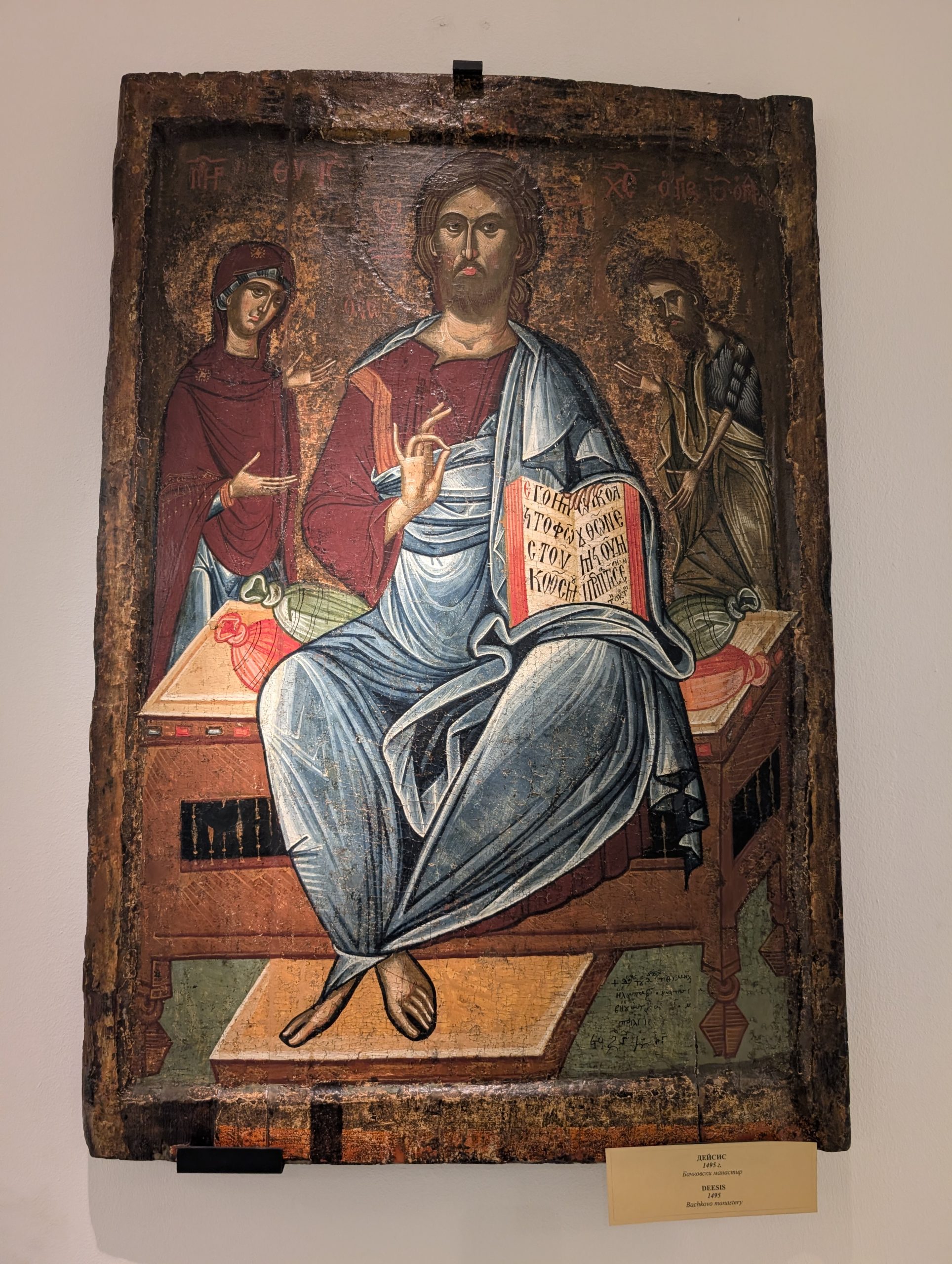
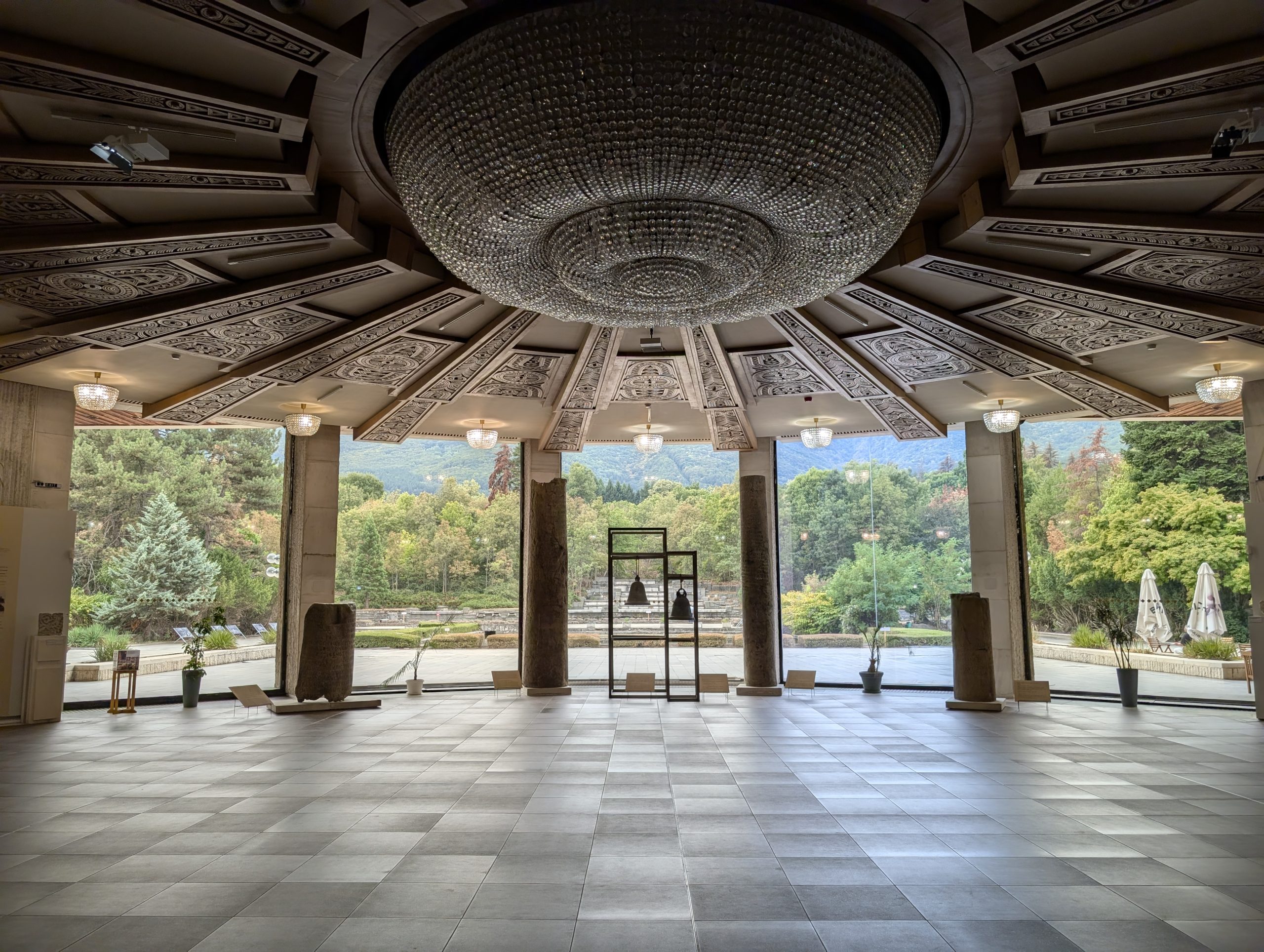
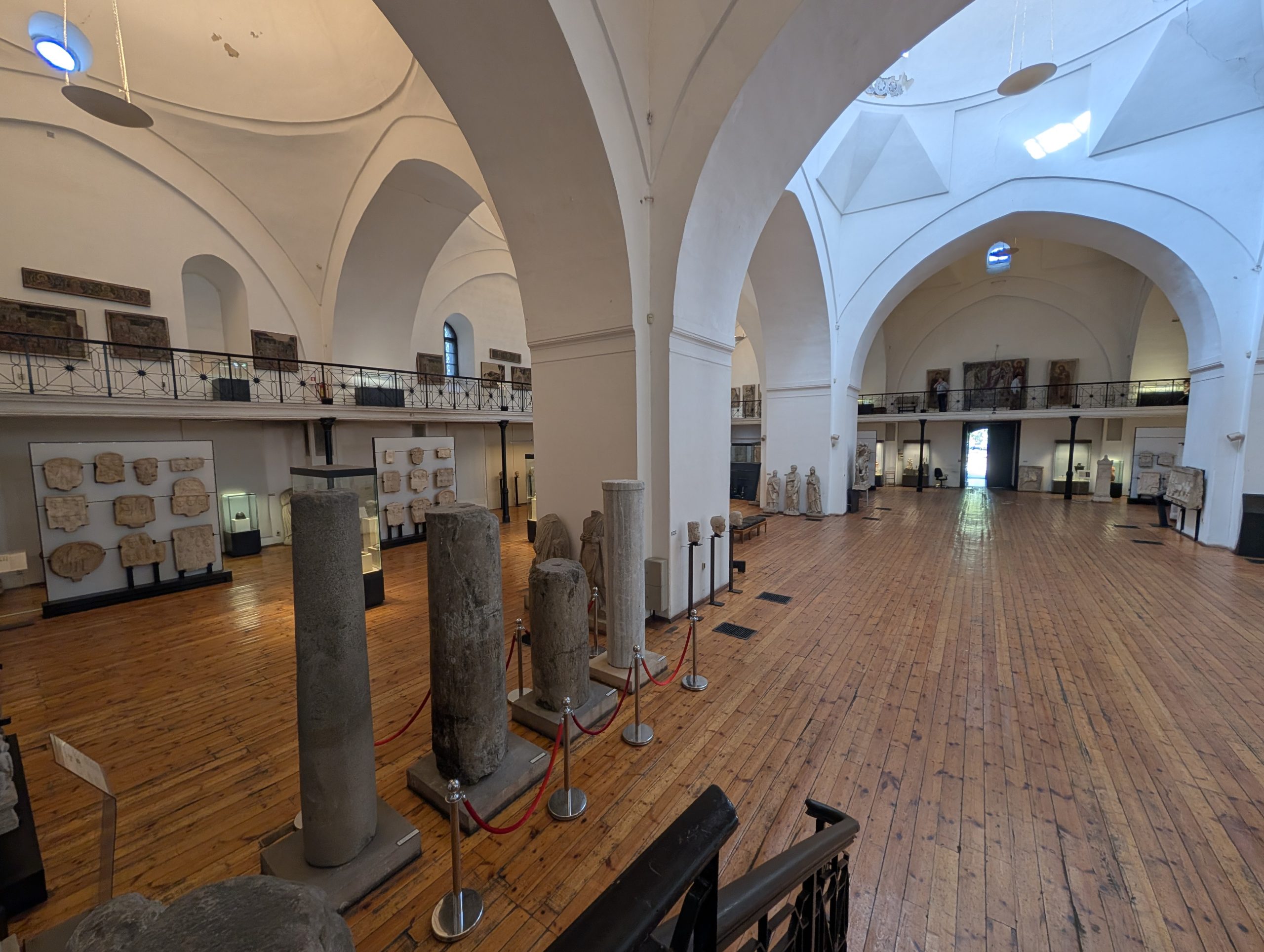
During our 3 days in Sofia we visited the excellent National Archeological Museum which had treasures from Thracian times – gold jewelry, pottery, weapons. The National History Museum had some good exhibits but it was confusing to follow as they didn’t present a timeline and they mixed up eras – there was an exhibit on Neanderthals right next to one on Thracian eras. The exhibit of Thracian history with more treasures was excellent. Other exhibits included history of the revolution in 1878, folk costumes and icons. The museum is located in a former Communist Party building outside of the city center (10euro cab ride).
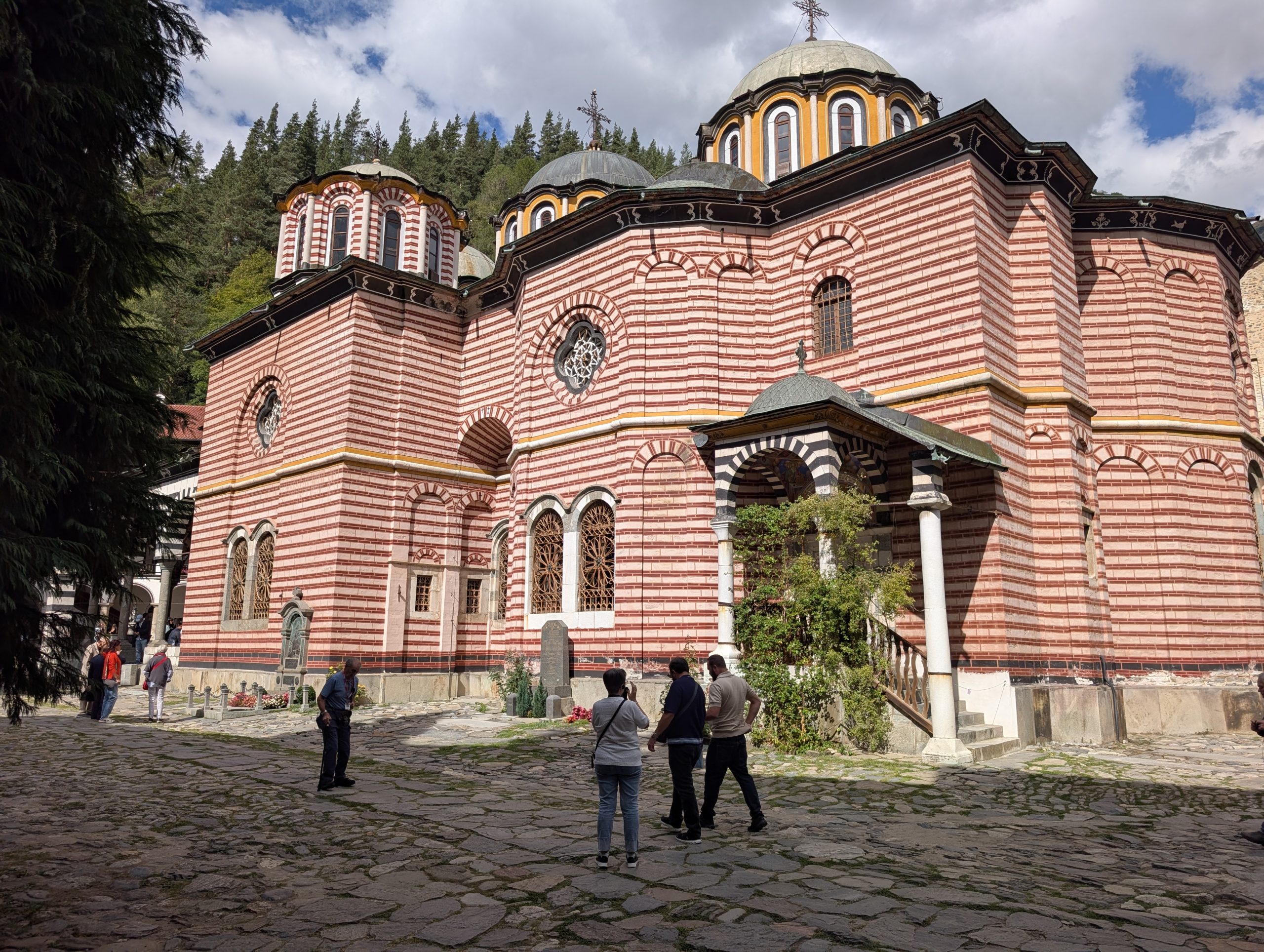
We saw so many beautiful churches on this trip. Sveta (Saint) Sofia was close to our hotel. It is the country’s oldest surviving Christian church, dating to the 6th century and built on top of a 4th century church and graveyard. The name of the church means “Holy Wisdom” and gave the city its name. Underneath the church are crypts and graves from the xxth century. The inside is calm and peaceful with brick façade and little ornamentation. The building was converted to a mosque in the 16th century and was restored as a basilica during the 19th and 20th centuries. The outside is fairly non-descript. Underneath this church lies a necropolis filled with ancient tombs and the ruins of previous churches.
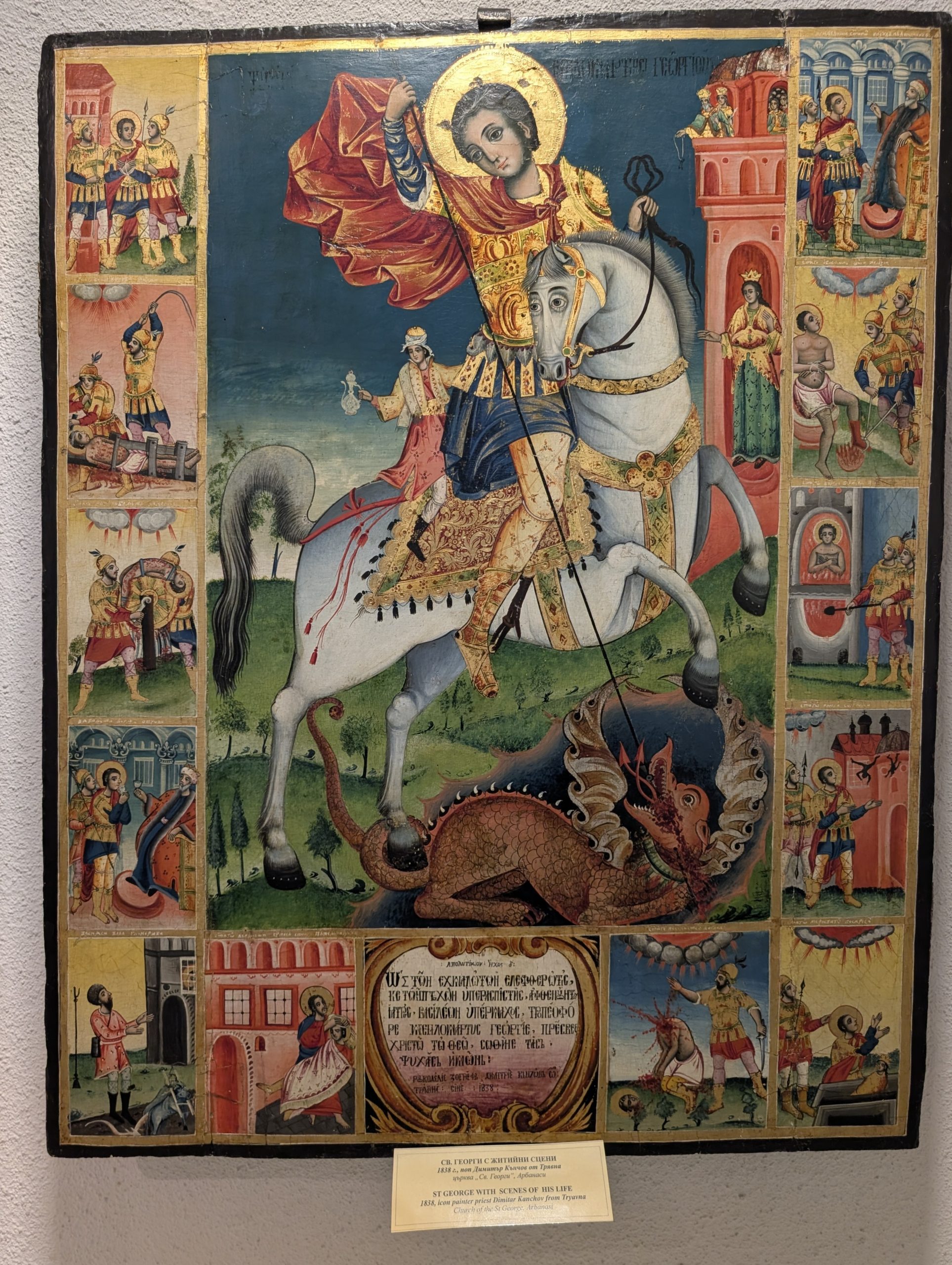
All of the churches have gift shops which sold beautiful icons. We found one of the Annunciation for our grand-daughter who was recently baptized with the name “Evangelia”. These icons commemorate the announcement by the Archangel Gabriel to Mary that she would conceive a child to be born, the son of God.
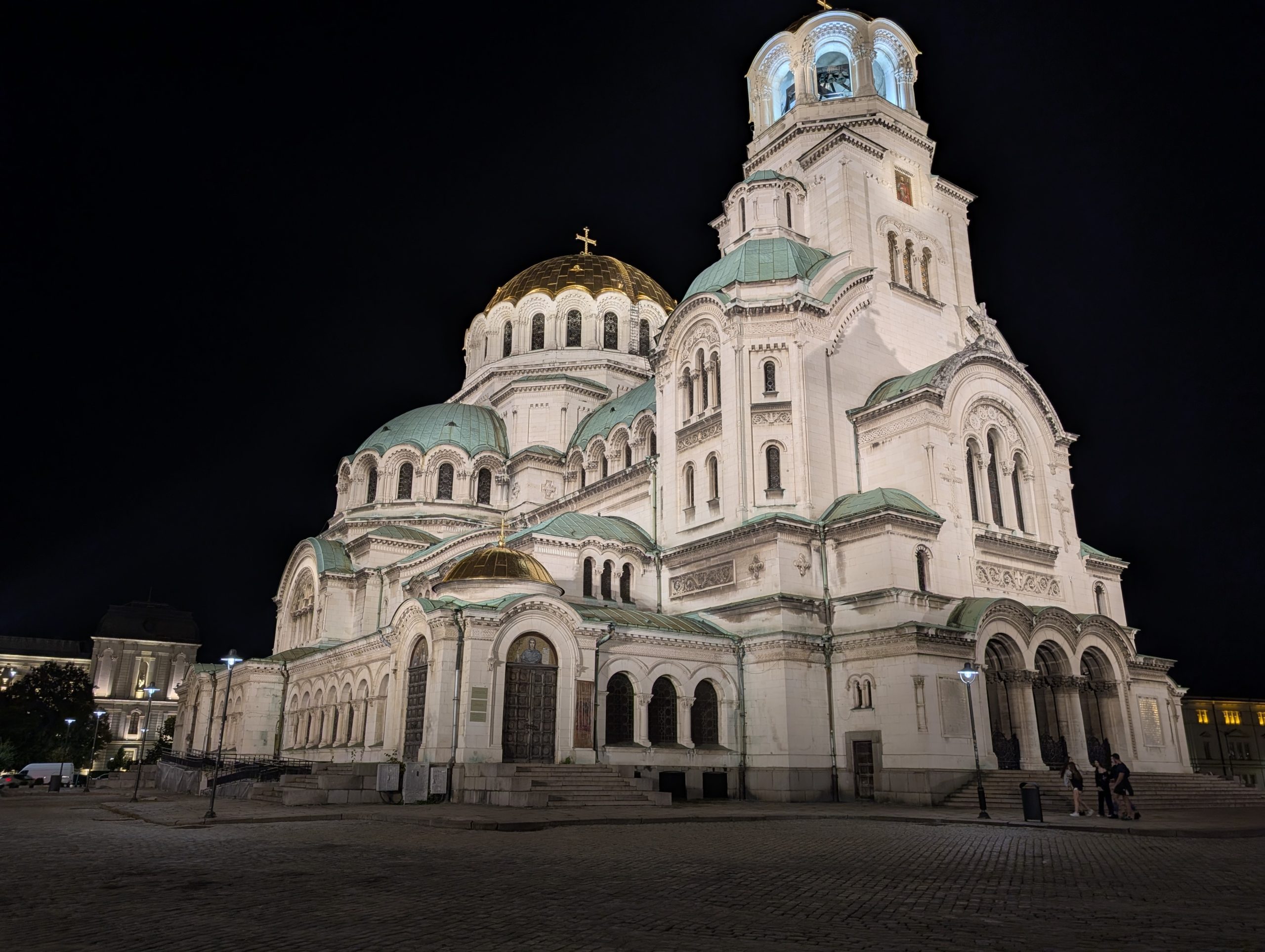
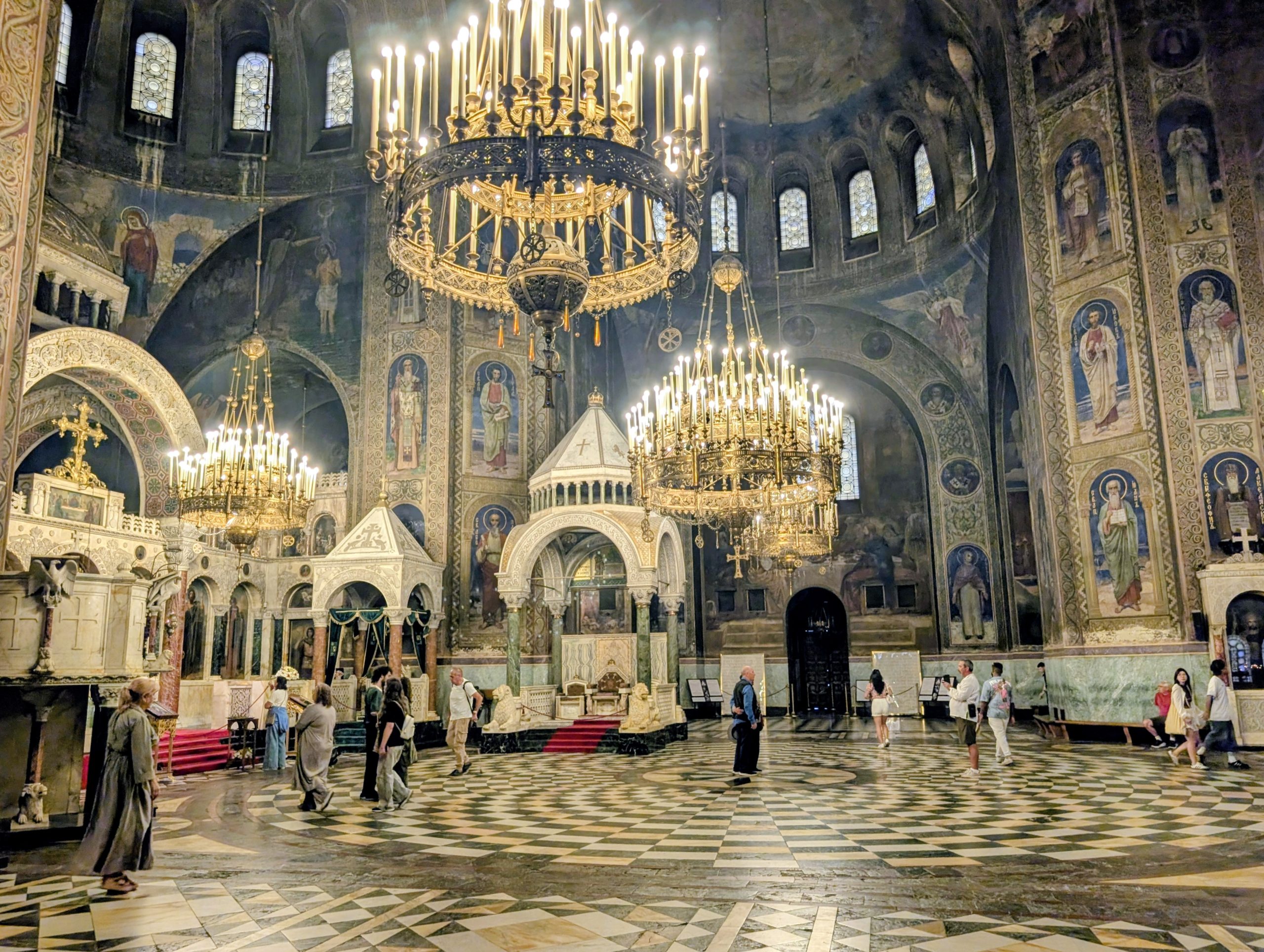
The massive Aleksander Nevsky church looms over the city center with its gold gilt domes. The Bulgarian Orthodox church was built between 1882 and 1924 to commemorate Russia’s contribution to Bulgaria gaining its independence from the Ottoman empire in 1877-1878. Named for Russian prince Saint Alexander Nevsky (1221– 1263), the church was built to honor those who sacrificed their lives during the Russo-Turkish War. The inside is massive with several chapels, beautiful icons, massive chandeliers. I sat through a few minutes of a vespers service – but it was only a small choir practicing, no priests.
There is a museum of Bulgarian icons inside the cathedral’s crypt, part of the National Art Gallery – supposedly the largest collection of Orthodox icons in Europe with roughly 300 works spanning the 10th through 19th centuries, drawn from monasteries, churches, and private collections across the country. It is a beautiful exhibit and worth the 3 euros and an hour of our time.
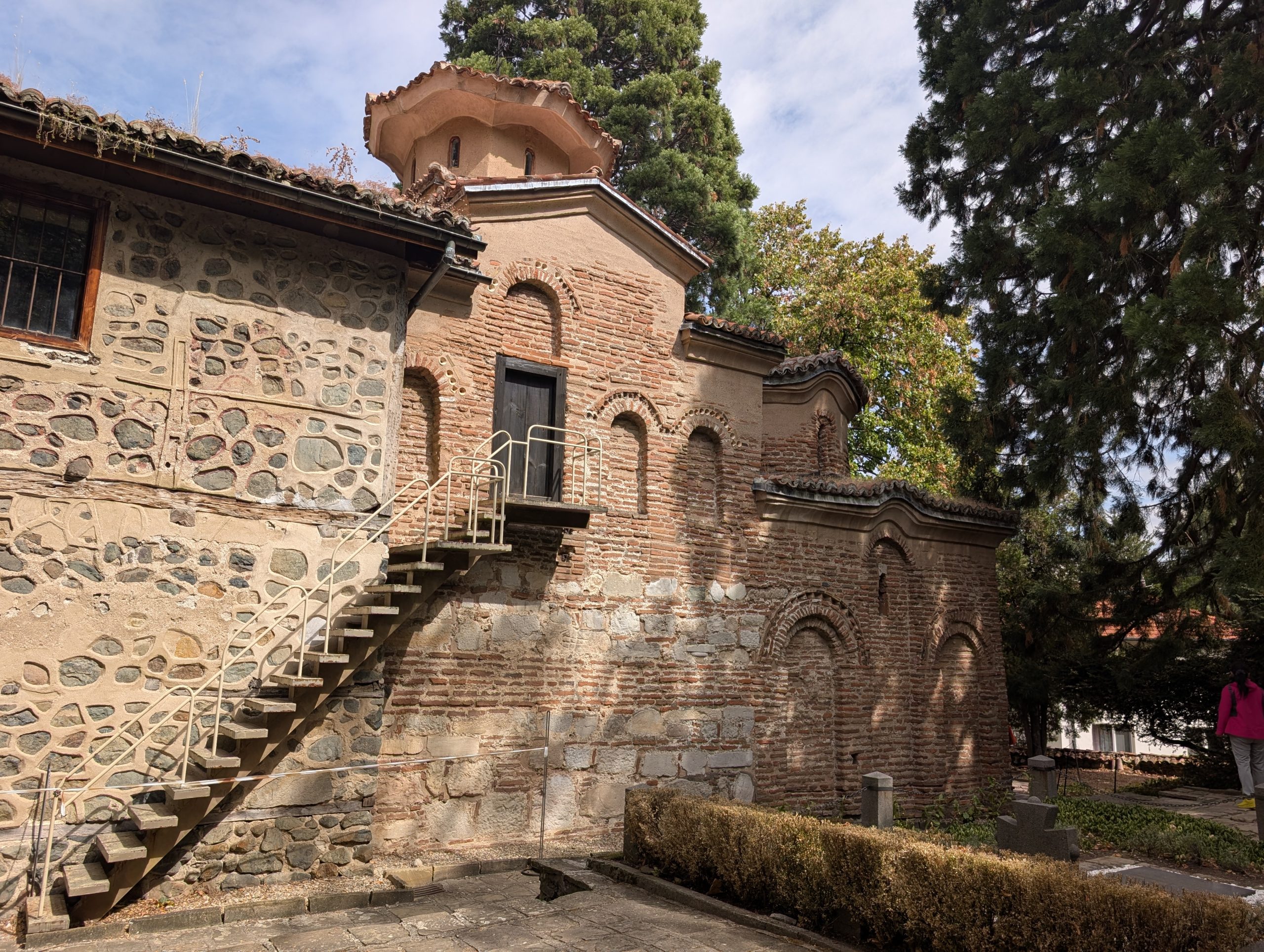
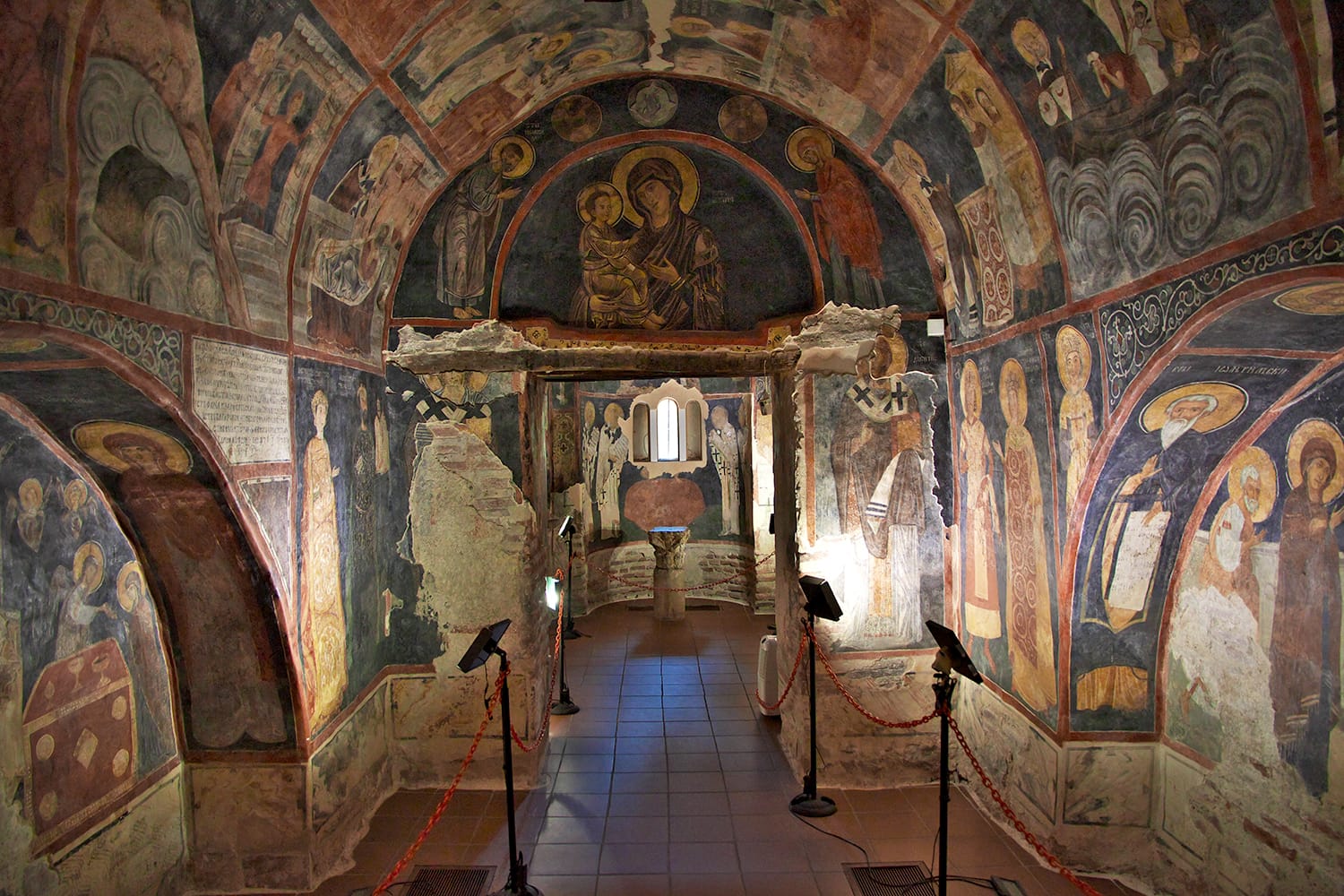
On Tuesday, we skipped the Gate1 walking tour since we had already done that on Sunday. Instead we went to the National History Museum in Boyana and visited the nearby Boyana Church – a tiny medieval Orthodox church built in three stages: late 10th to early 11th, mid-13th, and mid-19th centuries. For a steep 10 euros, groups of up to 8 visitors are permitted to stay for 10 minutes. Photos are not allowed inside of the beautiful frescoes but I found one on the internet. We had lunch at a hotel restaurant in the tiny village of Boyana – good food, average to poor service and expensive water and wine.