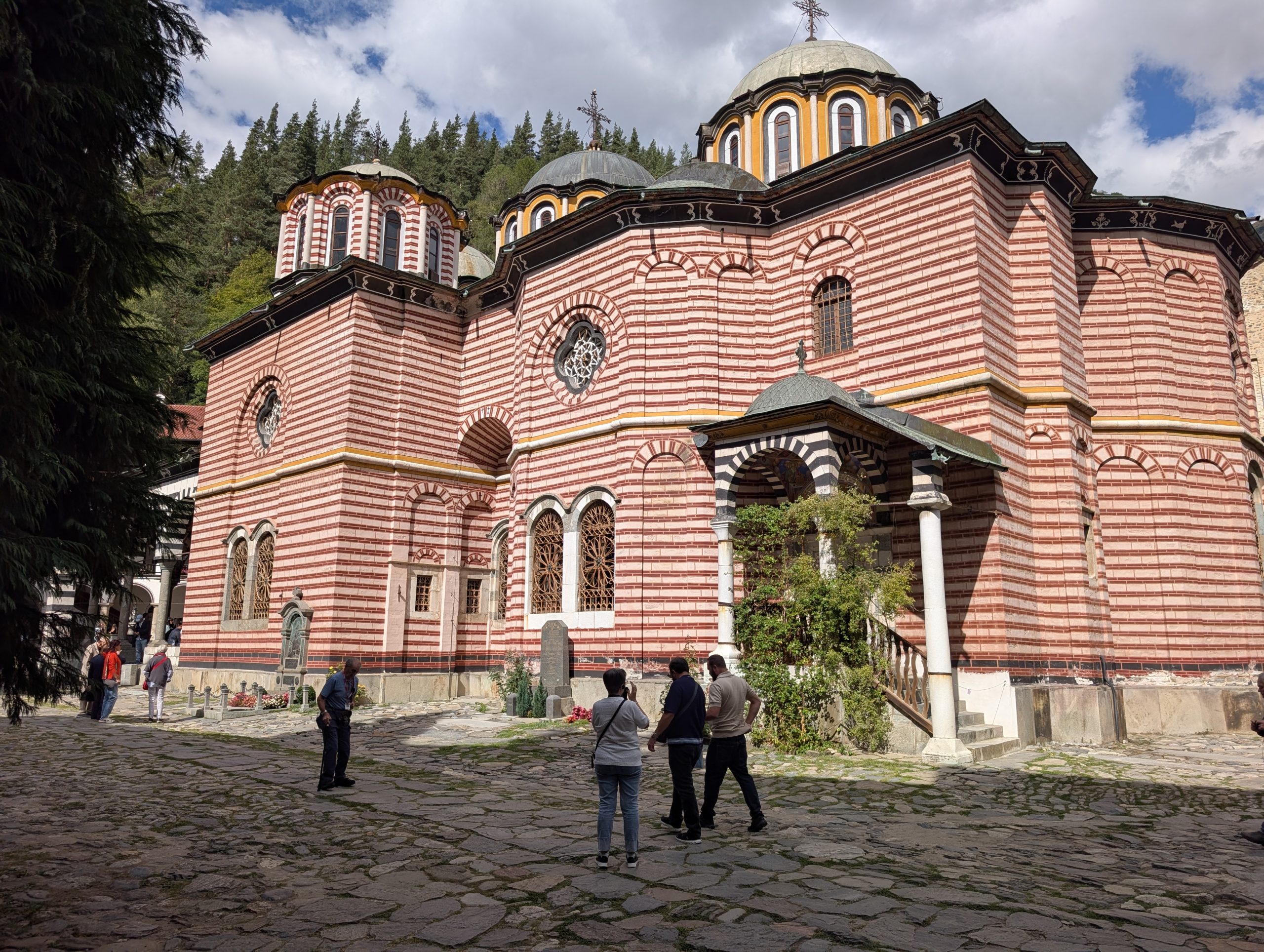
After leaving the capital city of Sofia, we headed south in the direction of the Greek border. We had an amazing visit to the Rila Monastery. Georgi gave us a tour of the outside of the buildings and took us inside a typical monk’s cell. We weren’t allowed to take pictures inside the church. We spent 3 hours at the Monastery including a snack lunch of fried dough and cheese. Several days we ate on the go with fruits and snacks provided by Georgi. He was on a roll and we tried yogurt milk, quince rakia from his farm, a fizzy drink made from rye bread, and some Bulgarian packaged sweets. The monastery sits in a beautiful setting inside a gorge in the Rila Mountains.
The Rila monastery was founded a 1000 years ago by St. John of Rila. But the current complex was constructed in the 14th century. Over the centuries, the complex has been damaged and destroyed by fire and the Ottomans and then restored by the Bulgarians. Beautiful murals and frescoes grace the exterior and interior of the church. A musem displays artifiacts from many centuries. The most memorable was Rafael’s Cross.
The crucifix is a wooden cross made from a single piece of wood (81 х 43 cm).[1] It was whittled down by a monk named Rafail using fine burins and magnifying lenses to recreate 104 religious scenes and 650 miniature figures. Work on this piece of art lasted not less than 12 years before it was completed in 1802 when the monk lost his sight.
Our guide told us Rafail was a janissary in Ottoman Empire, originally born in Bulgaria to a Christian family and kidnapped by the Ottomans as a child and trained to fight and defend the Ottomans. On a rampage through Bulgaria, someone who knew him and his family told him who he was. He was so devastated and shamed by his actions that he stayed in Bulgaria and joined the Rila Monastery. As a demonstration of his faith, he worked on this piece of art for 12 years until he lost his sight.
The cross and other artifacts are located in the Treasury. They tell the story of the founder, the use of a printing press and organization of a school which became a key center of Bulgarian literary, educational, and cultural activity during the Bulgarian National Revival period (18th–19th centuries), focused on preserving and advancing the Bulgarian language, Orthodox traditions, and national identity amid Ottoman rule.
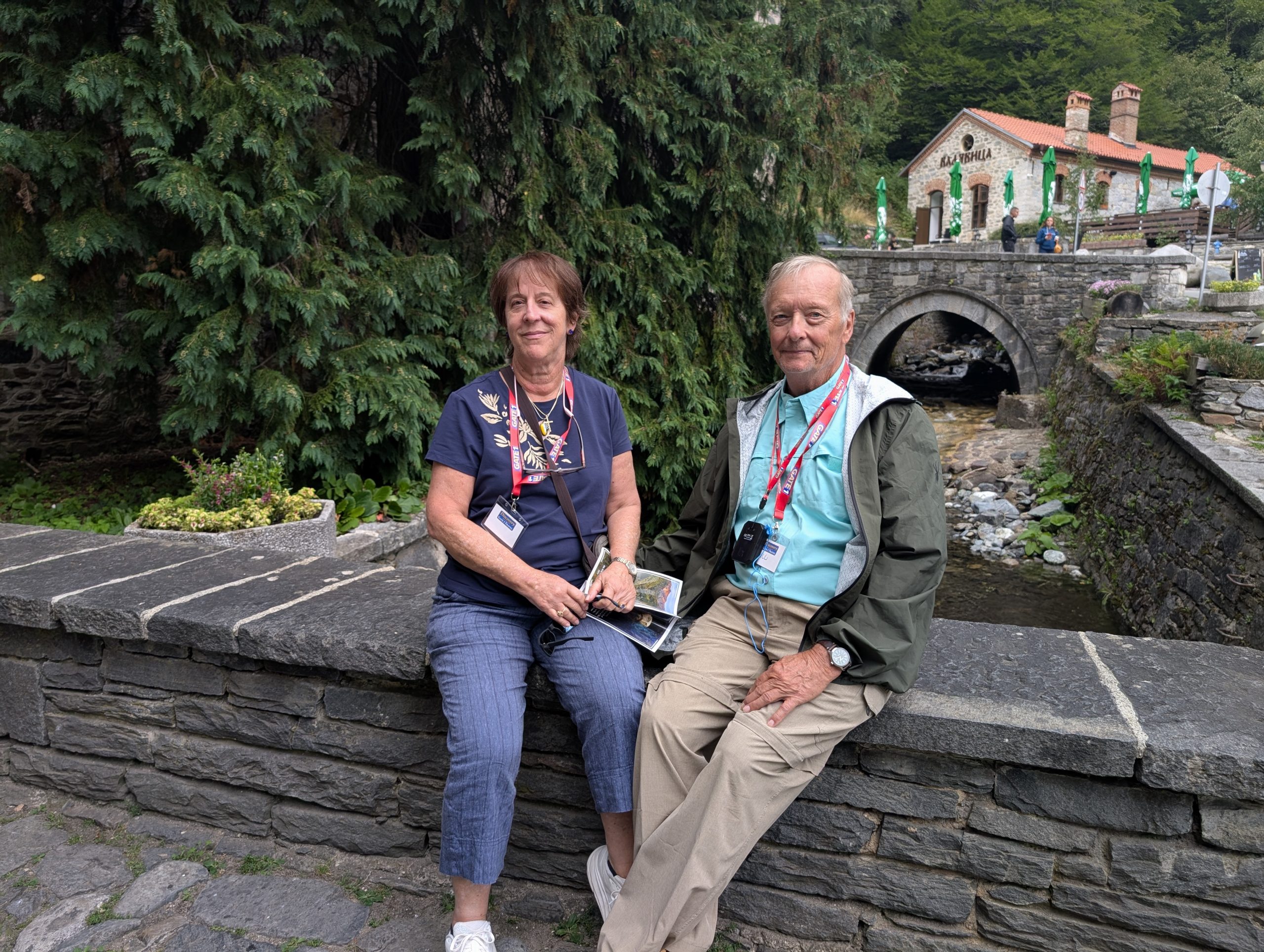
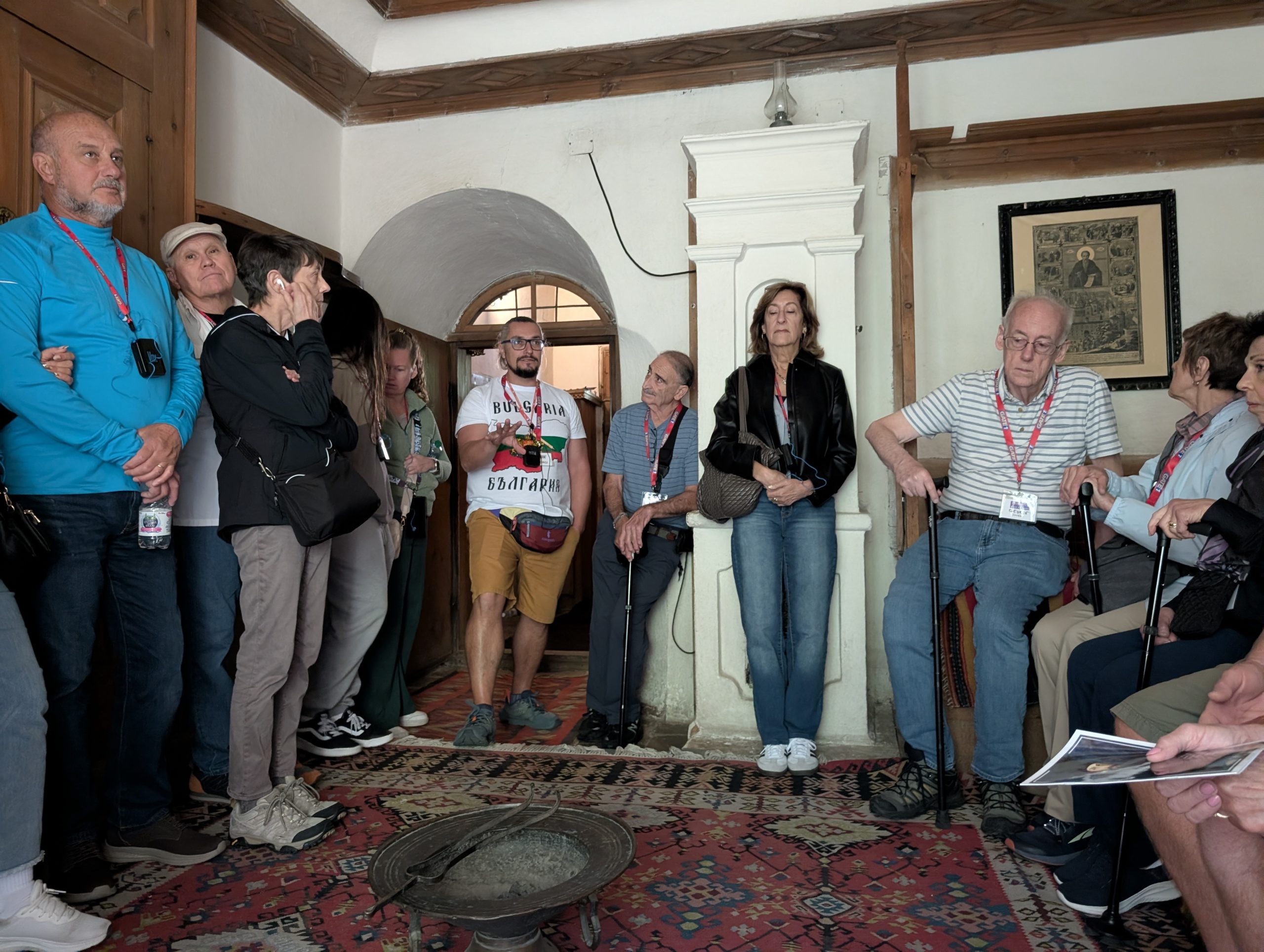
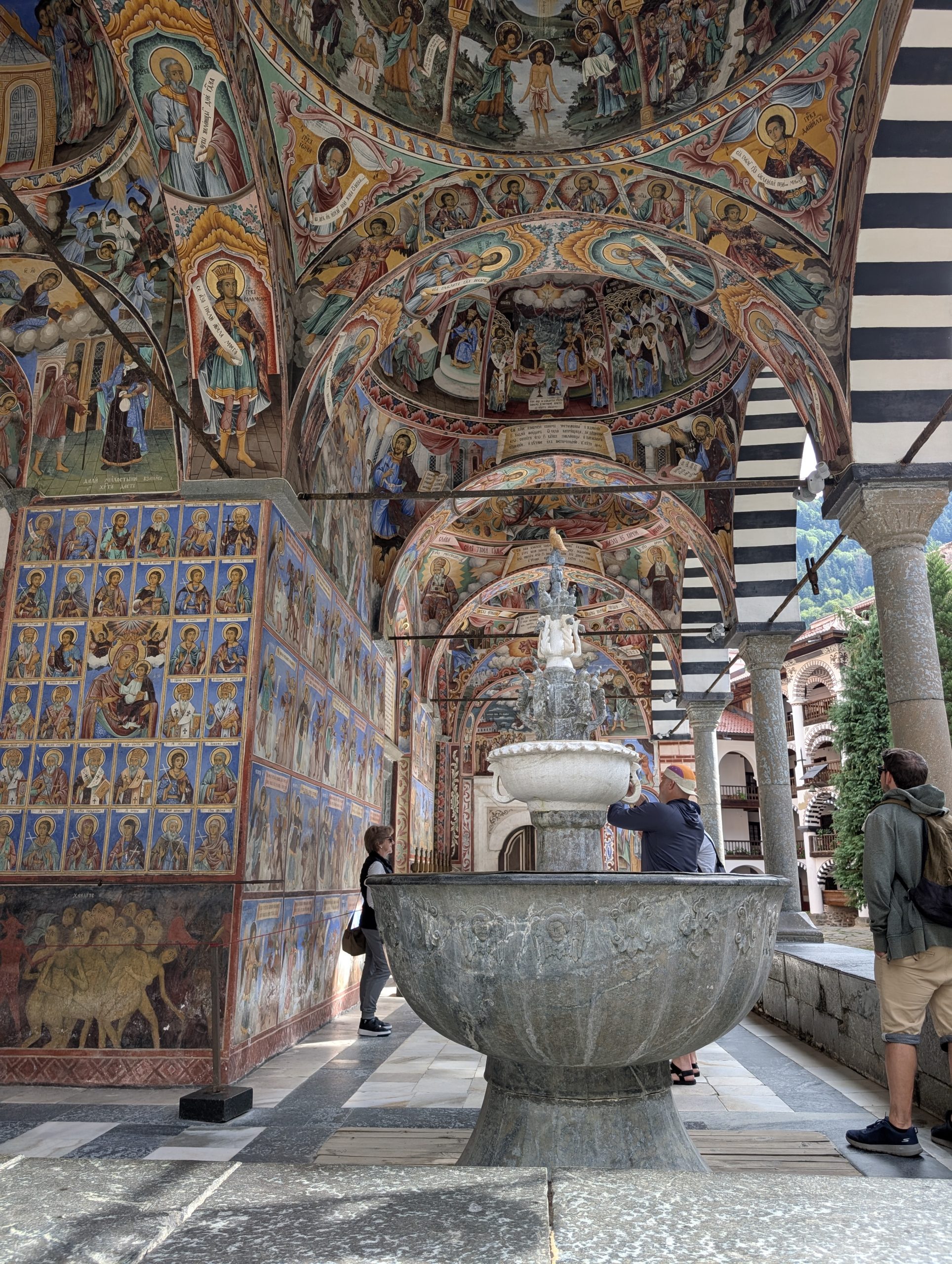
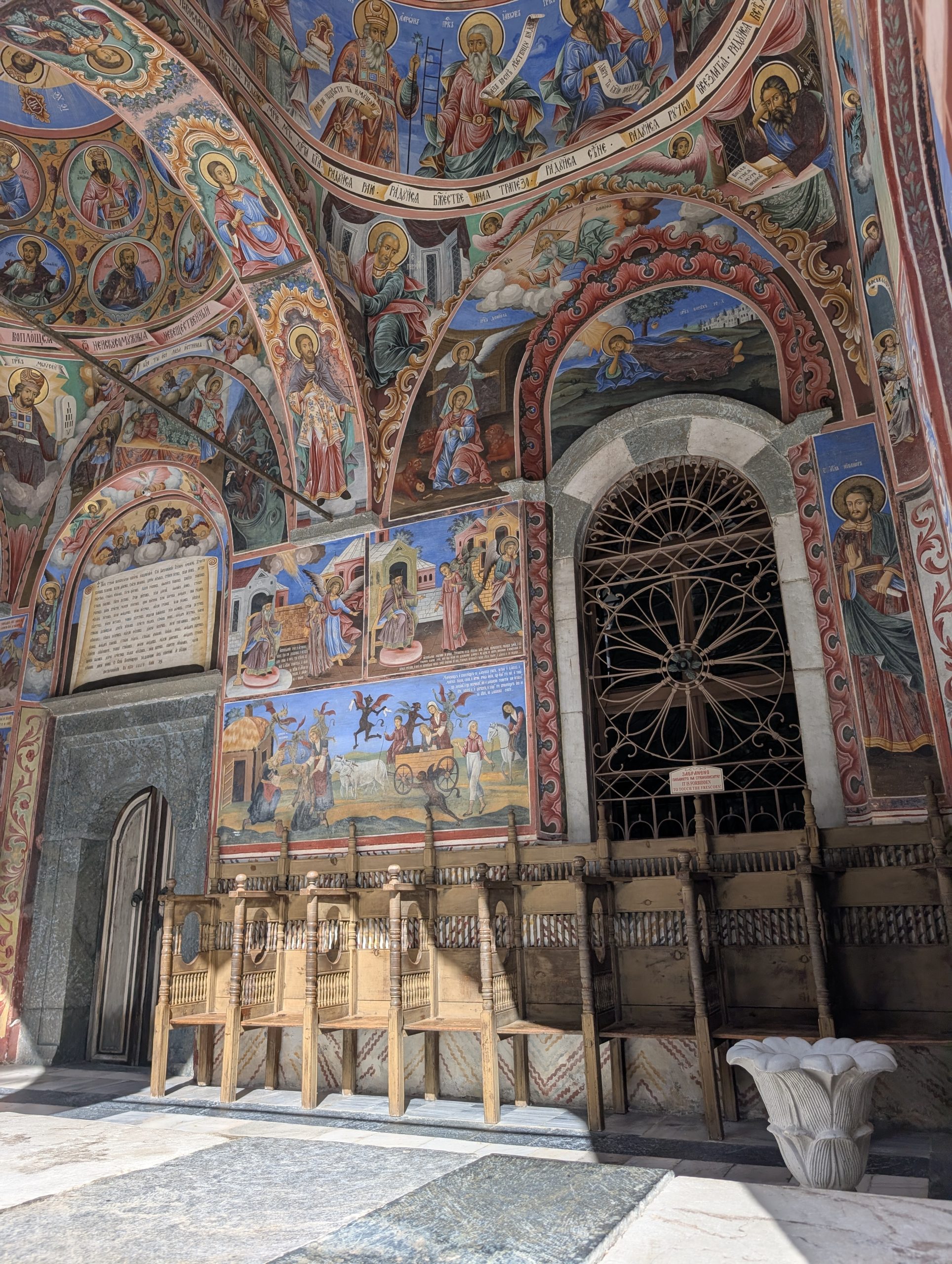
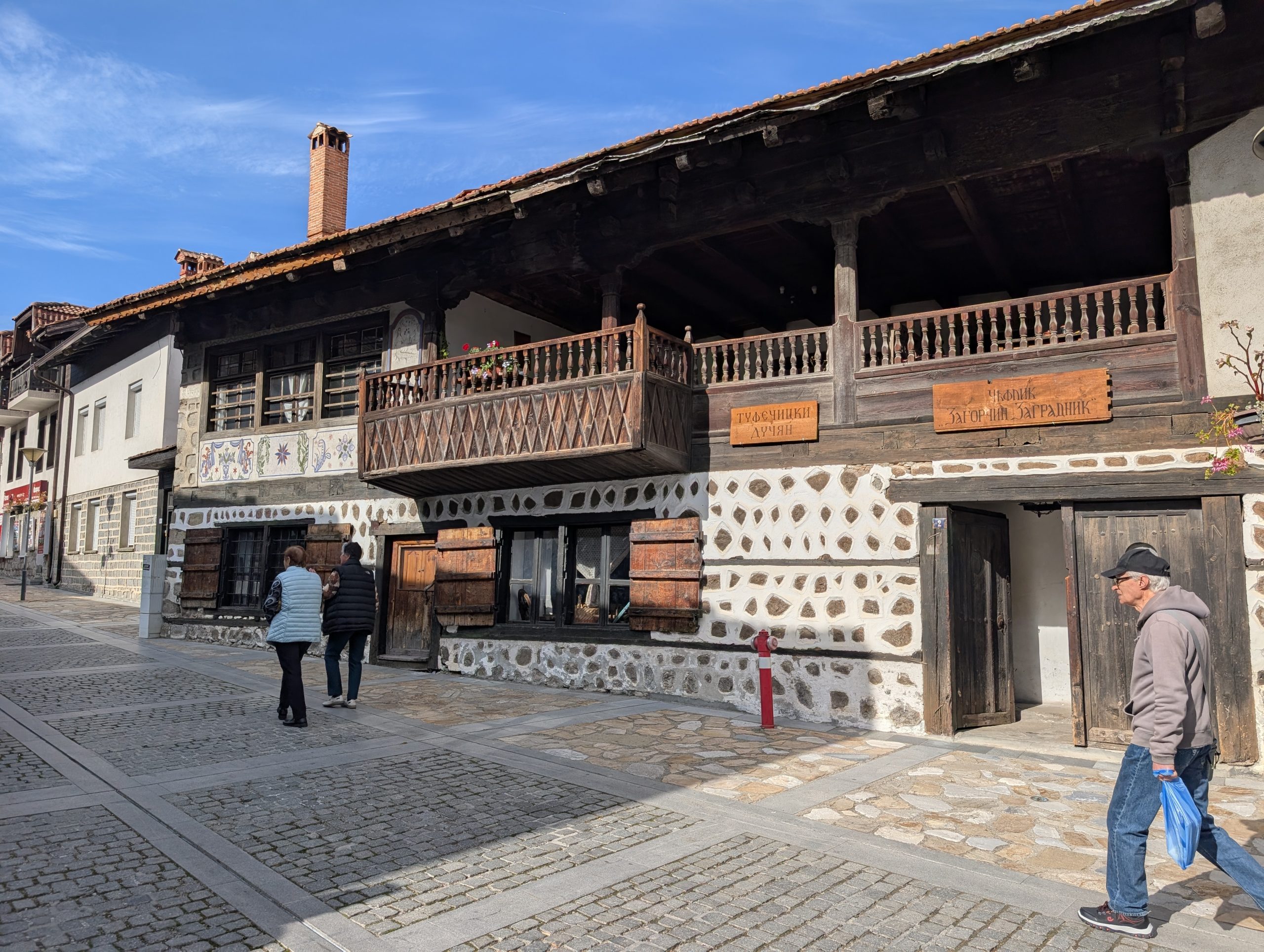
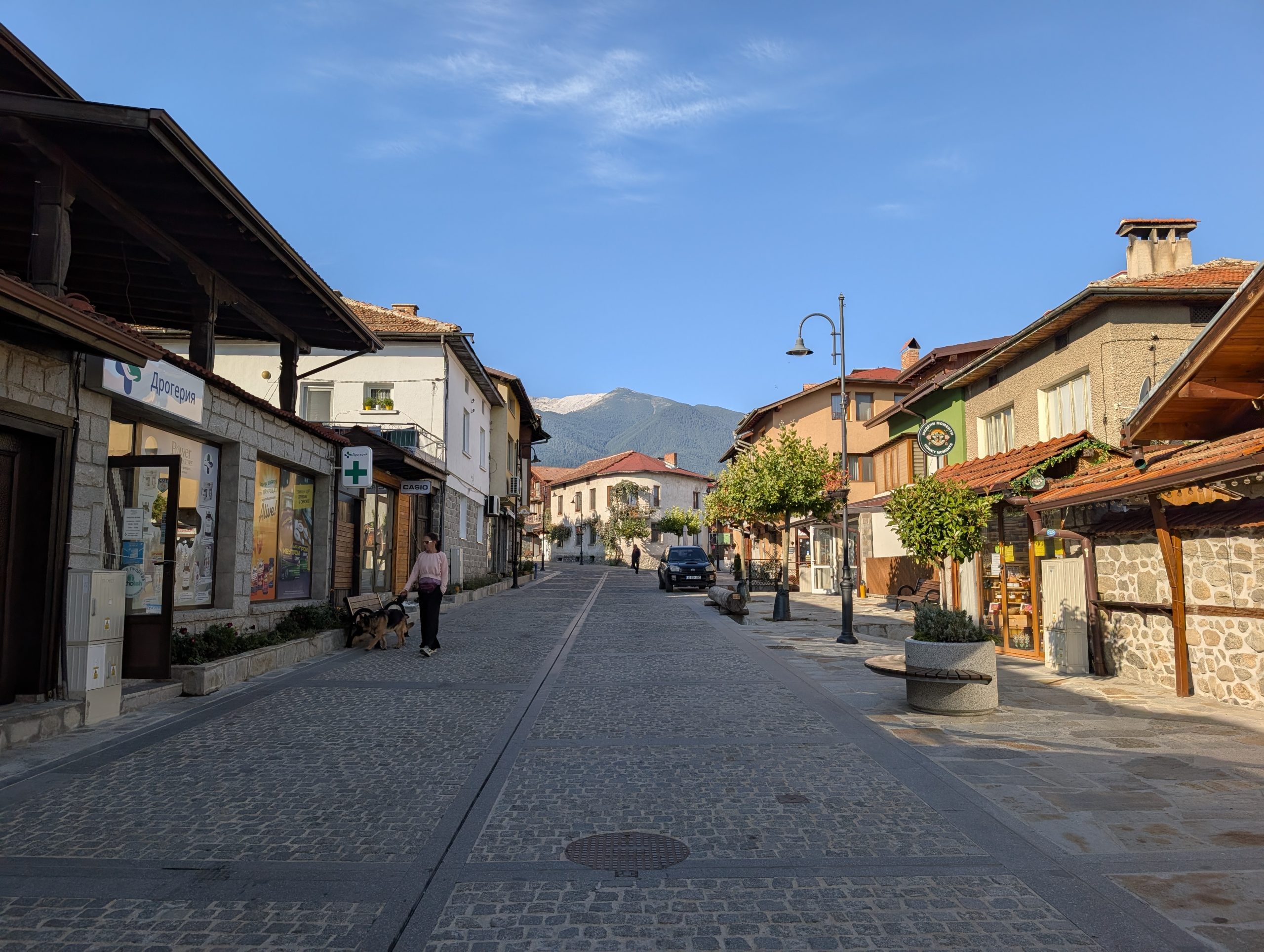
After a lovely 3 hours at the monastery, we headed to Bankso, a ski resort and mountain town that sits among the Pirin Mountains. Bansko is popular in the summer with hikers and booms in the winter with skiers. The town was founded in the 9th century. The old town has beautiful stone and wood houses built in the 18th and 19th century by wealthy Bansko merchants who grew rich by moving goods on the trade rute between Thessaloniki and Vienna. The houses have massive stone ground floors with thick walls, small iron-grilled windows, and heavy gates. Upper floors have timber frames with wide bay windows, carved wooden ceilngs and painted murals. Some of the houses were used for Orthodox worship during Ottoman times and are marked with the Byzantine two headed eagle or a cross.
There are many churches and several house museums as well as many restaurants, cafes and shops you would expect in a tourist town. The Old Town is very walkable and car-free in its core lanes. From our hotel near the gondola, it is a 15 – 20 minute walk to the main square.
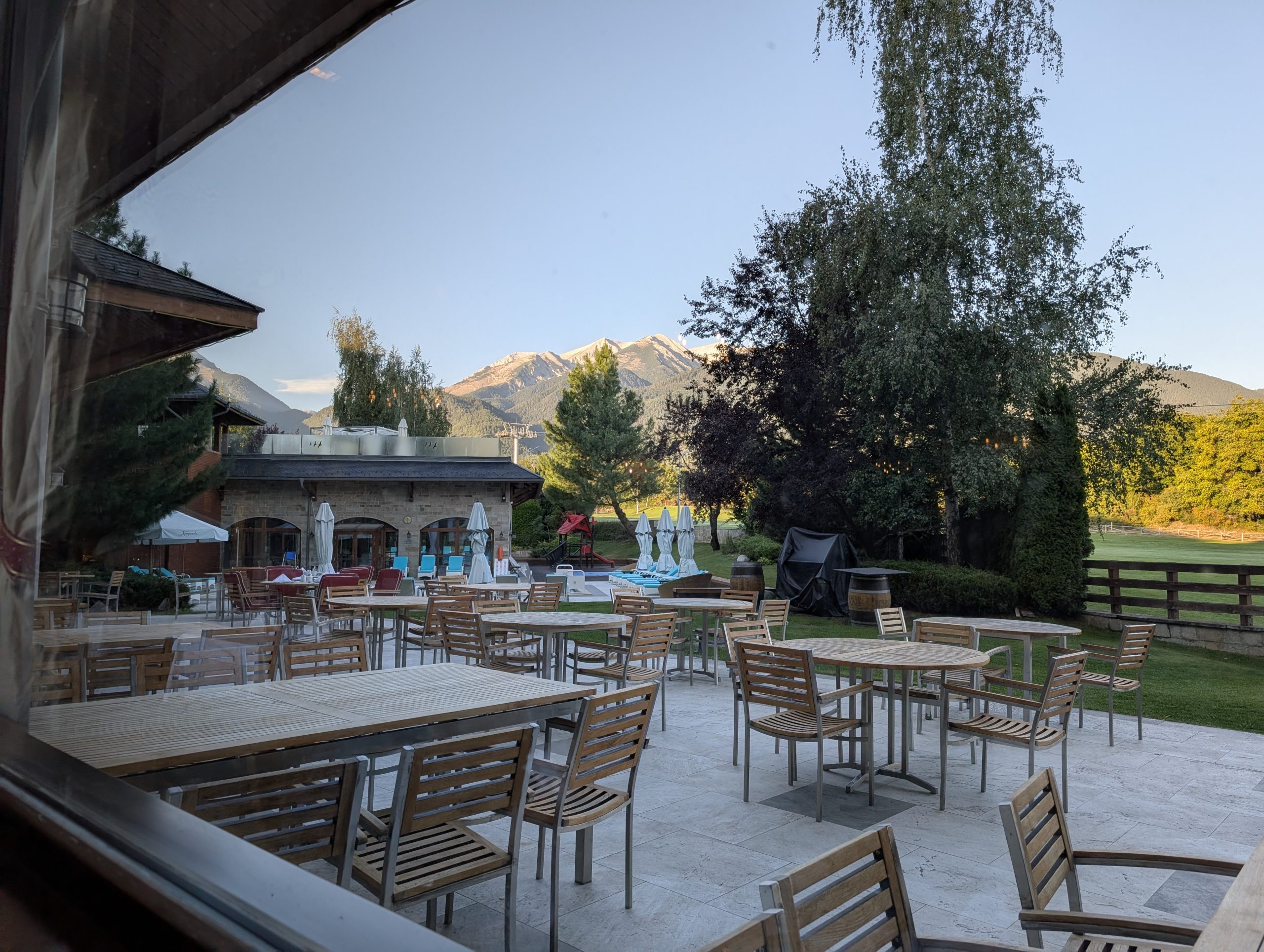
We stayed at the Kempinski Hotel, located near the ski gondola. The hotel had a lovely heated outdoor pool that faces the mountains. The afternoons were warm and sunny and a few of us enjoyed the pool and in the inside spa facilities both evenings. We had a lovely dinner at the hotel – salmon trout, pumpkin soup, tiramisu and unlimited local wine.
The new part of town where the hotel is located is a hodge-podge of apartments, hotels and tacky buildings thrown together in the building boom of the last 25 years. We stayed at the Kempinksi hotel for two nights.
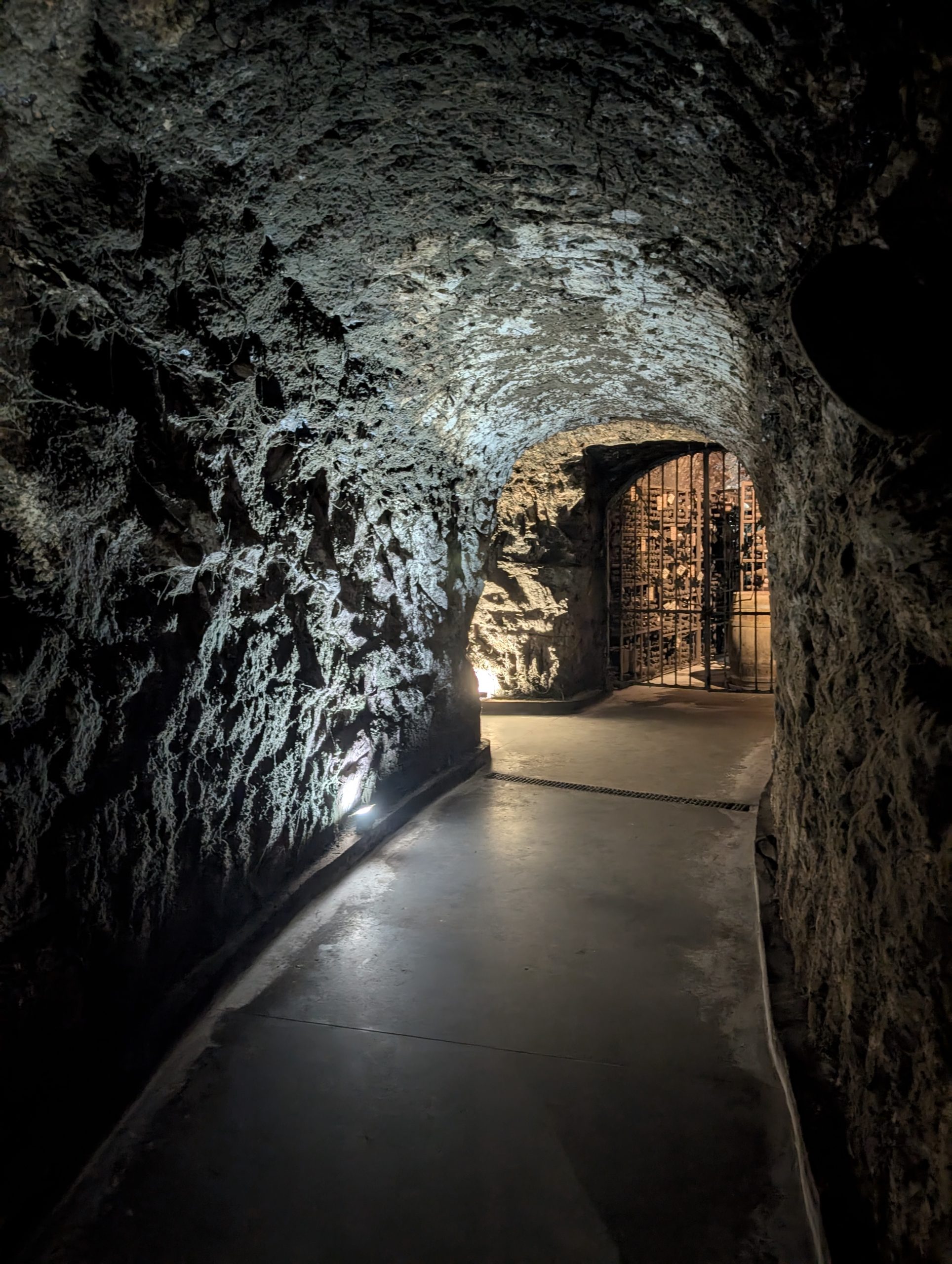
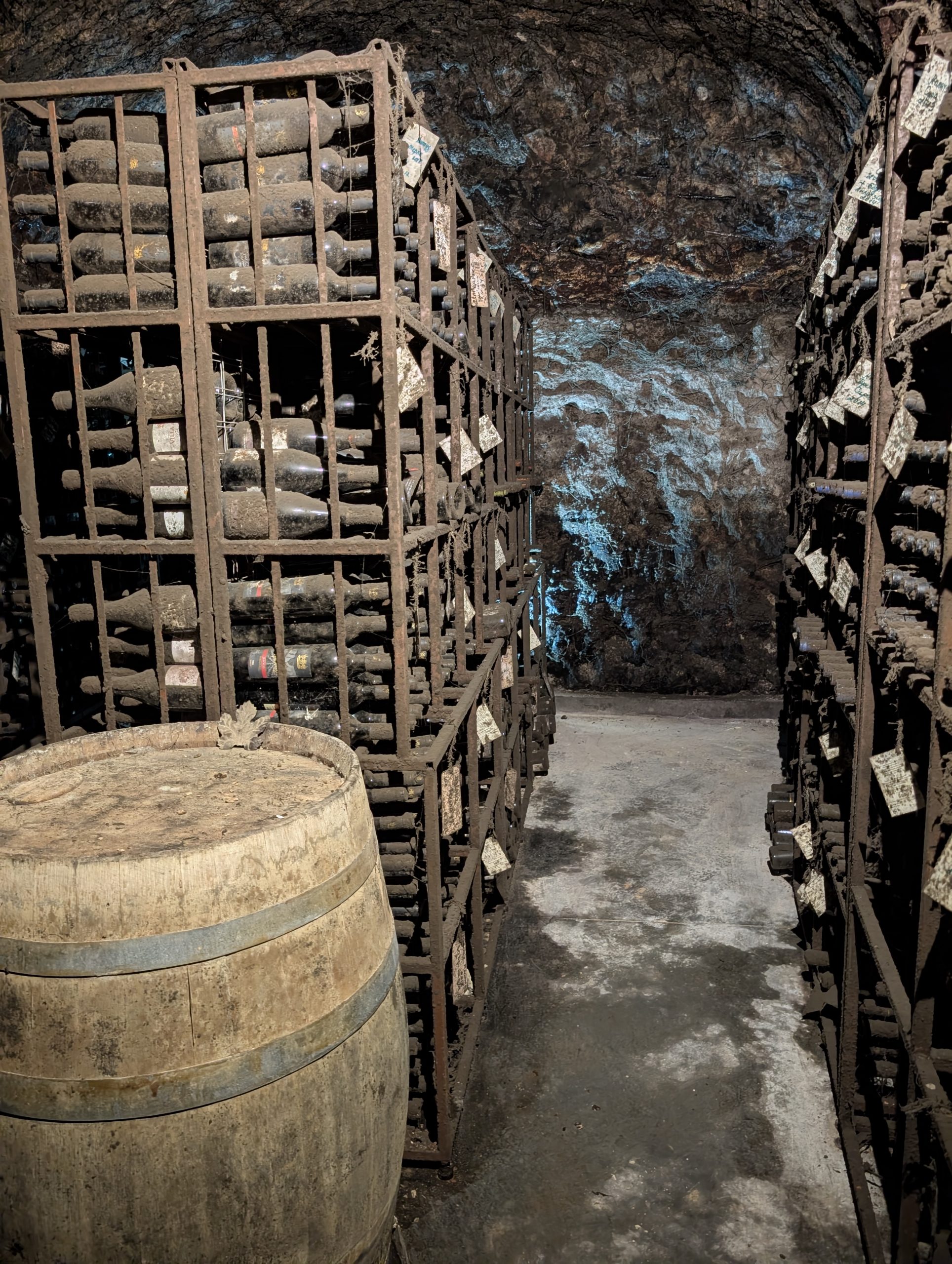
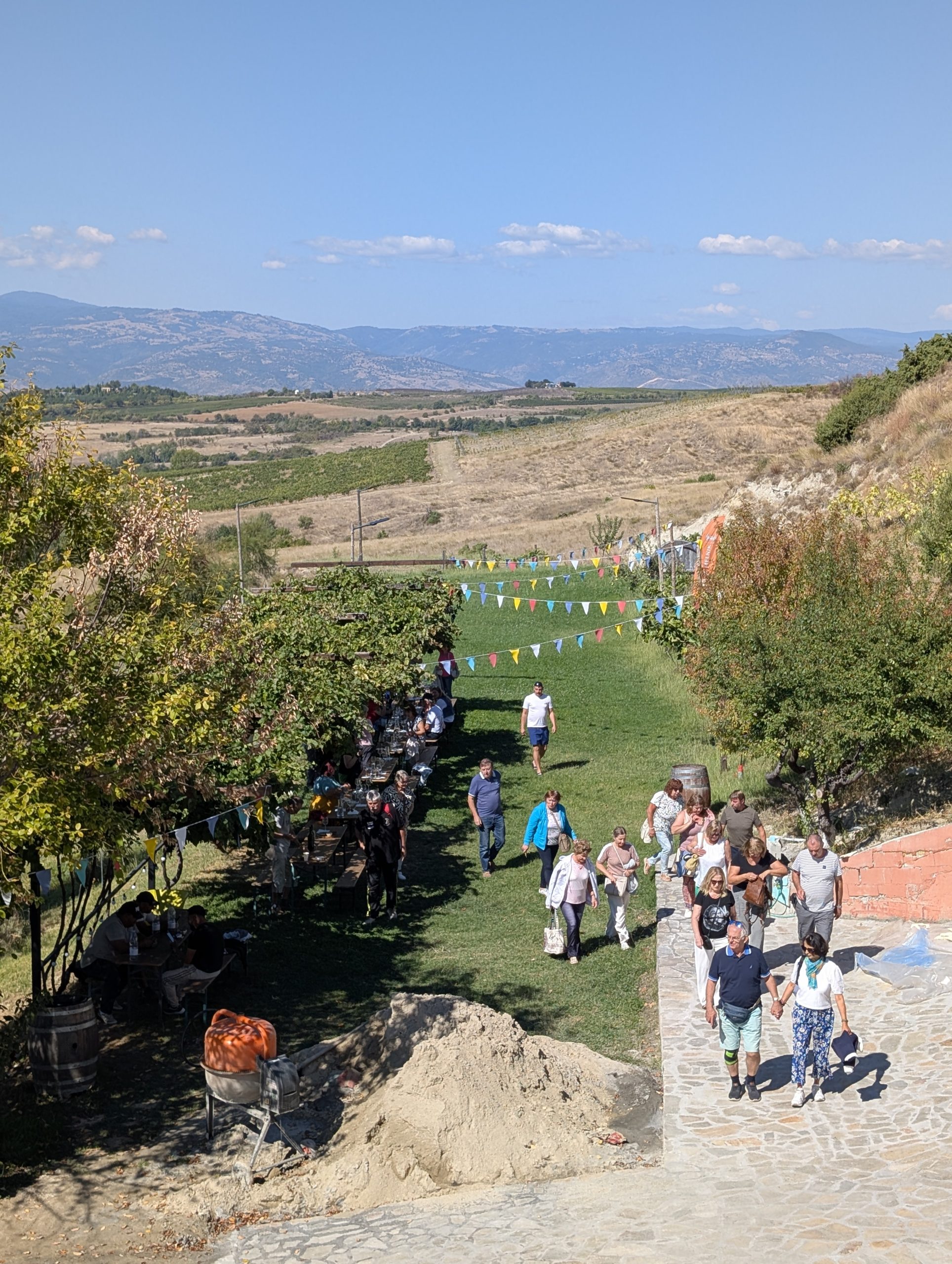
Our second day included a 2 hour rive to the Melnik Winery, located close to the border with Greece. We had a tour of the winery with a humidity. I am a little tired of going to tours of wineries and distilleries. It is the tastings that I enjoy. While in Bulgaria I discovered a favorite red blend – Mavrud.
We had lunch at a traditional Bulgarian tavern (Mehana Aleksova Kashta) in the town of Melnik. The meal was served family style and included an excellent sald, chicken and pork with rice, fires, fresh homemade bread and homemaid ice cream. This town dates back to pre-Roman times when the Thracians settled there. A river runs through the town but it was completely dry when we visited. During the 17th and 18th centuries the town thrived with tobacco and wine production as well as wood craftsmanship and church décor. It is known also for the rock formations that look over the town. Only 78 people now live in town now.