18
Sep
2026

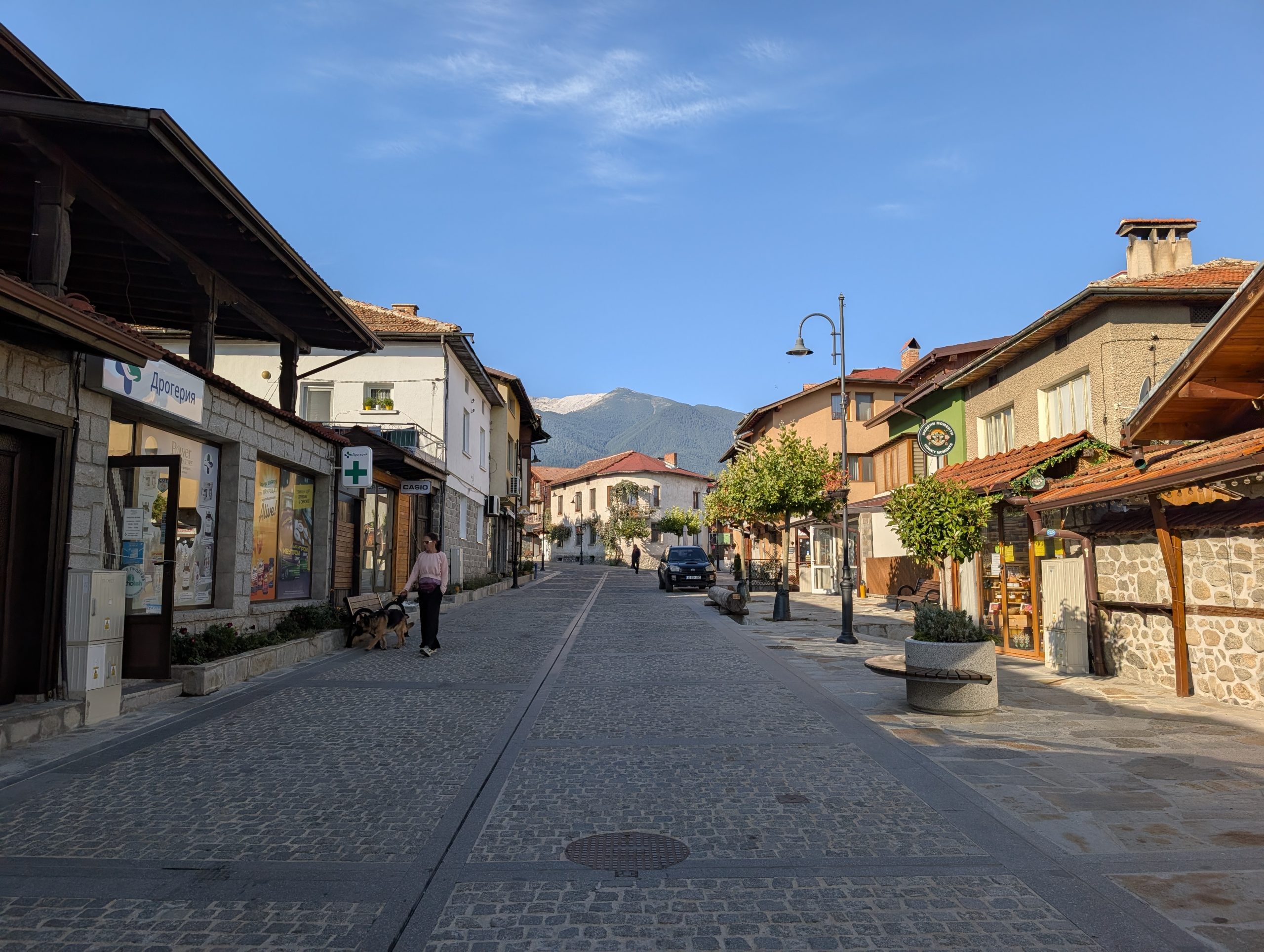
In the morning before our departure from Bansko we took a walking tour of the old town. It really wasn’t that far from the hotel and we should have ventured down the hill a bit for a better dinner experience the night before.
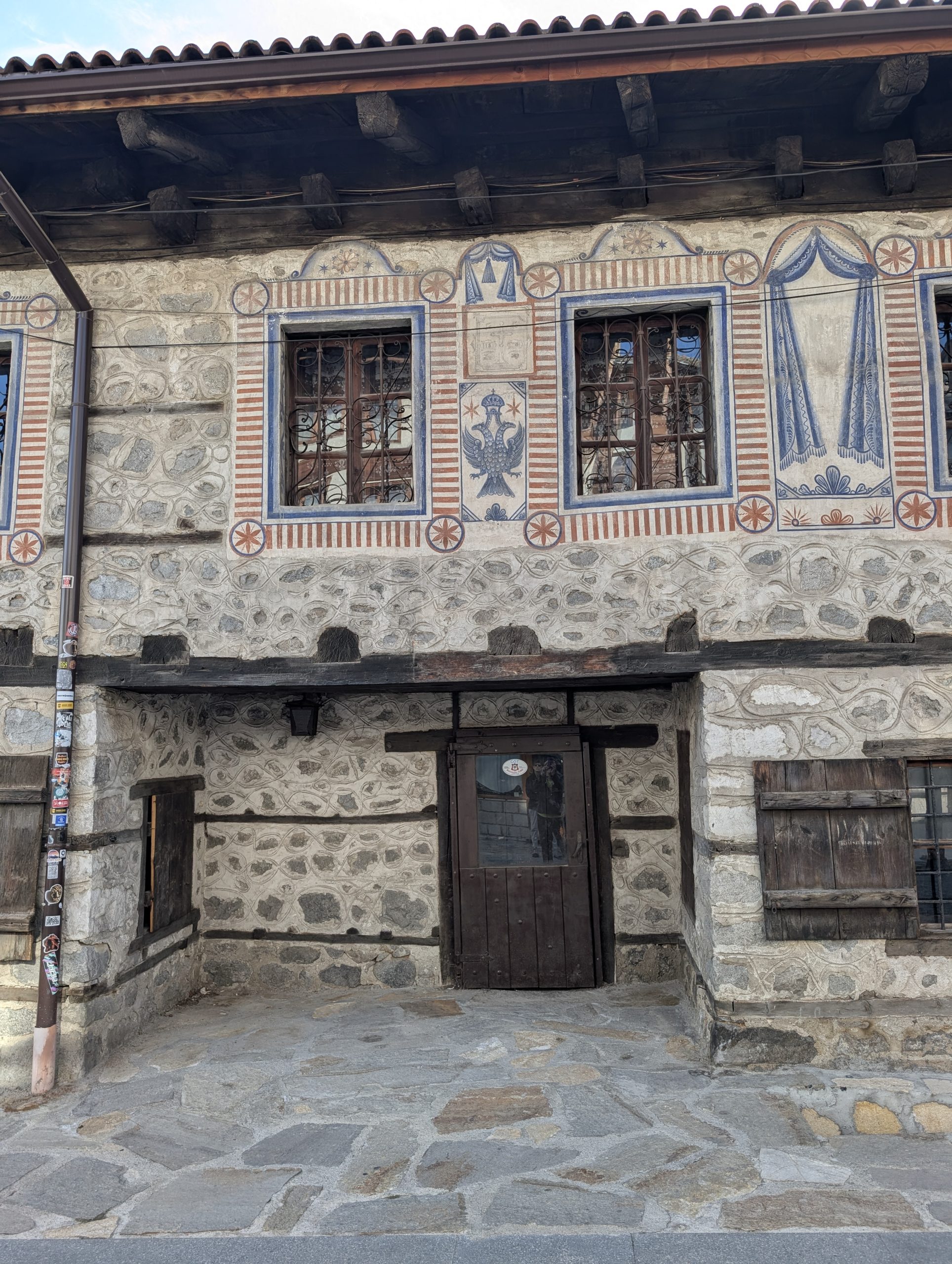
The town has been on the trade route from Sofia to Thessaloniki for a thousand years. A few very old houses still exist from the 16th century. One of the oldest houses is now a barber shop.
The poppy seed trade in the 19th century was used to fund arms purchases for various wars. Bansko was under the rule of the Ottomans during the 19th century. The Ottomans allowed the Christians to practise their religion if they followed the rules – many families had to pay a blood tax by giving them one of their sons to join the Sultan’s janissery army. They had to pay the Ottomans a livestock tax – 50% of their stock each month. In order to build an Orthodox church, they had to get permits and follow strict guidelines – no outside crosses or bell towers. The height of the church could be no taller than a man on a horse – thus many of the churches built in the 1800’s had their entrance level built half underground. We visited the ornate Holy Trinity Church in Bansko. It was built in the basilica style, partially underground with a flat roof and an unusual bell tower. Pictures inside are not allowed but I snuck a couple when the church ladies couldn’t see me.
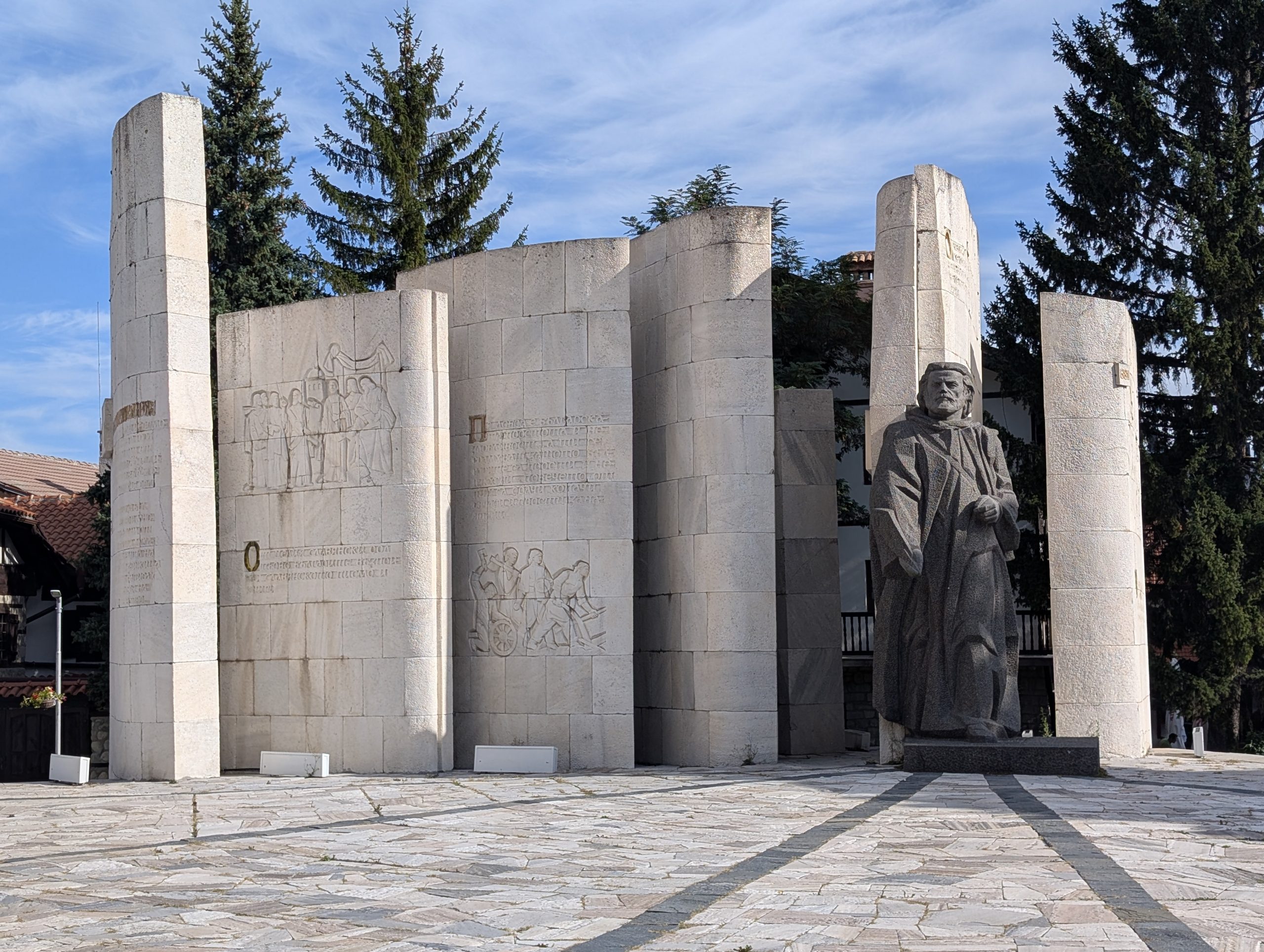
The “hero monk” who established the school at the Rila Monastery was born in Bankso and his house remains. In the main square of the town is a statue of another monk called Paisii Hilendarsky. He wrote the first history of the Balkans in the 1750’s and is remembered for that work. It was the first attempt at a comprehensive history of the Bulgarian people and served as the spark for the Bulgarian National Revival, aiming to awaken national conciousness.
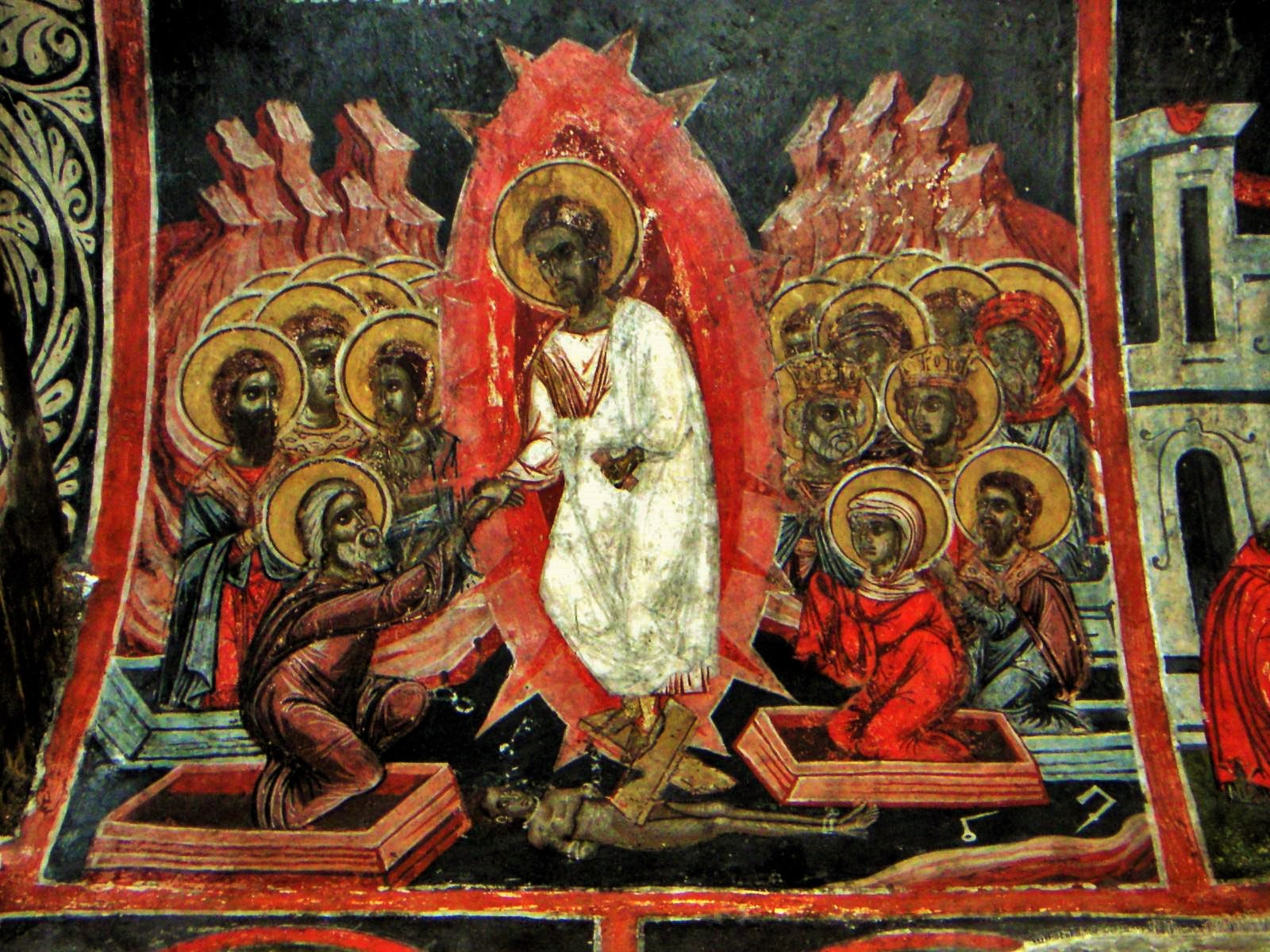
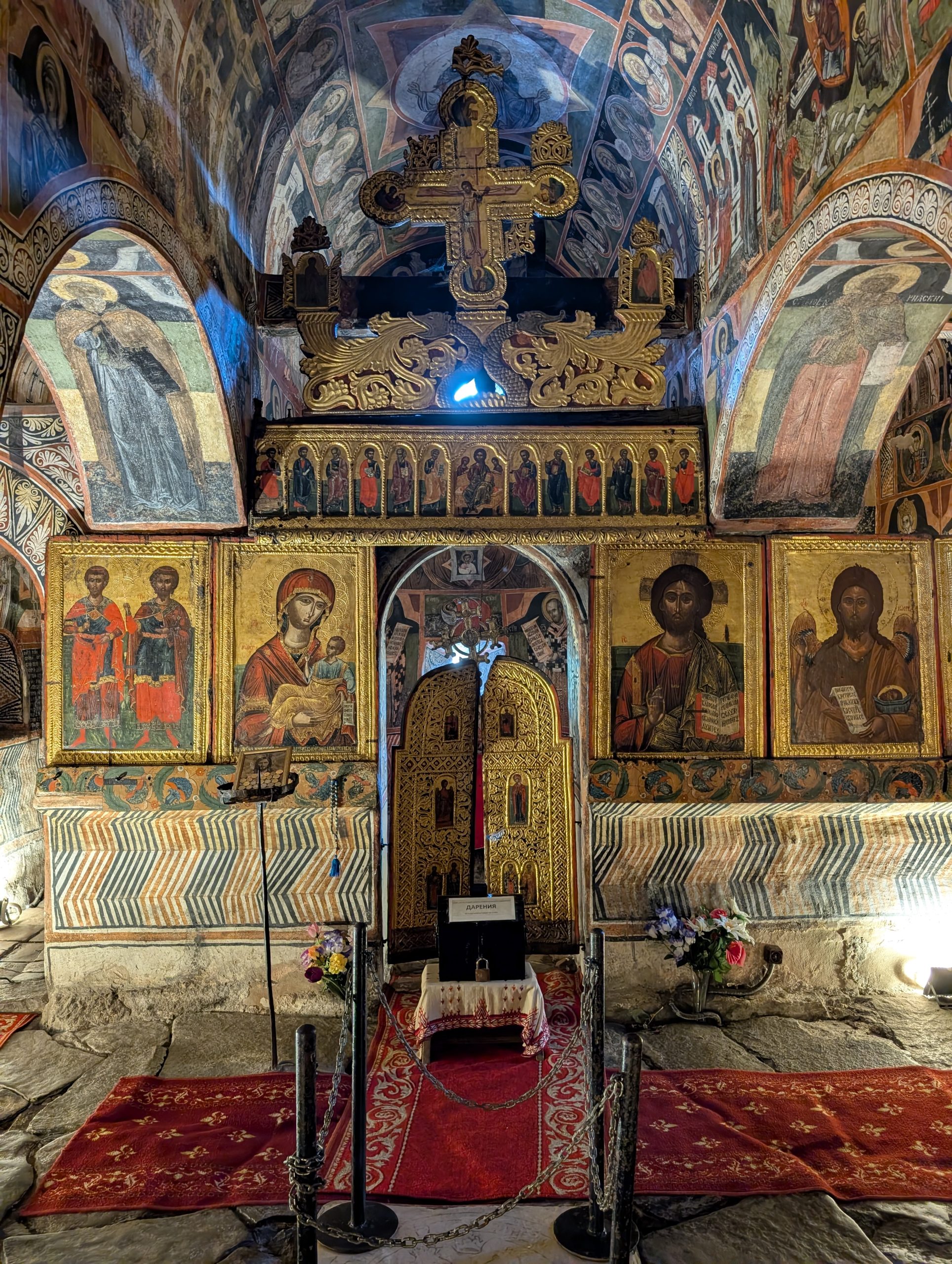
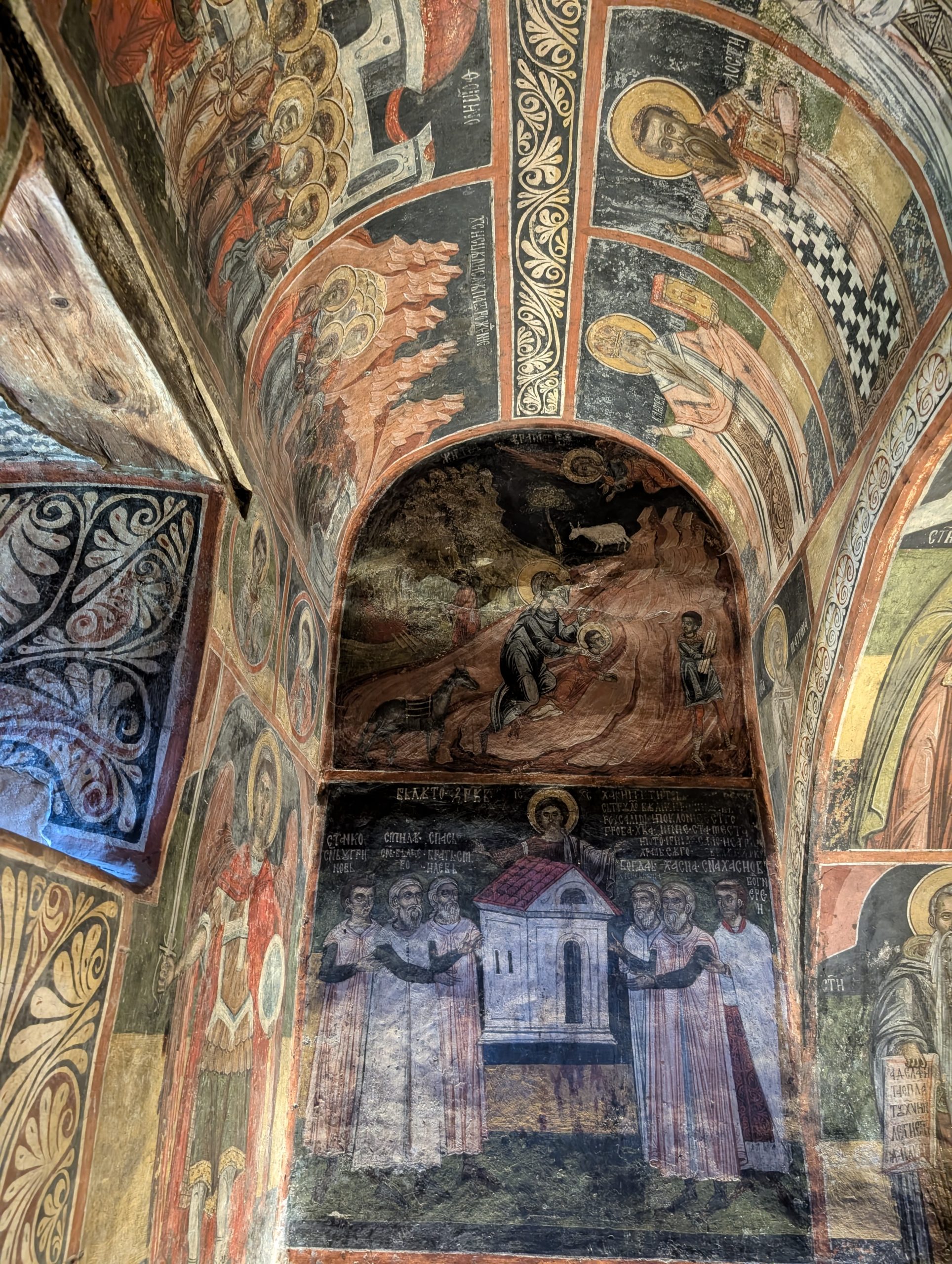
We boarded our bus and headed over the Rhodope mountains to the small village of Dobraska. The town is located close to the Greek border and is surrounded by mountains – Rila, Pirin, and the Rhodopes. It was a very quiet place and several locals had setup tables to sell their honey and jams just outside the church where we had lunch. We had a private tour of the tiny Dobarsko church. Named for St. Theodore Tiron and Theodore Stratelates built, the church was builit in the early 1600’s. The inside of the Dobarsko Church is covered with colorful frescoes with 460 human figures including many women saints. The most famous frescoes depict Jesus in what looks like a spaceship surrounded by flames.
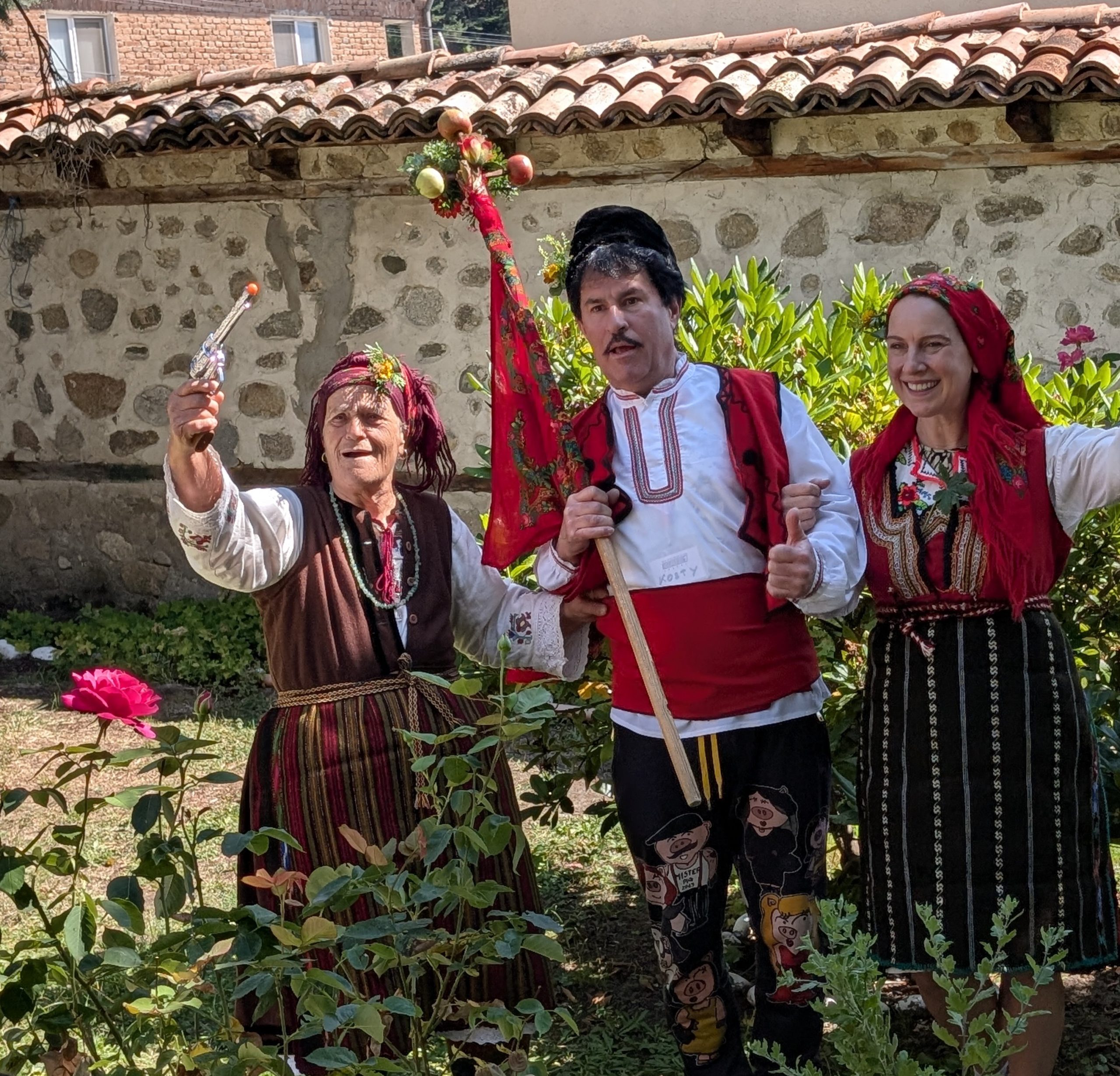
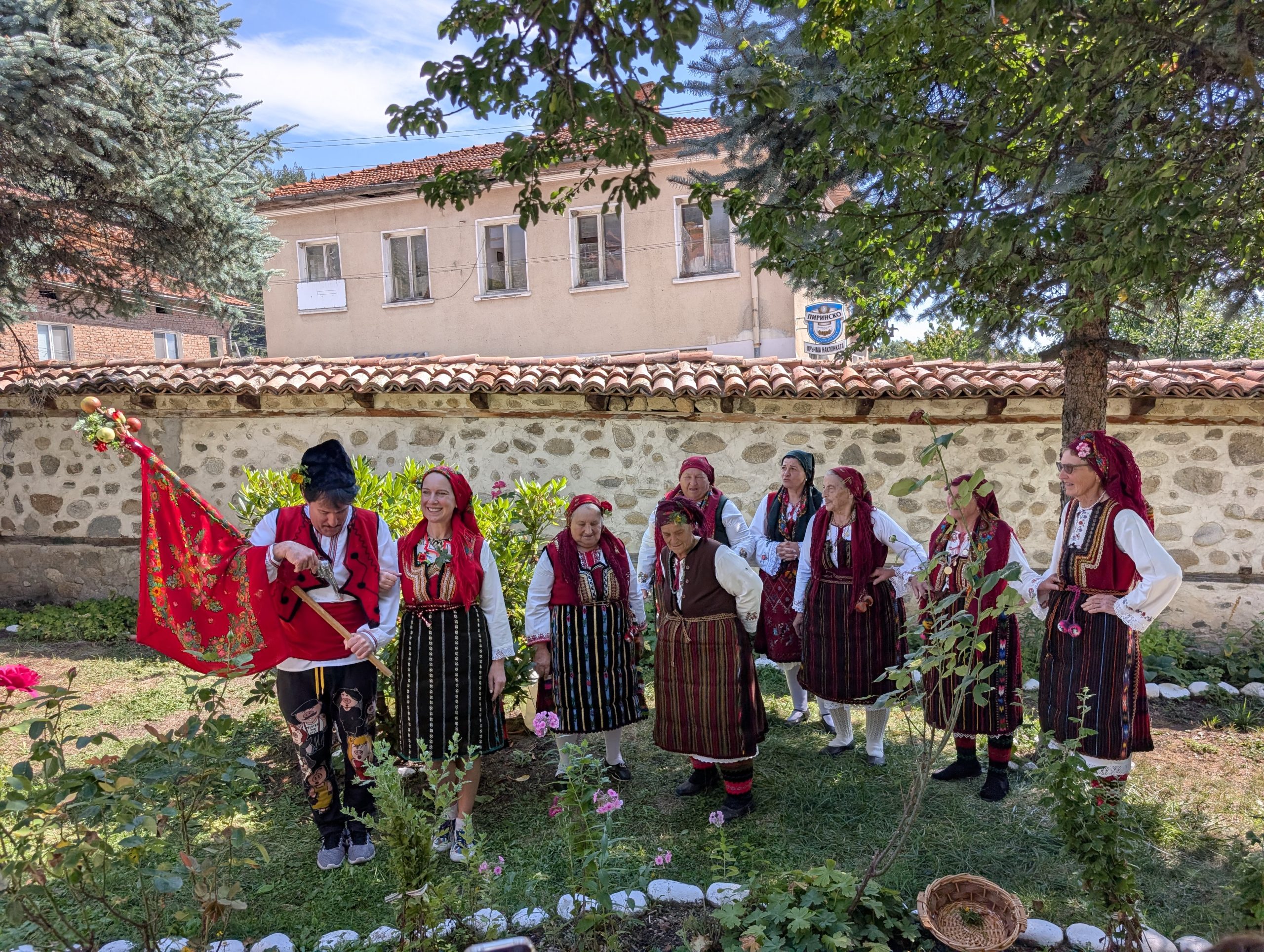
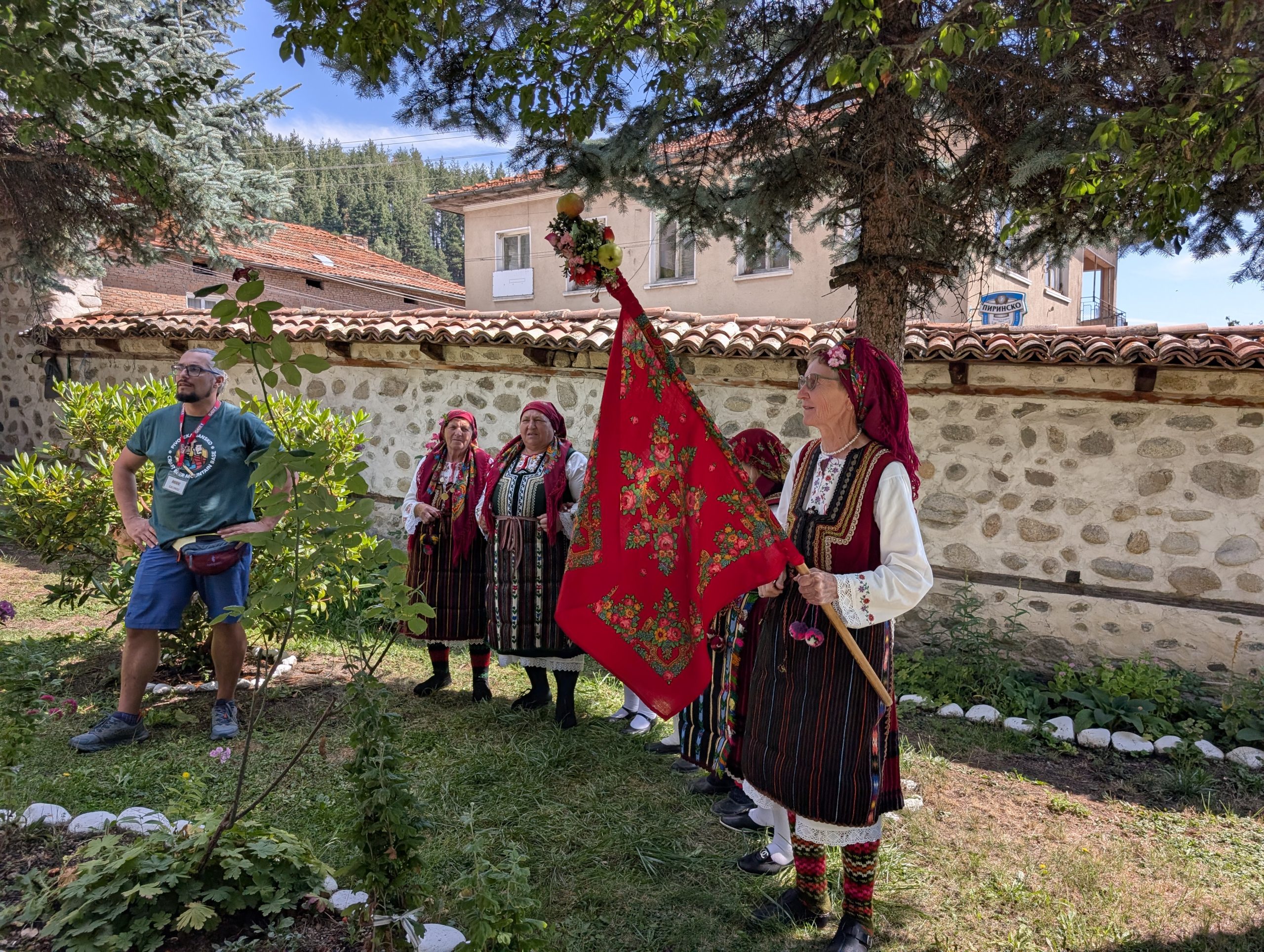
After our visit to the church, we were greeted in the church yard with a lovely performance by the Dobarsko Grannies, a singing group who maintain their region’s folklore traditions of Vodichni songs. Dressed in traditional costumes, they tell stories and sing songs from hundreds of years of village tradition. Our tour guide translated their songs and they finished up the performance with a wedding enactment using two of our tour members as the bride and groom. Fun was had by all and then we got to taste their delicious cheese banista (similar to tiropita).
We continued our drive towards Plovdiv. Along the way we saw many abandoned farms. During the Communist years there were many collective farms. After the fall of communism, many Bulgarians left the country for greener pastures and most of the collective farms sit unused with their buildings in disrepair. Our guide lamented that Bulgaria was losing its agriculture and starting to import food.
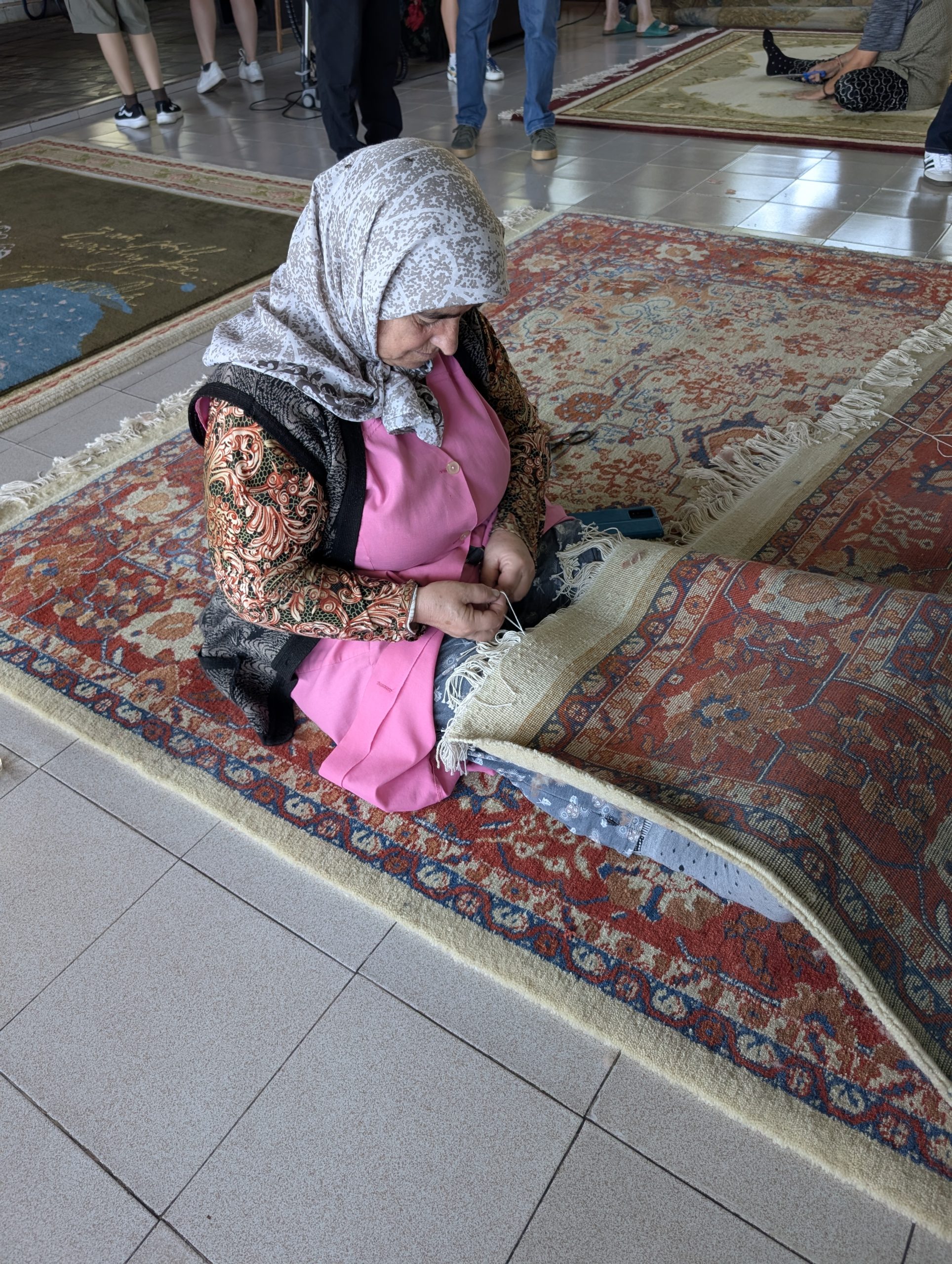
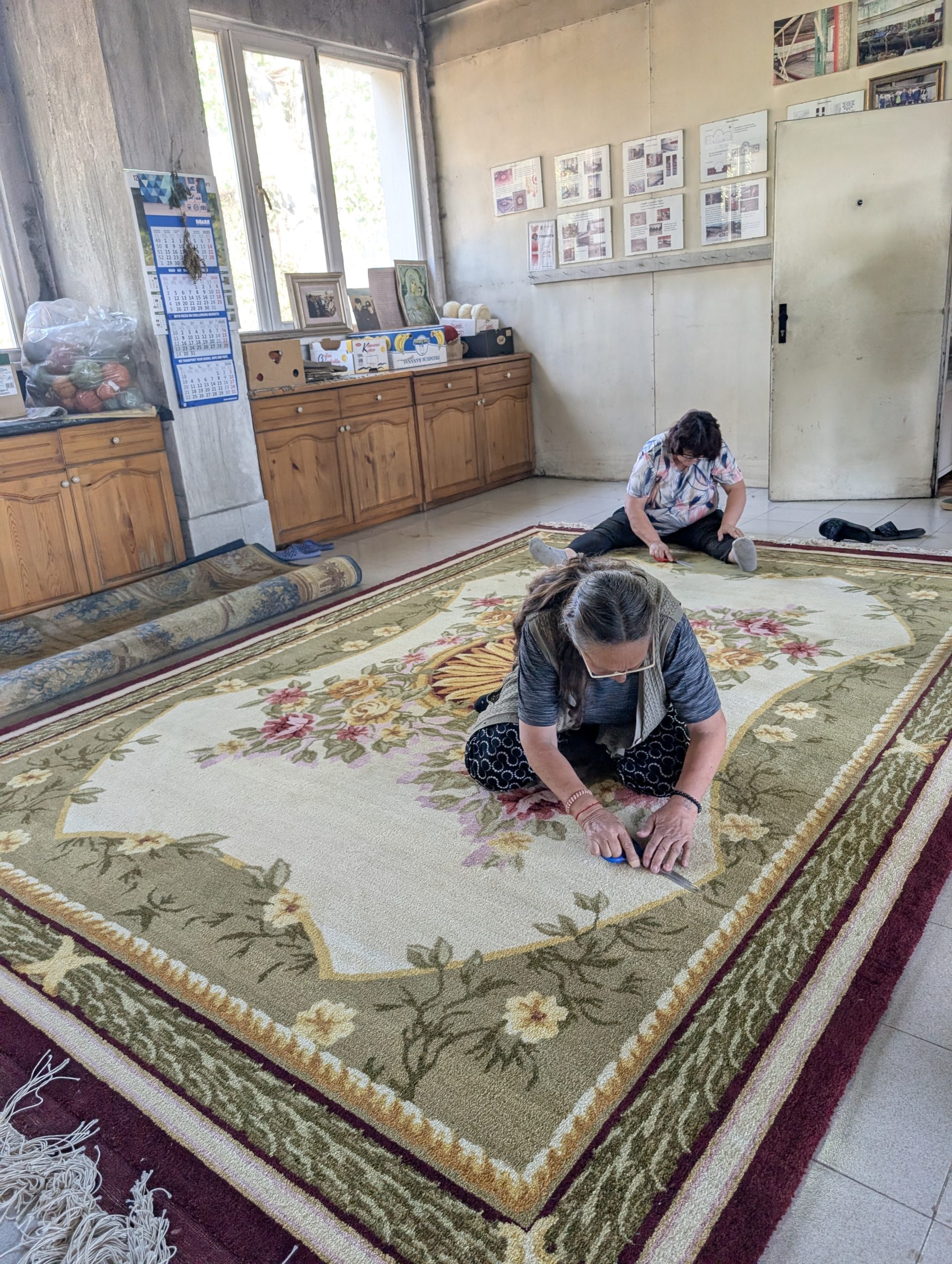
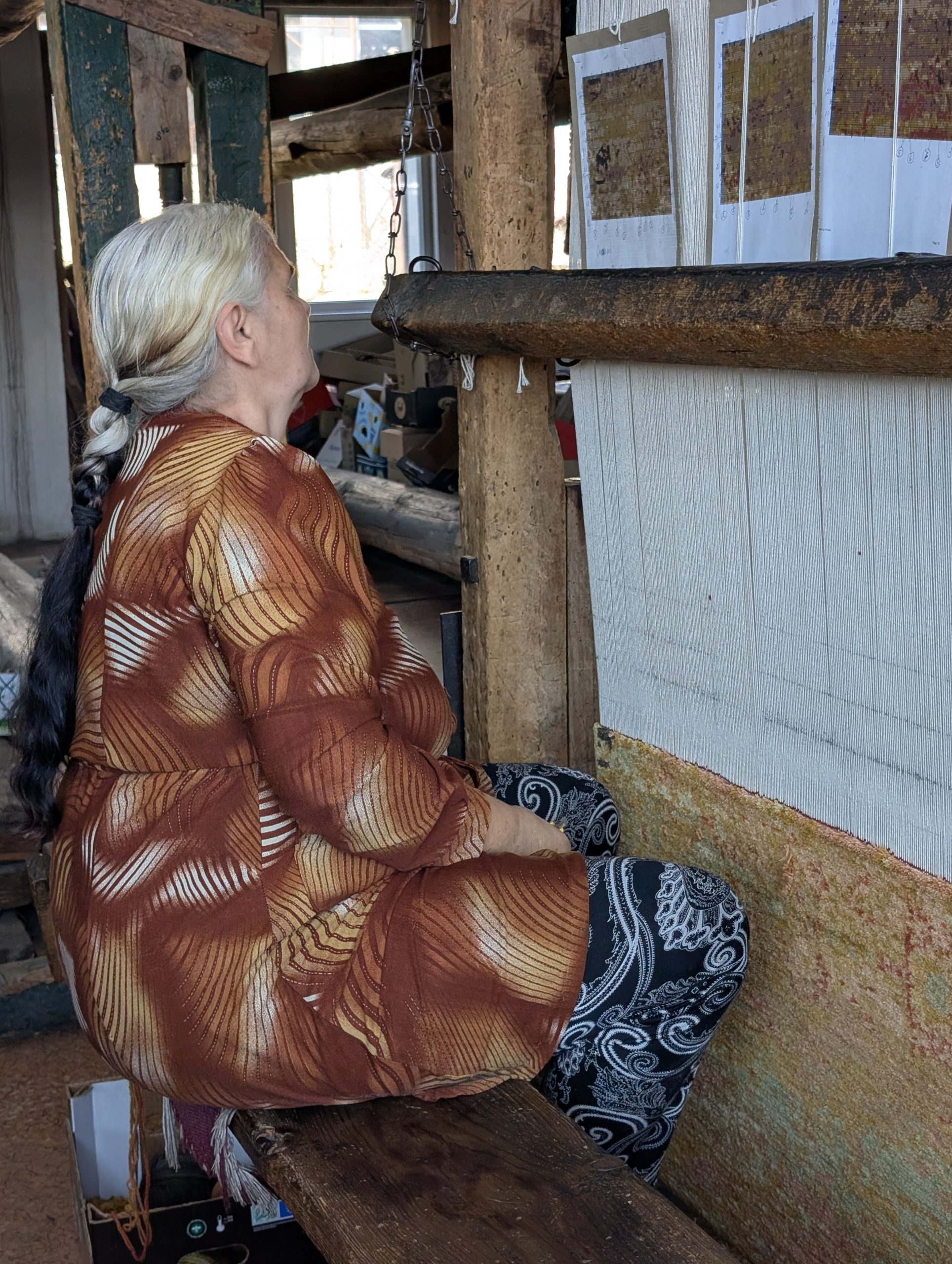
A highlight of the afternoon was a stop at the Hemus Carpet Factory in the small town of Kostandovo. This was not one of those “tours” where the tourists are encouraged to purchase a rug like you find in Morocco and Turkey. It was truly a place where intricate, hand-woven carpets are created by a team of elderly women. The largest loom in europe is found here and they make custom rugs for British royalty. The carpets are all made from wool and have intricate patterns with many colors – the wool is hand dyed in the factory.
Our final destination was the town of Plovdiv for a 2 night stay. Our hotel was the Radisson located a bit away from the Old Town and entertainment districts. The breakfast was decent, the air conditioning worked well and the windows did open. We had great views over the city and the sunrise. The hotel was full of business people – many women in pants suits, spike heels, long straight hair and Botoxed faces.
In the evening, we took a 5 euro taxi ride to the Kapana entertainment district for dinner. There were restaurants everywhere, all with outdoor seating. However, on a Friday night it was difficult finding a place to eat dinner without reservations. We finally snagged a table inside at a restaurant. We had a lovely dinner and chatted with a British couple who were seated next to us.