19
Sep
2026

We had a great day exploring old city of Plovdiv and it’s major sites. Georgi led us on a walking tour of the Old Town. There were many cobblestones and hills – the cane walkers joined us for parts of this walk but they struggled and had to drop off.
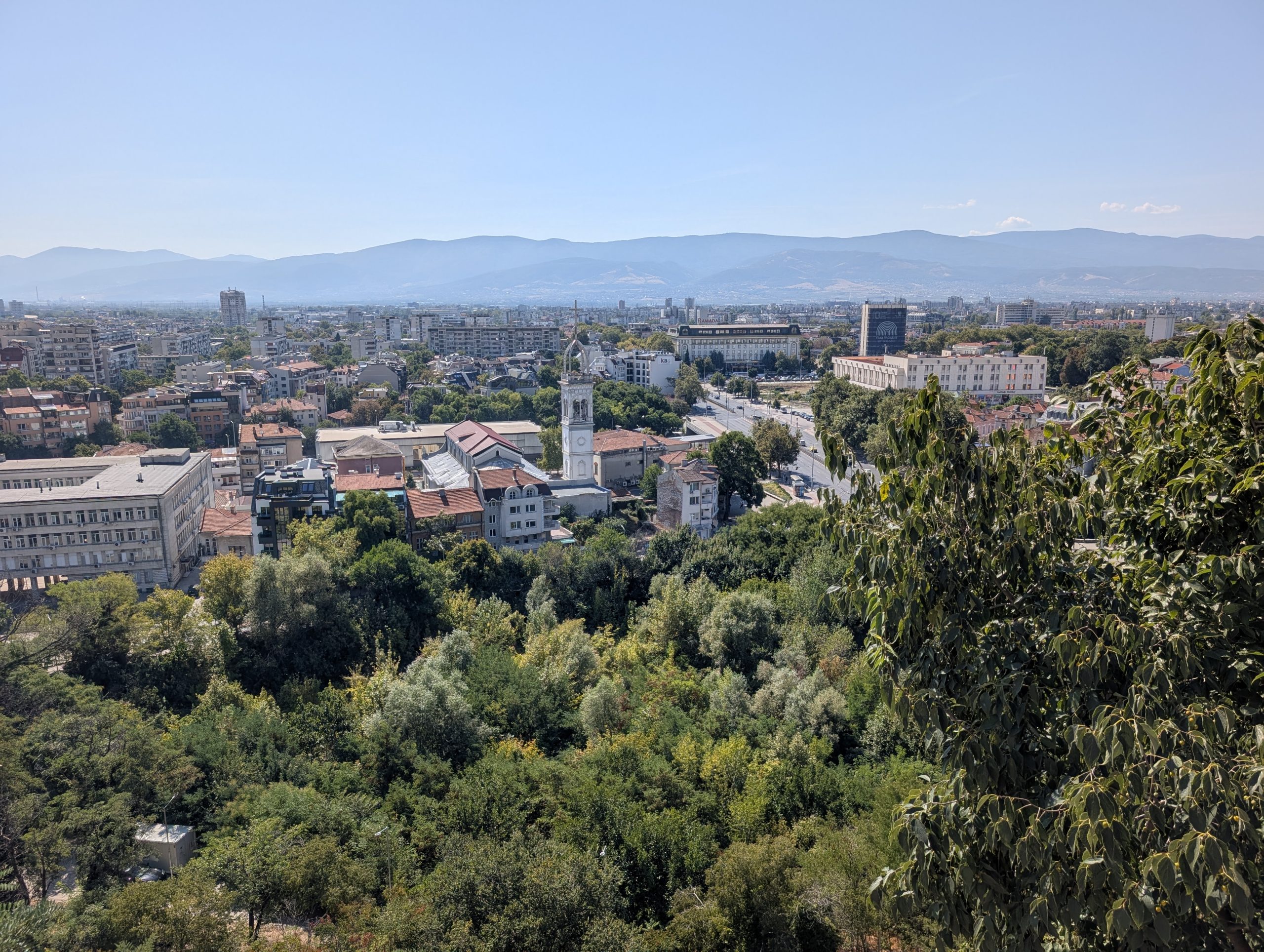
Plovdiv is Bulgaria’s second-largest city and one of the oldest continuously inhabited cities in Europe. Its history spans more than 6000 years. The city is built around seven hills along the Maritsa River and has Roman ruins, a beautifully preserved Old Town, colorful 19th-century Bulgarian Revival houses, and a lively modern cultural scene. In 2019 Plovdiv was named European Cultural City of the year. There are only six hills now because the Communists destroyed the seventh hill to quarry its stone in the 20th century.
During Thracian times, the city was known as Philippolis, named for Phillip II of Macedonia in 342BC.
Our first stop was The Bishop’s Basilica of Philippolis. A pagan temple was first built here in the 2nd century combining Greek and Roman architecture. The Christians later used the site to build the Bishop’s Basilica. It was a sumptuous place where the liturgies were performed in the early Christian church. The site is known for its extensive floor mosaics, 2000 feet. Worship at this site ended around the 7th century but it was later used as a necropolis and there are remains of houses found here. The site was fully excavated between 2015 and 2019 when it opened to visitors.
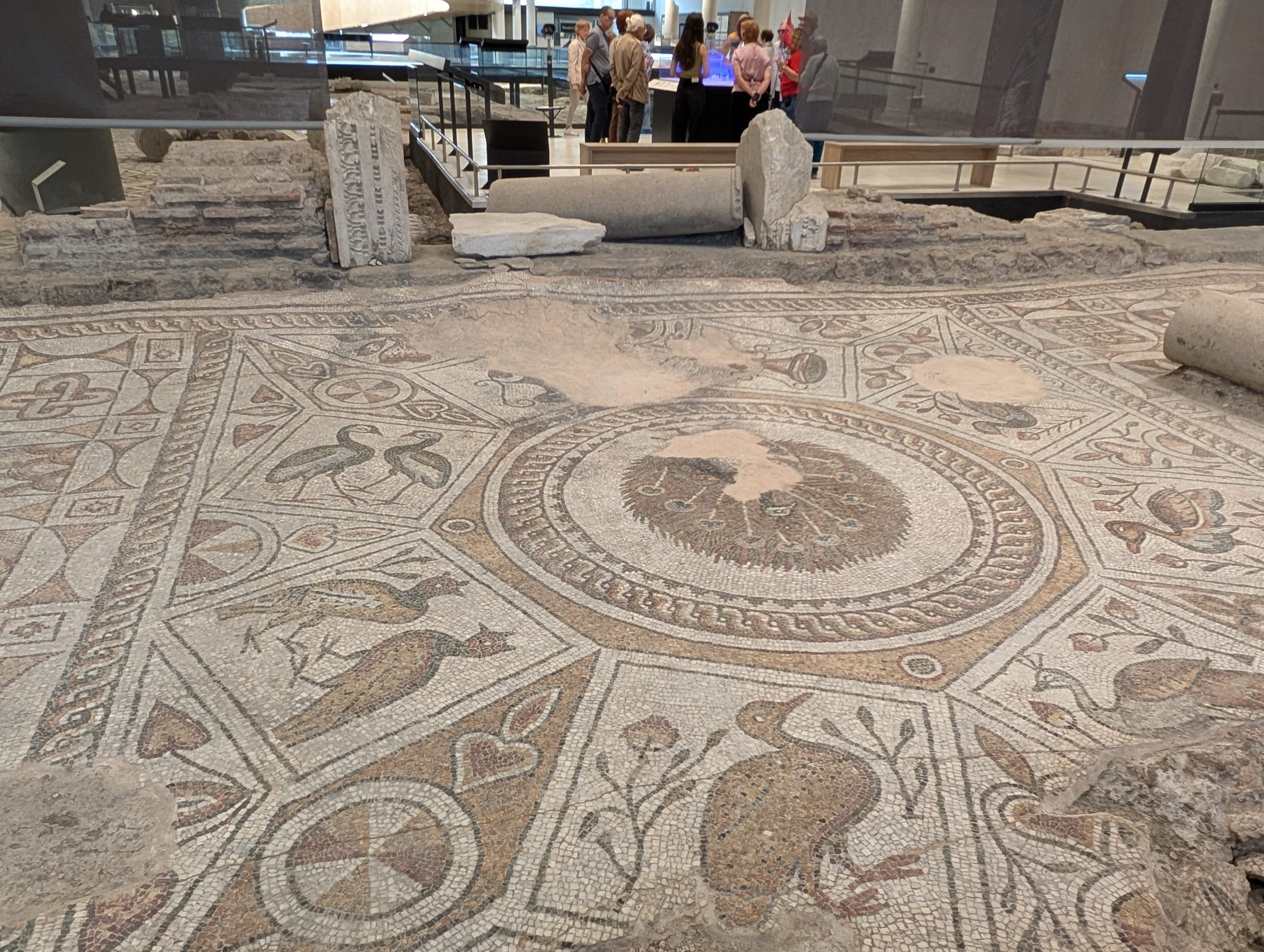
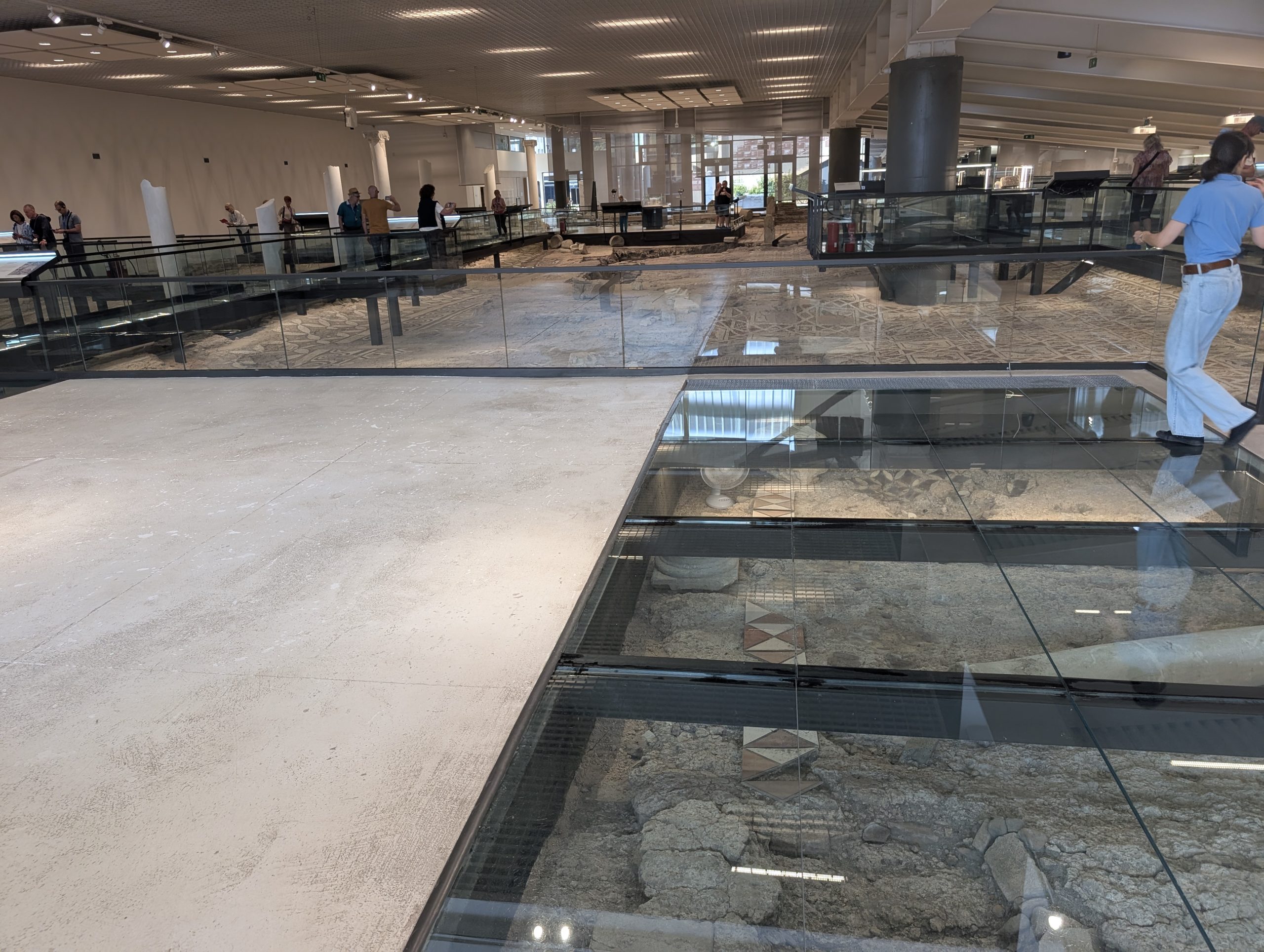
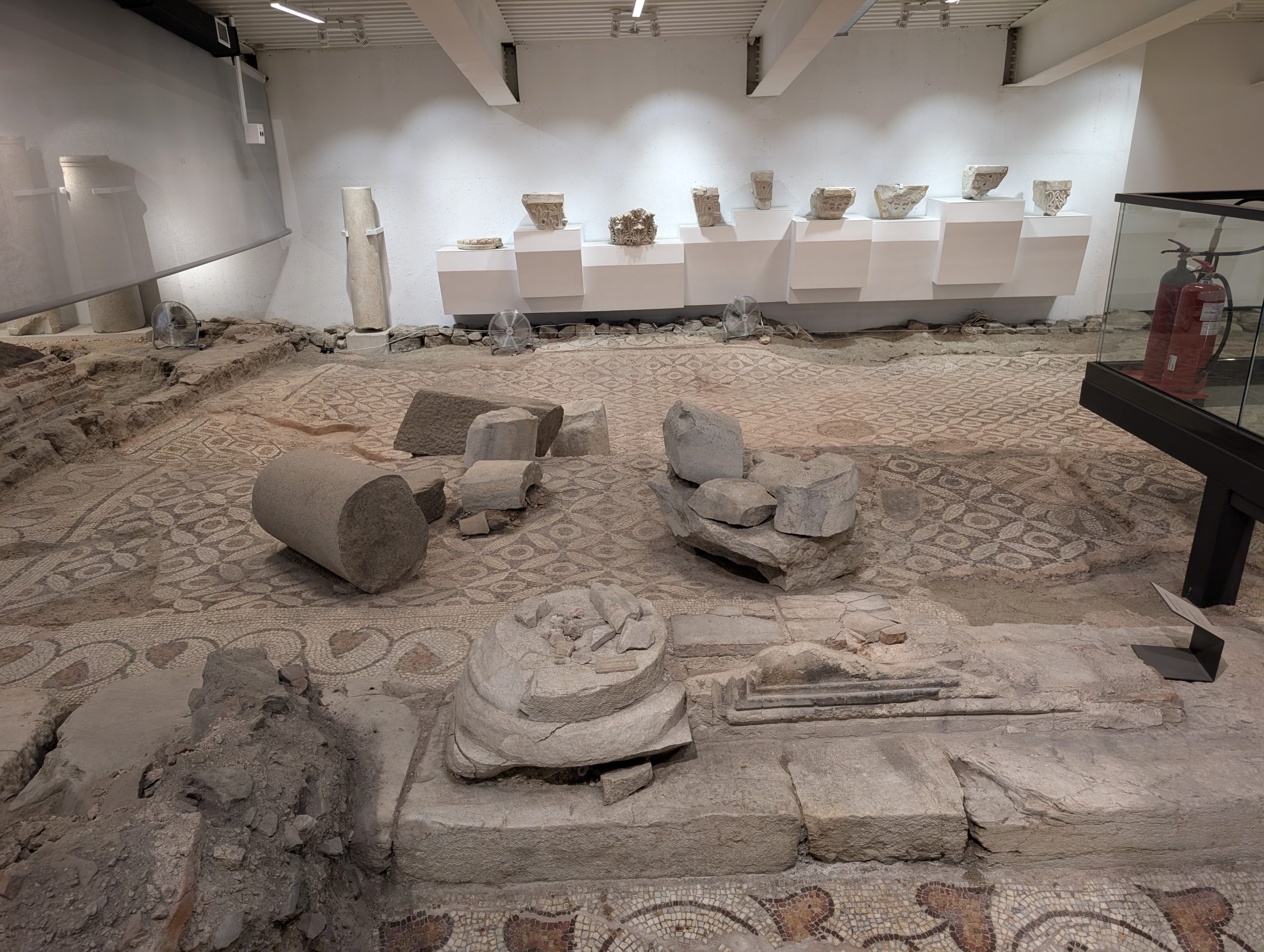
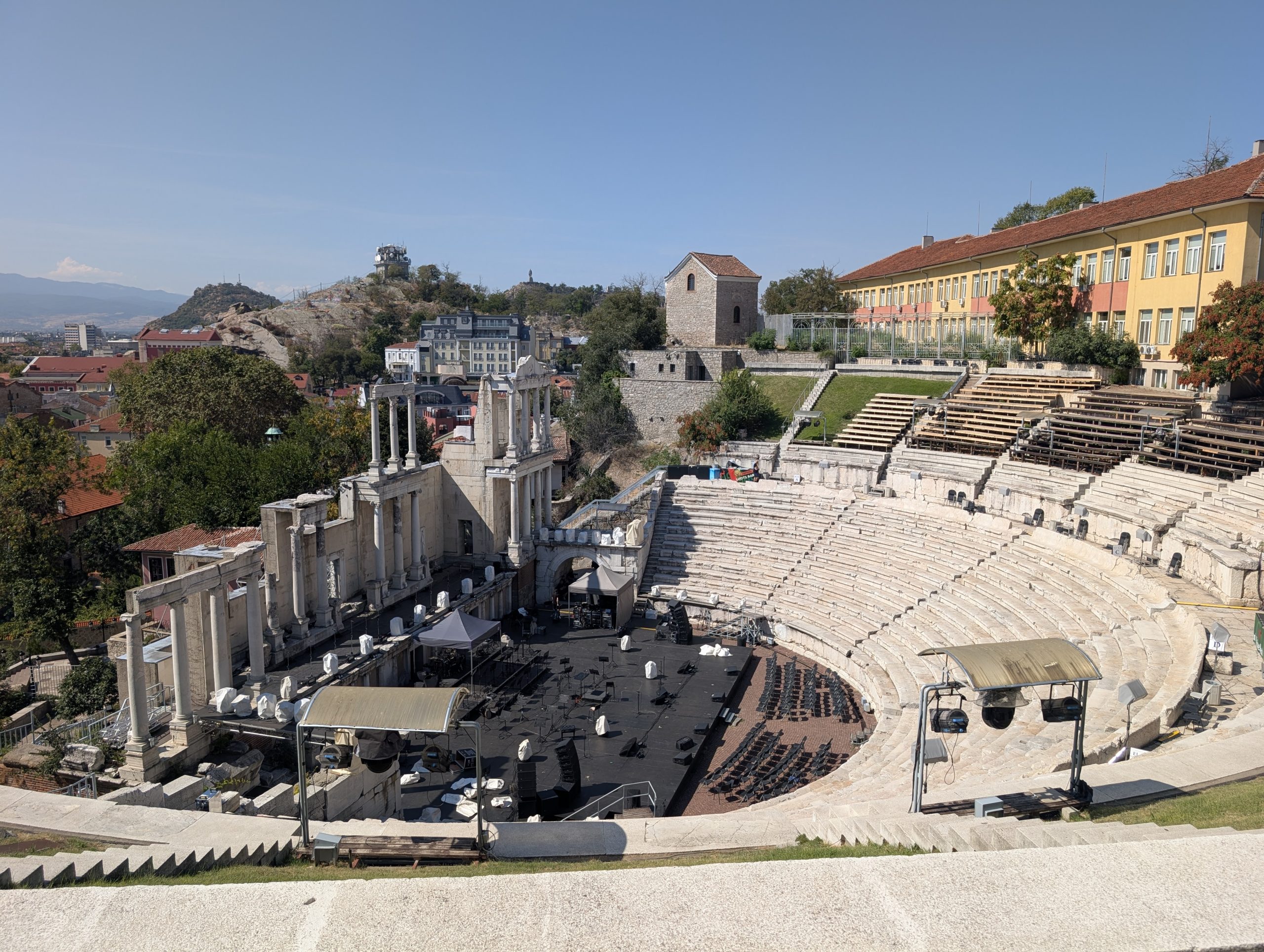
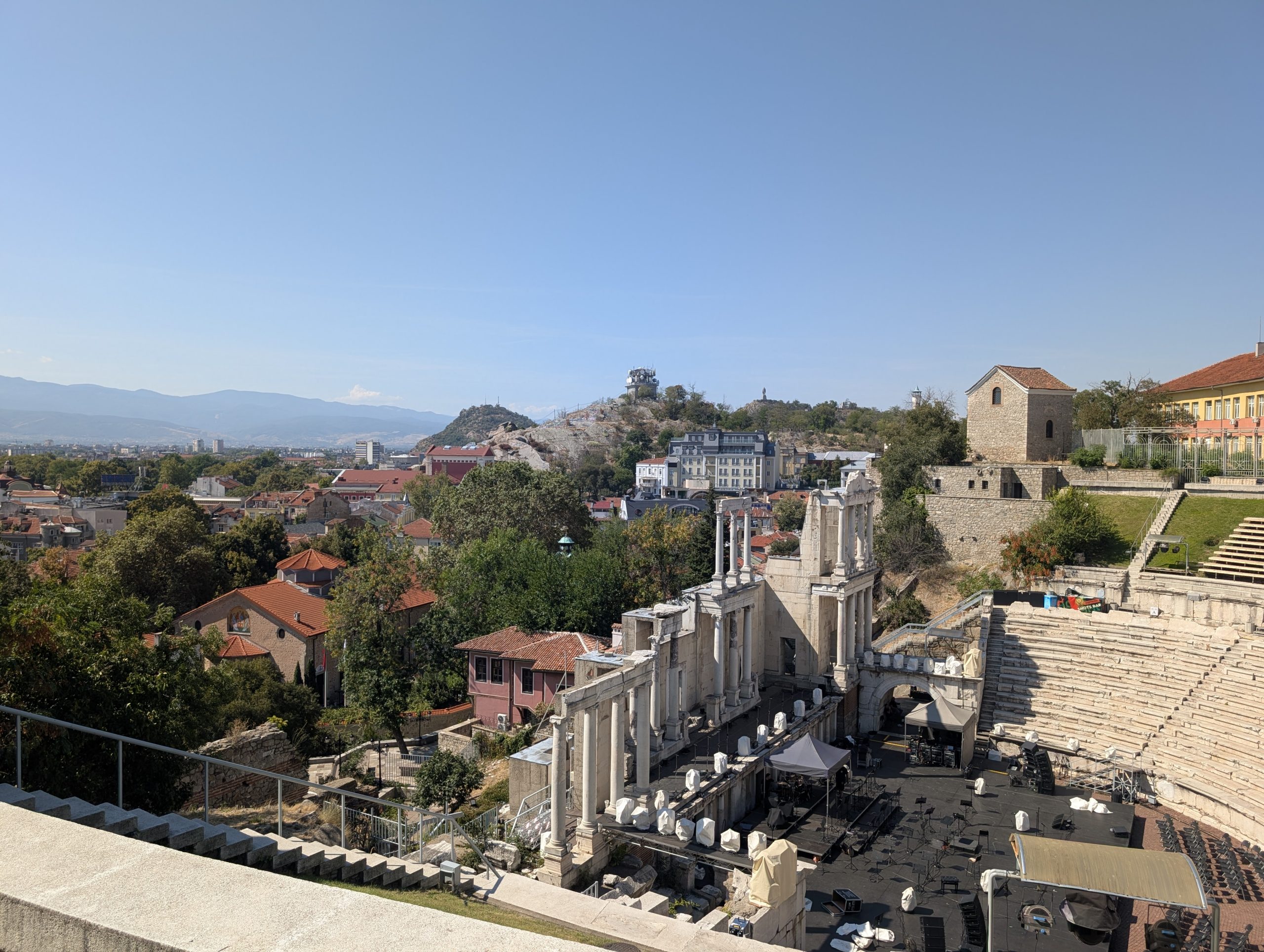
Scattered throughout the city are Thracian, Roman, Byzantine, and Bulgarian antiquities. The Ancient Theatre of Philippopolis is one of the world’s best-preserved ancient theaters. Built in the 1st century A.D., the theater is still used today for concerts and other performances. It was only discovered in 1987 after two earthquakes revealed the ancient structure.
In the middle of the town near the pedestrian street and in front of the mosque is an ancient stadium that sits under the street and easily visible. Built in the early 2nd century AD, the stadium once held athletic festivals, imperial celebrations, animal fights, and gladiator contests. Only part of the structure is visible today. Everywhere you turn in this town are visible ruins from previous civilizations.
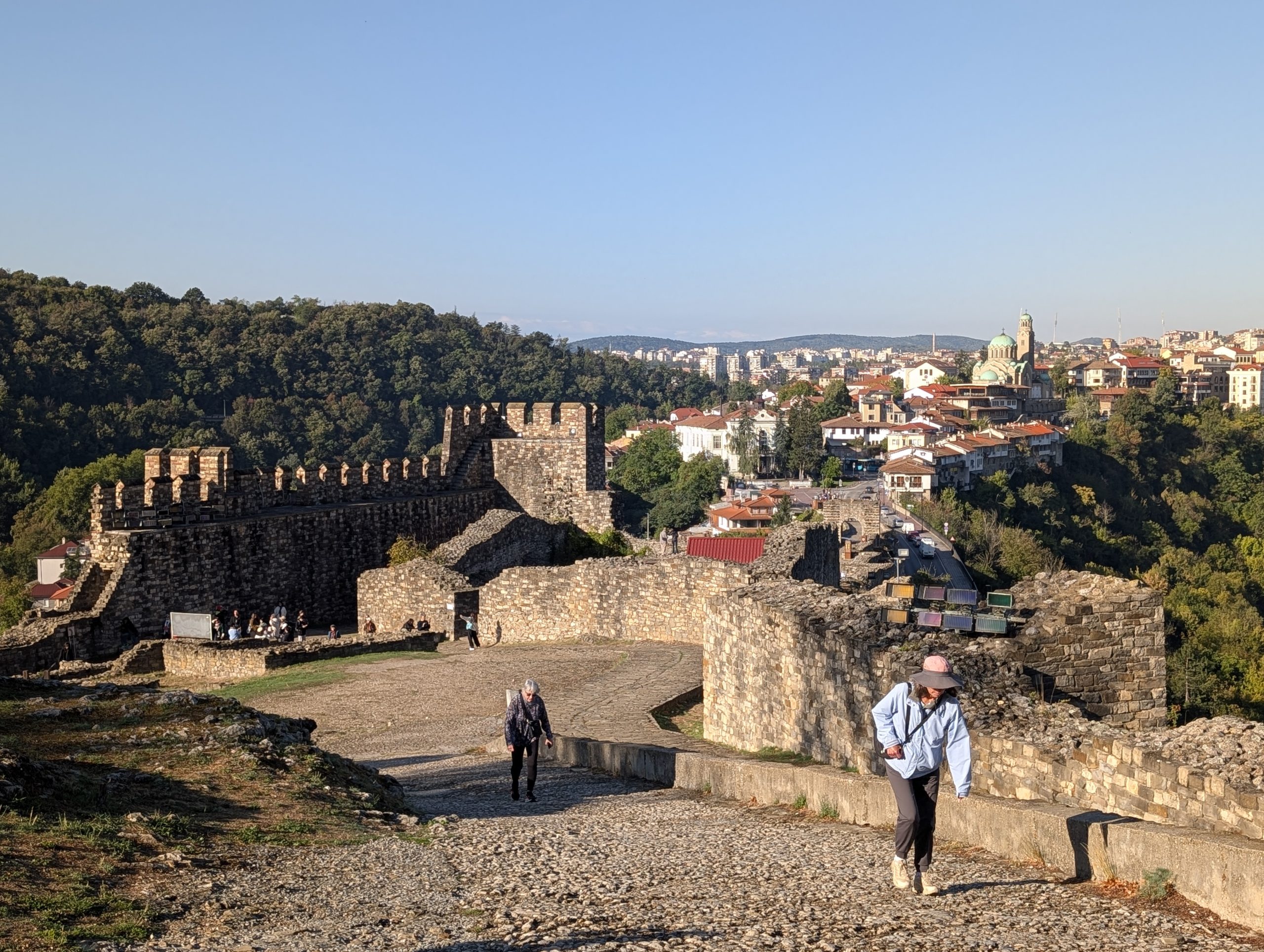
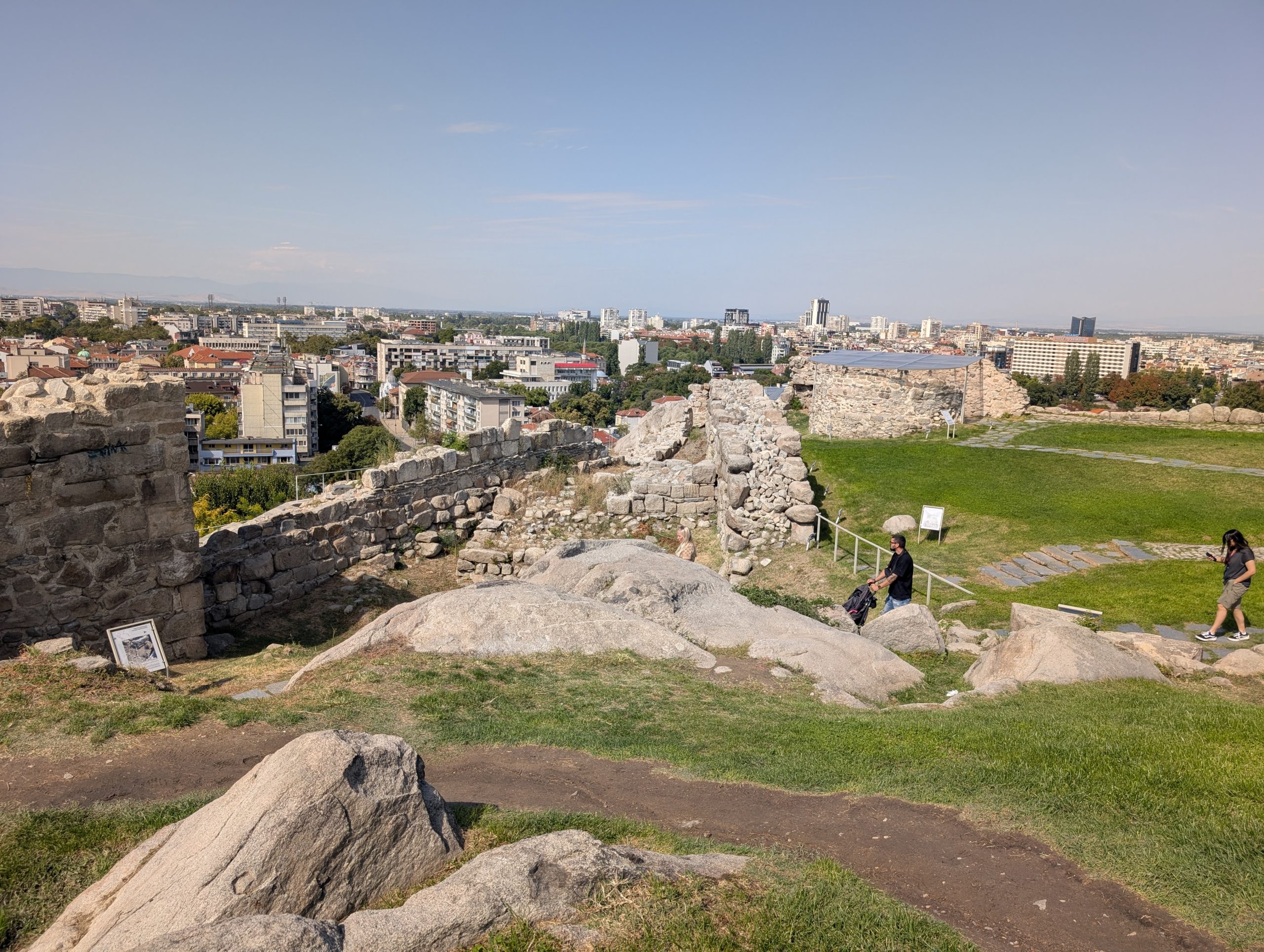
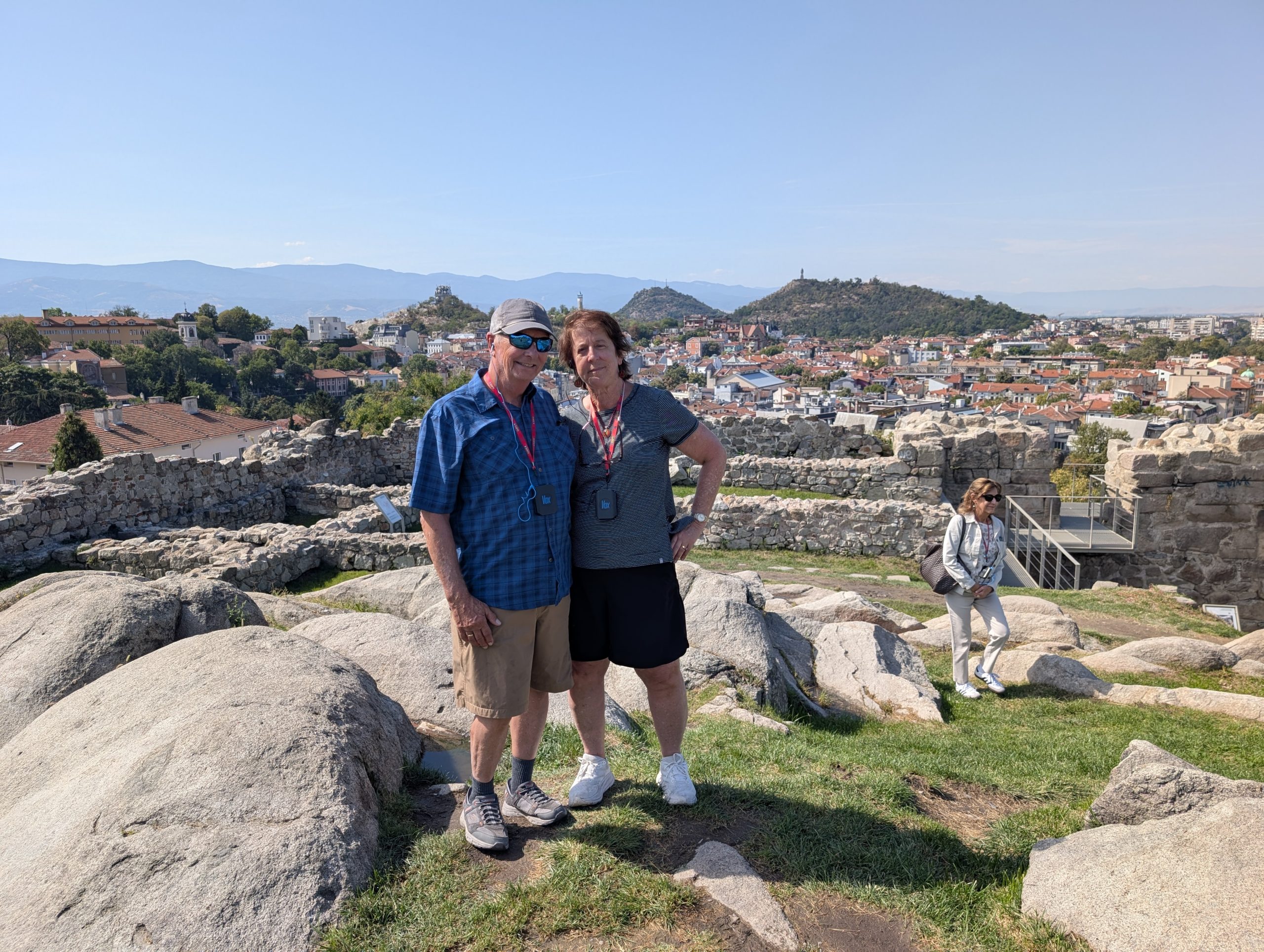
One of the highlights of our tour was a hike up to Nebet Tepe, an ancient fortress with some sections built as far back as 6000BC. There are panoramic views from the summit of the modern city below. Walking through the site reveals the layered Thracian, Macedonian and Roman occupation of this strategic hilltop, expanded first under Philip II of Macedon and later fortified under Rome. After the Communists left, there were layers of concrete that had to be removed to reveal the stonework below.
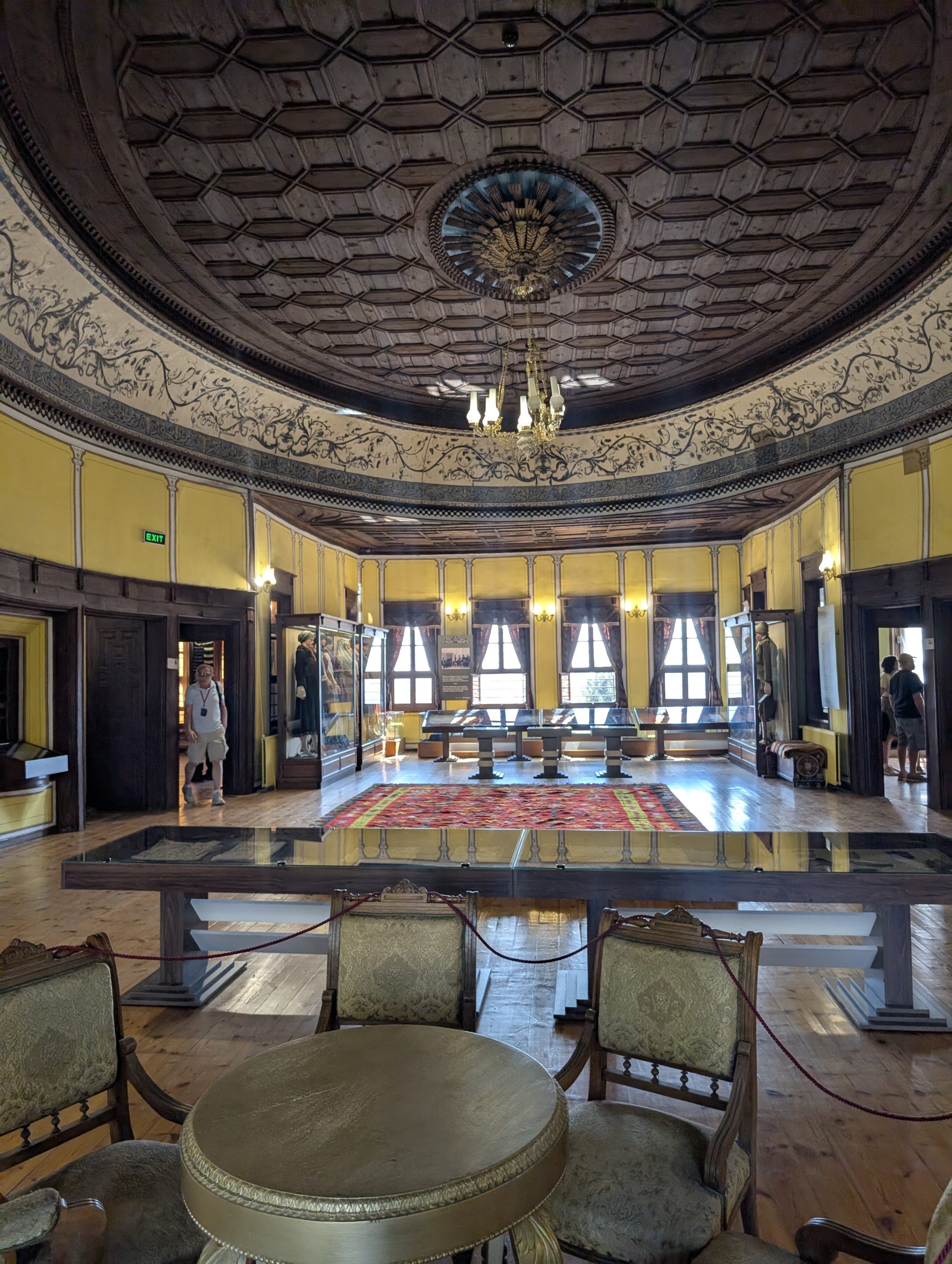
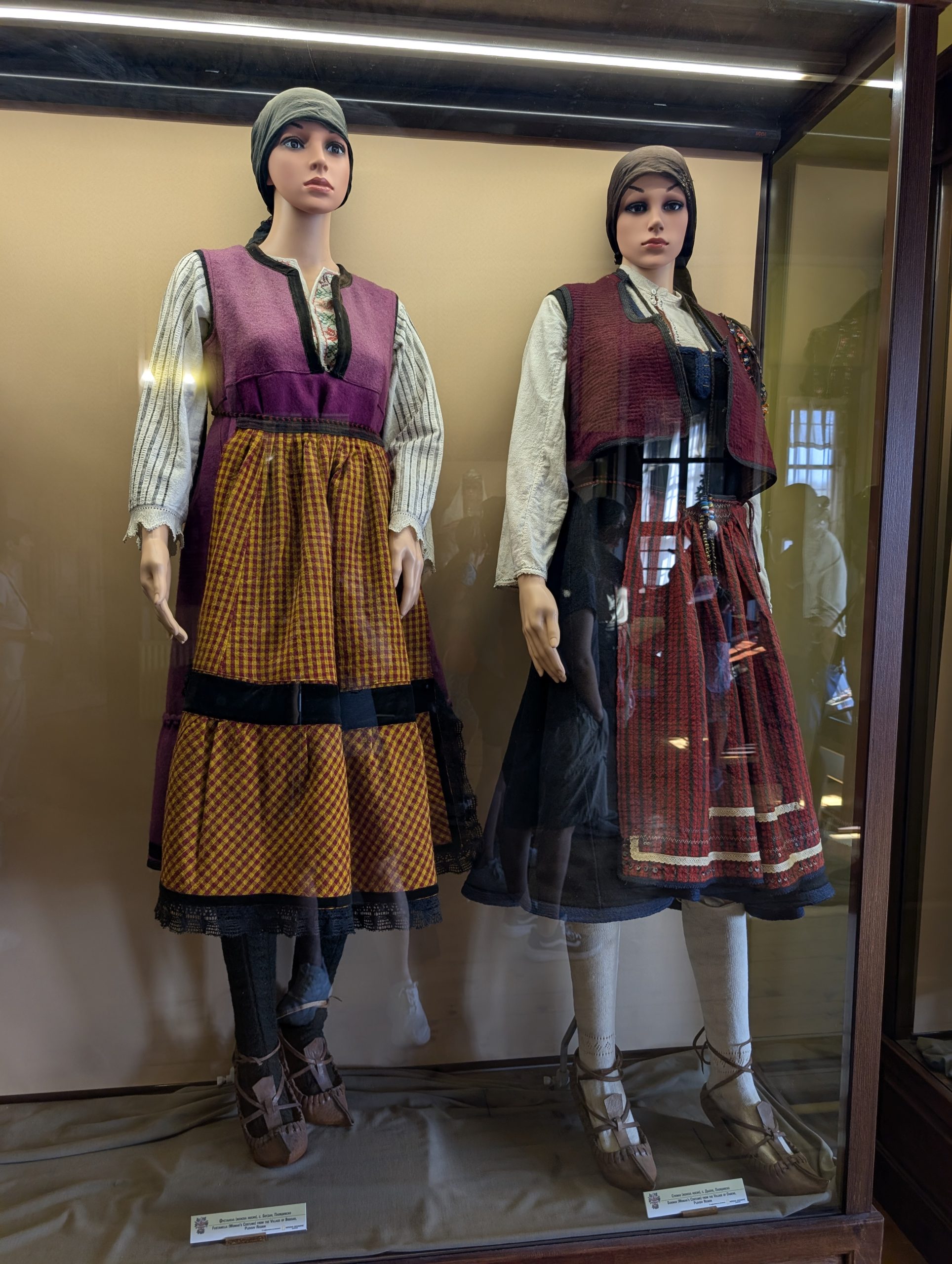
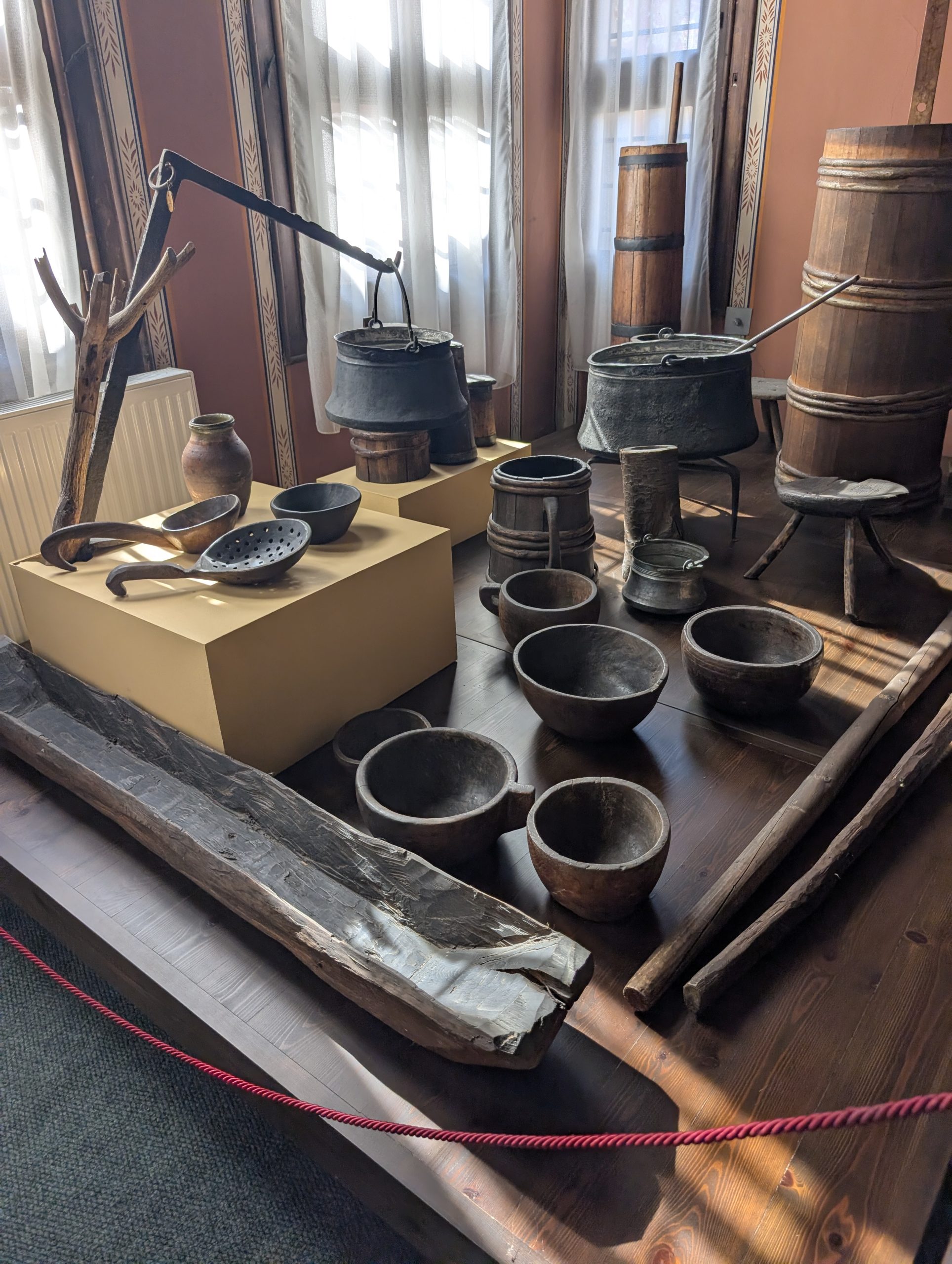
Another highlight for me was a visit to the Ethnographic Musuem. The museum is located in The Kuyumdzhioglu House, which was built in 1847 for the Plovdiv merchant, Argir Hristov Kuyumdzhioglu. The building is a prime example of Plovdiv’s mid-19th century Baroque architecture. The 6000 square foot building, painted in black with floral décor, has carved wooden ceilings. After the defeat of the Ottomans, the house was used as a girls’ boarding house and then a millinery factory, a a flour warehouse and a vinegar factory. In 1938 the town of Plovdiv bought the building and created the museum we see today. We enjoyed seeing the exhibits on agriculture, crafts, fabrics and clothing, furniture and interior, musical instruments, religious items and works of art.
There are so many sights to see in this beautiful town. We could have spent a couple of days there. After the organized tour, we had some free time to explore Plovdiv further on our own. Bill and I had a lovely lunch at Shevitsa Bulgarian Food & Wine.
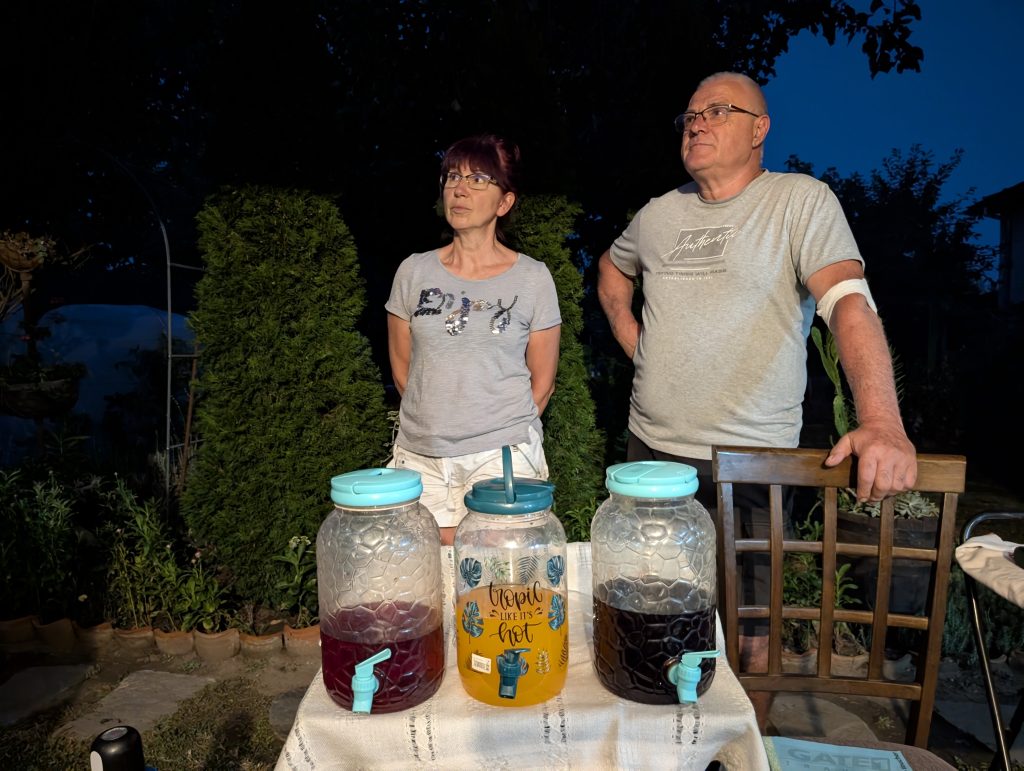
In the evening, our tour group visited a local family in the nearby village of Sadovo, where we enjoyed a traditional dinner prepared with the family’s fresh produce. There livelihood has been peanut farming but the droughts in recent years have severely impacted the production. Our group was served a lovely dinner sitting in their garden. It was a wonderful opportunity to experience Bulgarian hospitality firsthand and get a more personal glimpse into rural life. After dinner, we had an opportunity to ask questions about their lives.