22
Sep
2026

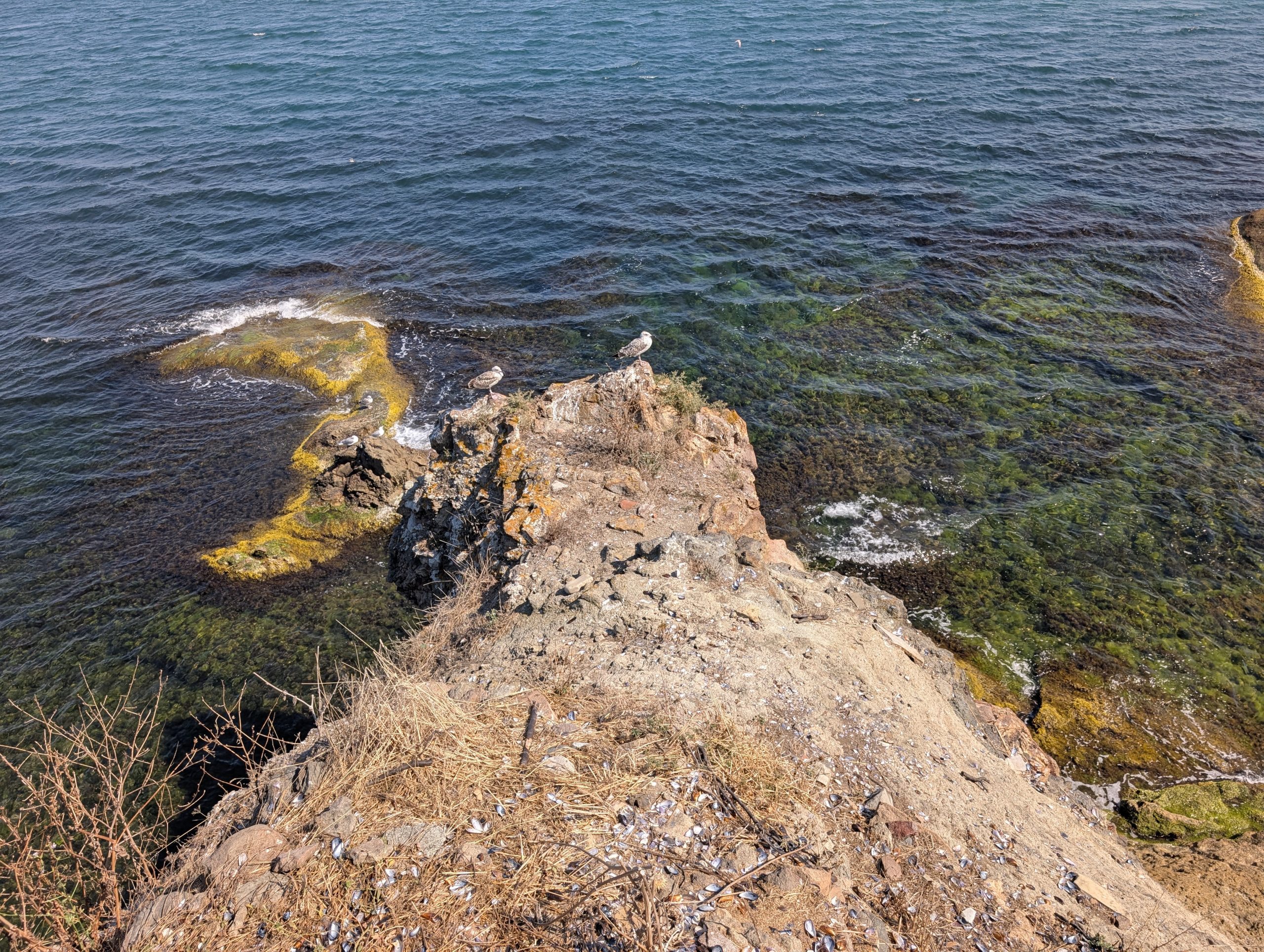
We departed Burgas and traveled for about 40–50 minutes to Nessebar, one of many seaside resorts on Bulgaria’s Black Sea coast. Nessebar is a UNESCO World Heritage Site, because of well-reserved Old Town and its wealth of historical ruins dating back to its days as an ancient Thracian settlement.
On the way over, I suddenly remembered we had left our passports and my wallet in the hotel safe in Burgas. Georgi said “Don’t worry, I will take care of it”. He called the hotel and they retrieved our passports and then he asked a friend who lives in Burgas to pickup the package and deliver to us in Nessebar. Whew, what a relief. Our third and final mistake of the trip.
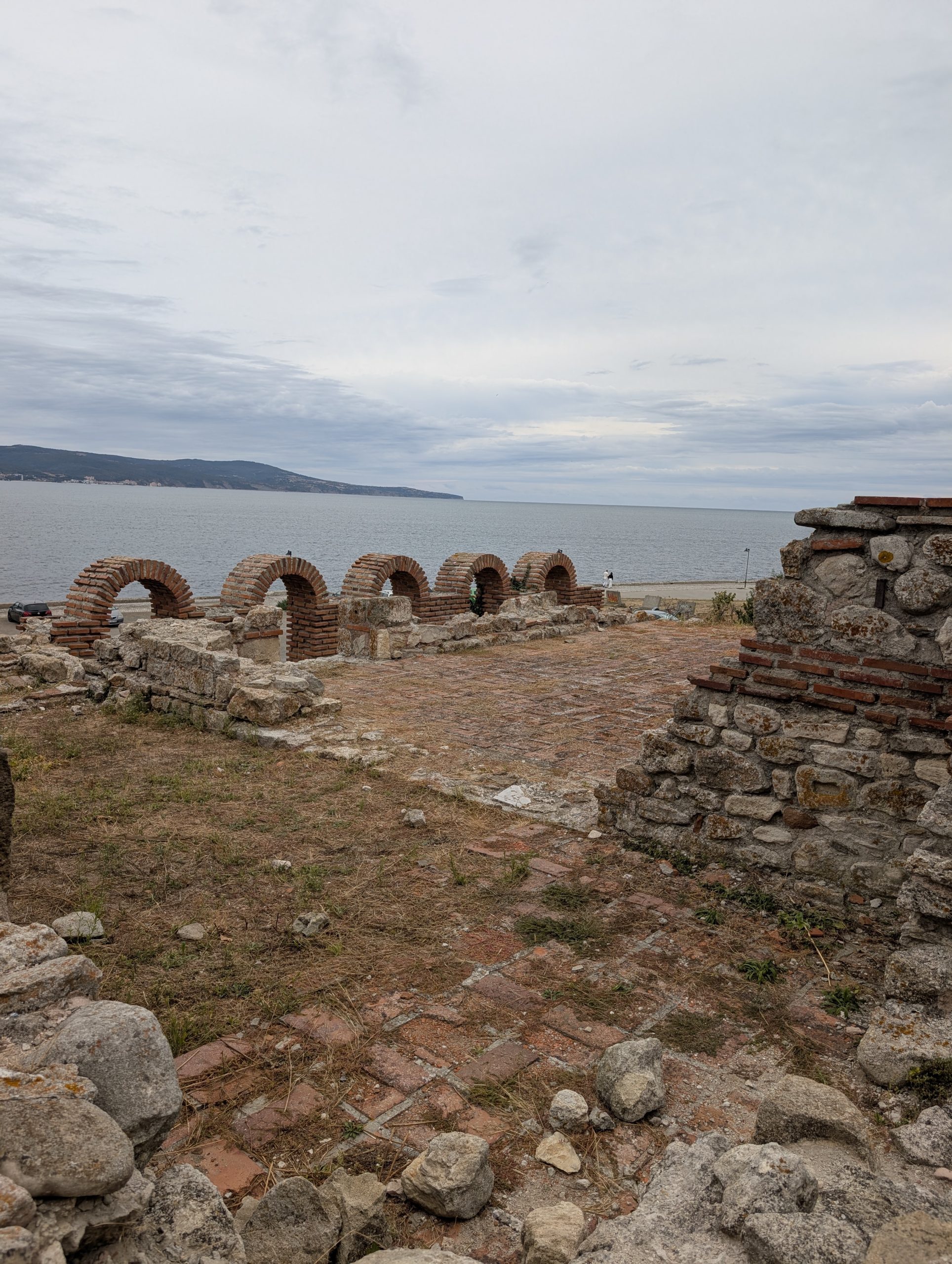
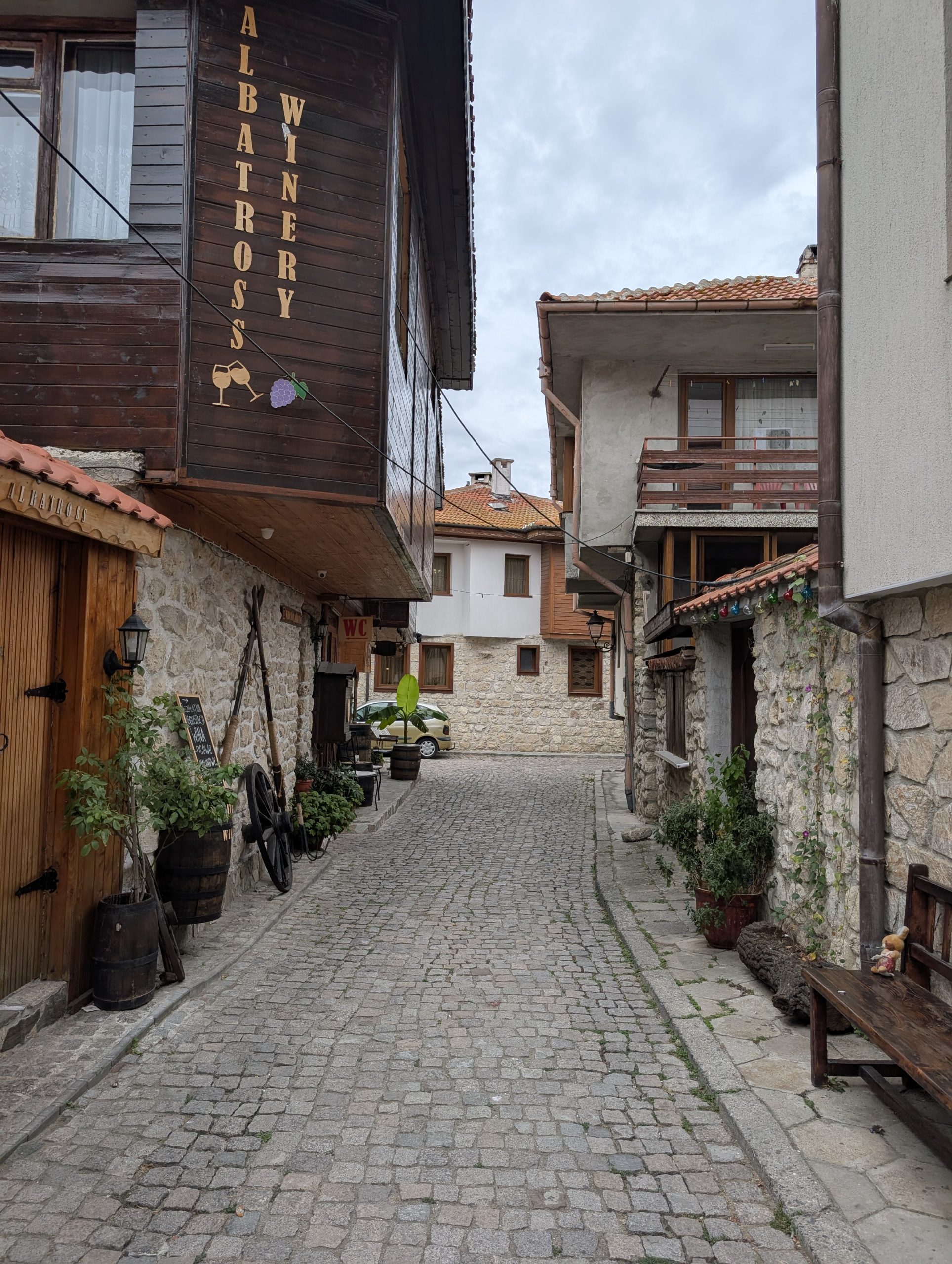
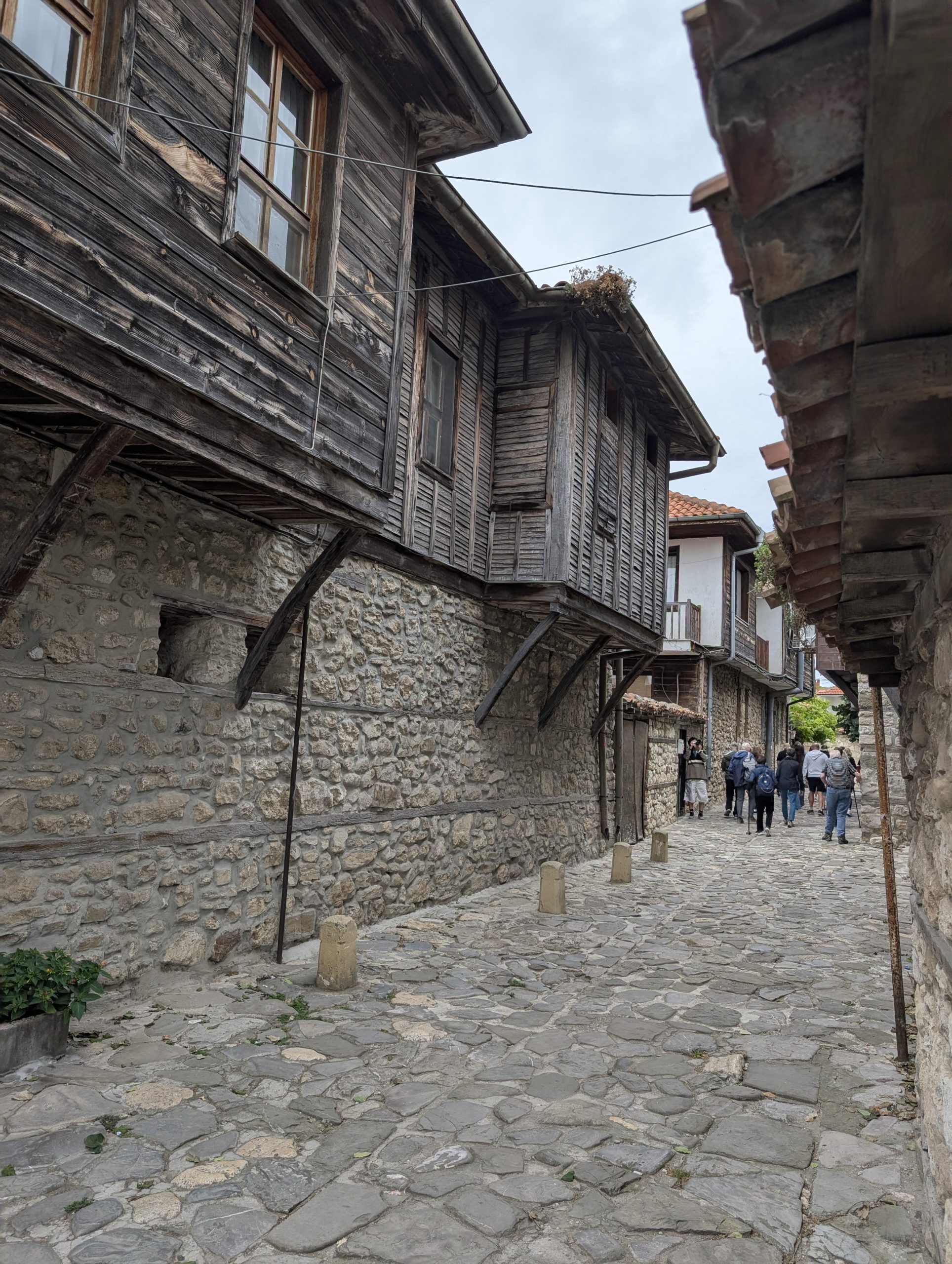
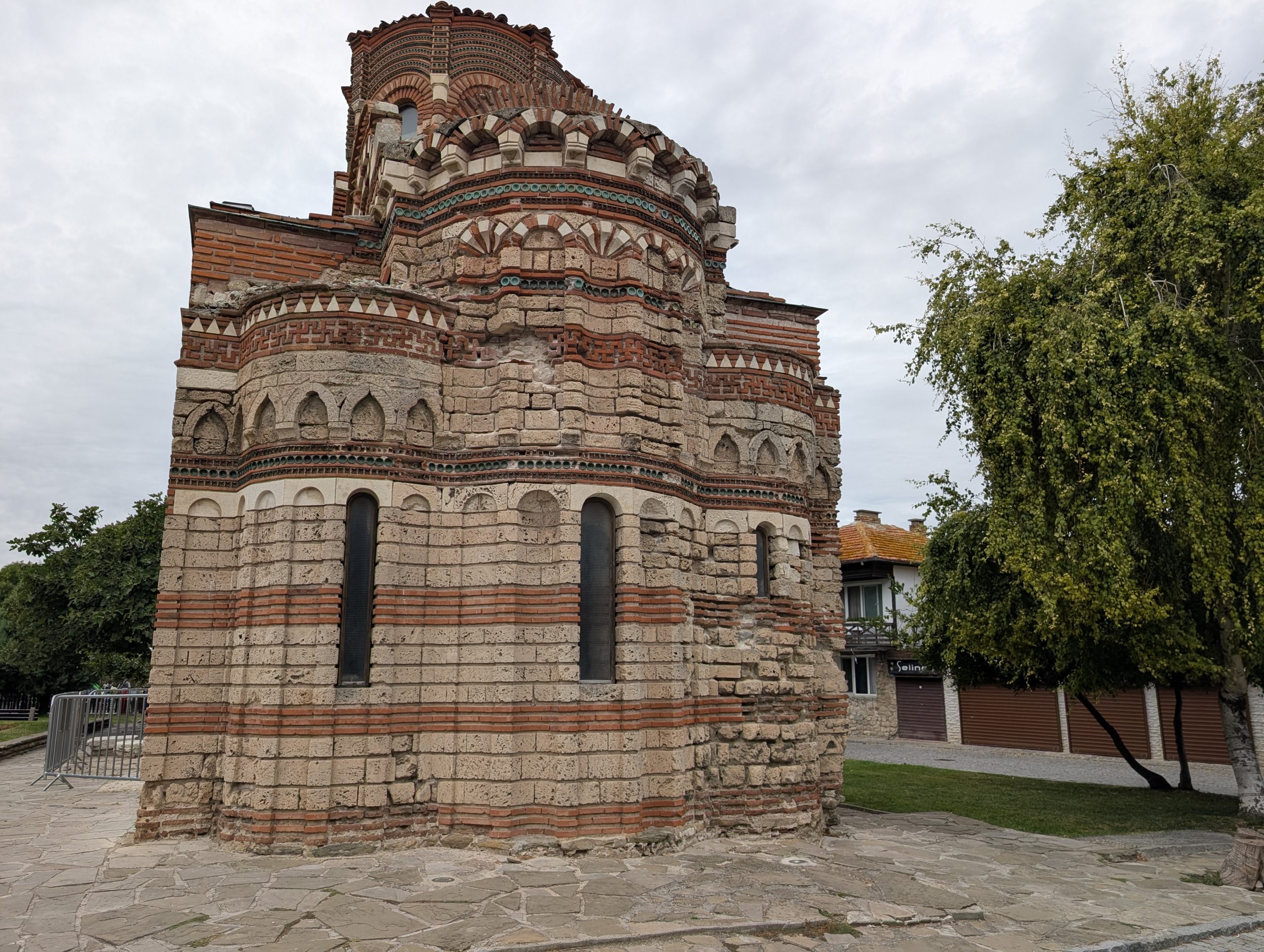
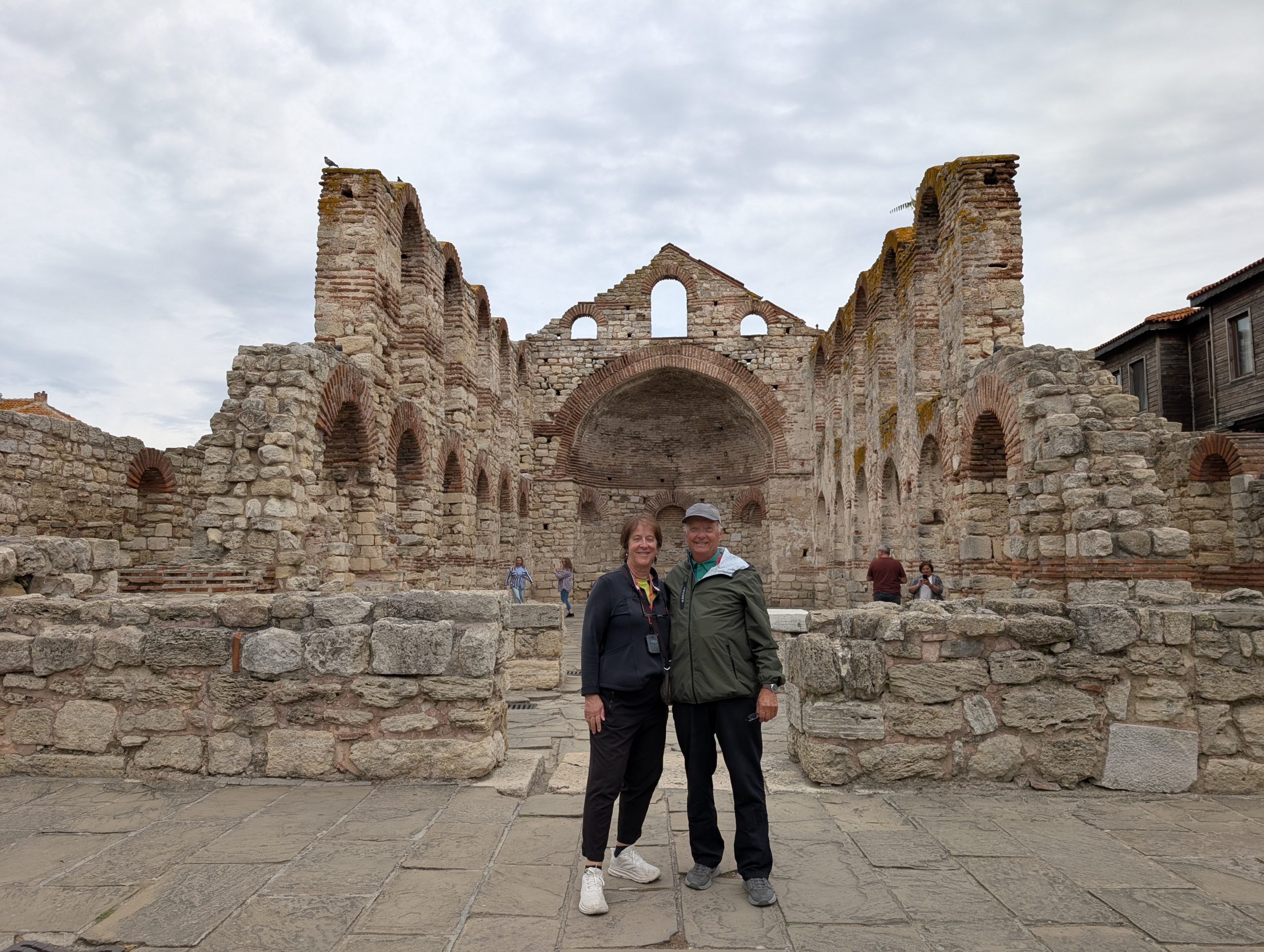
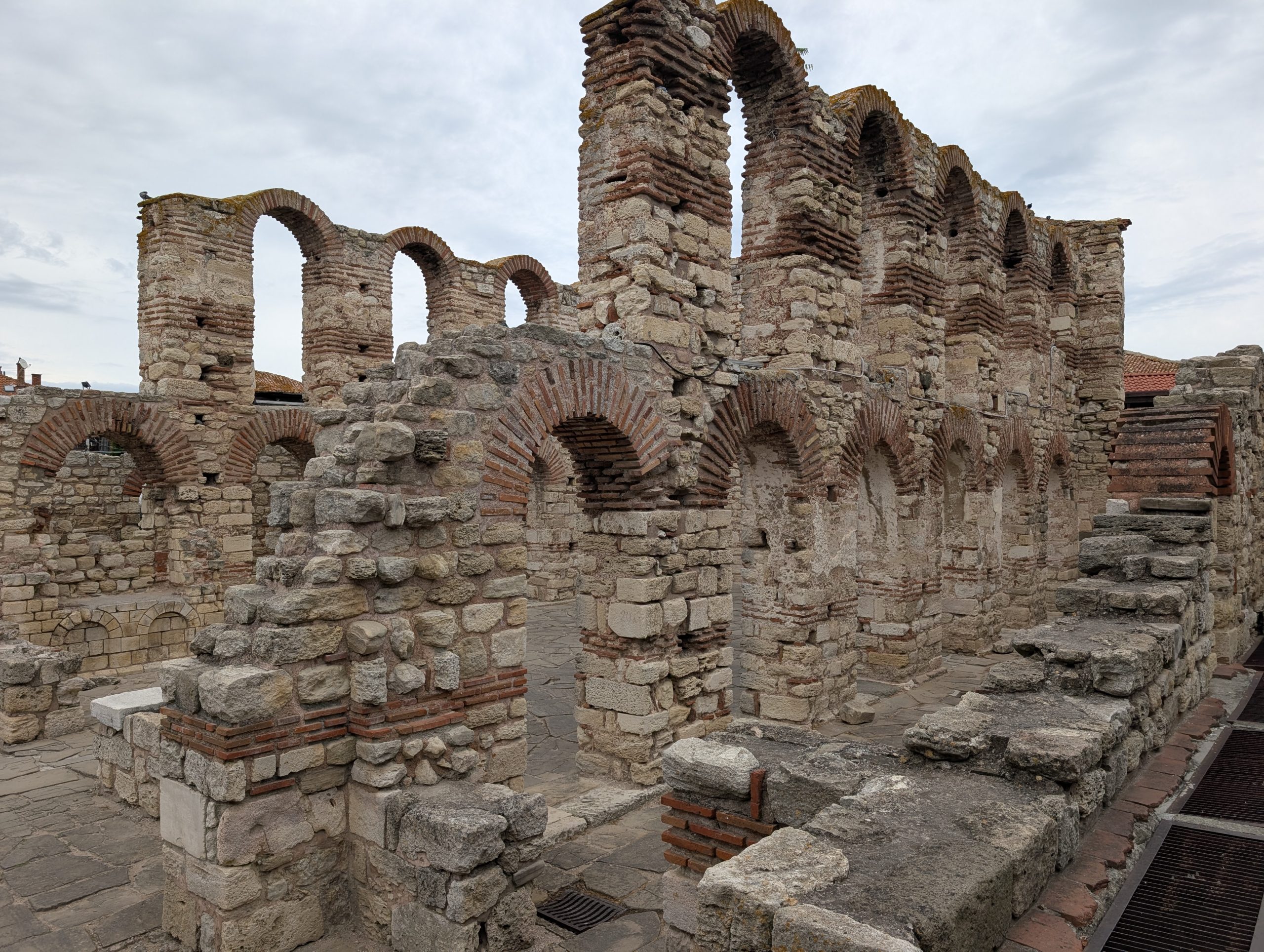
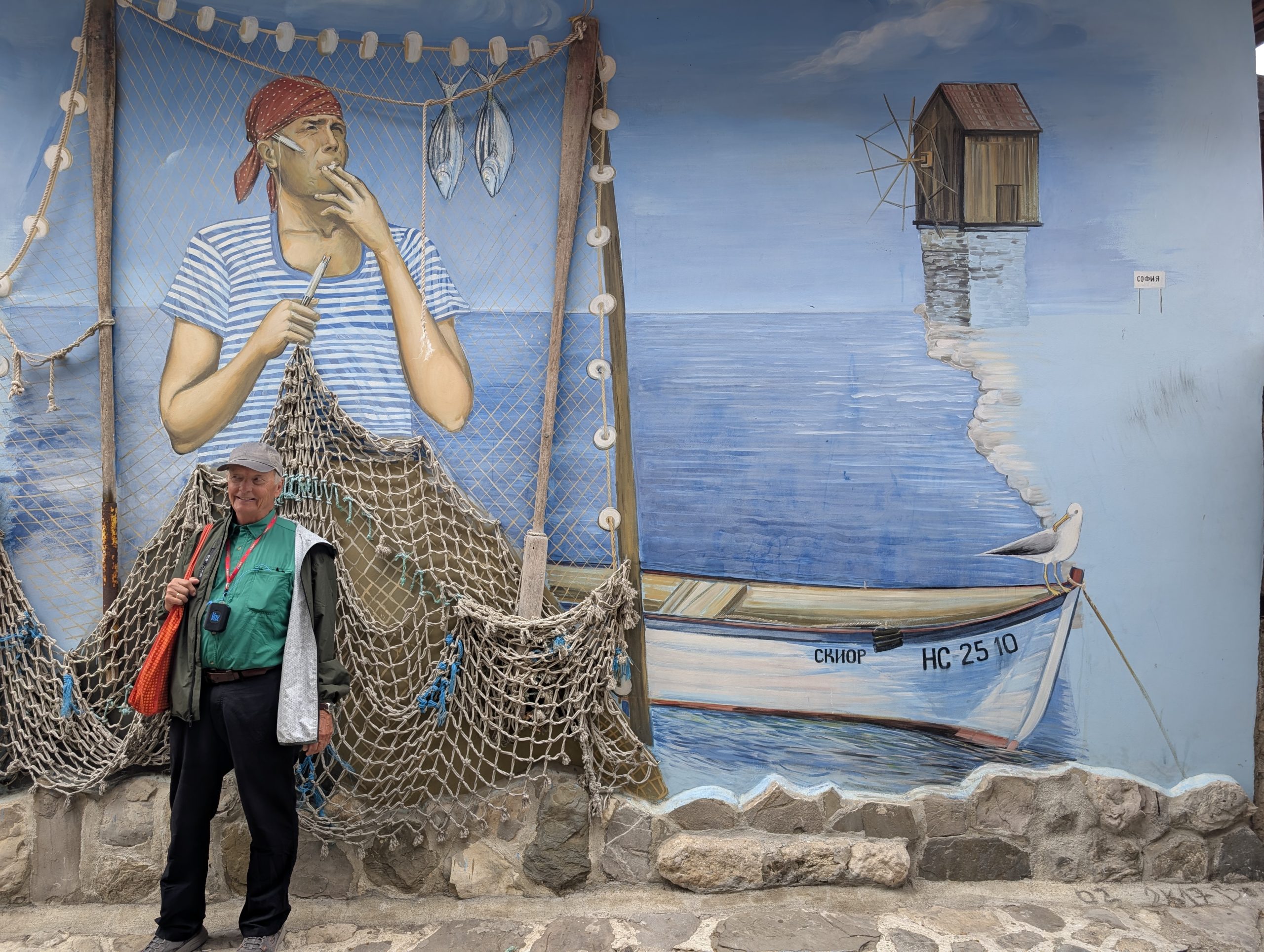
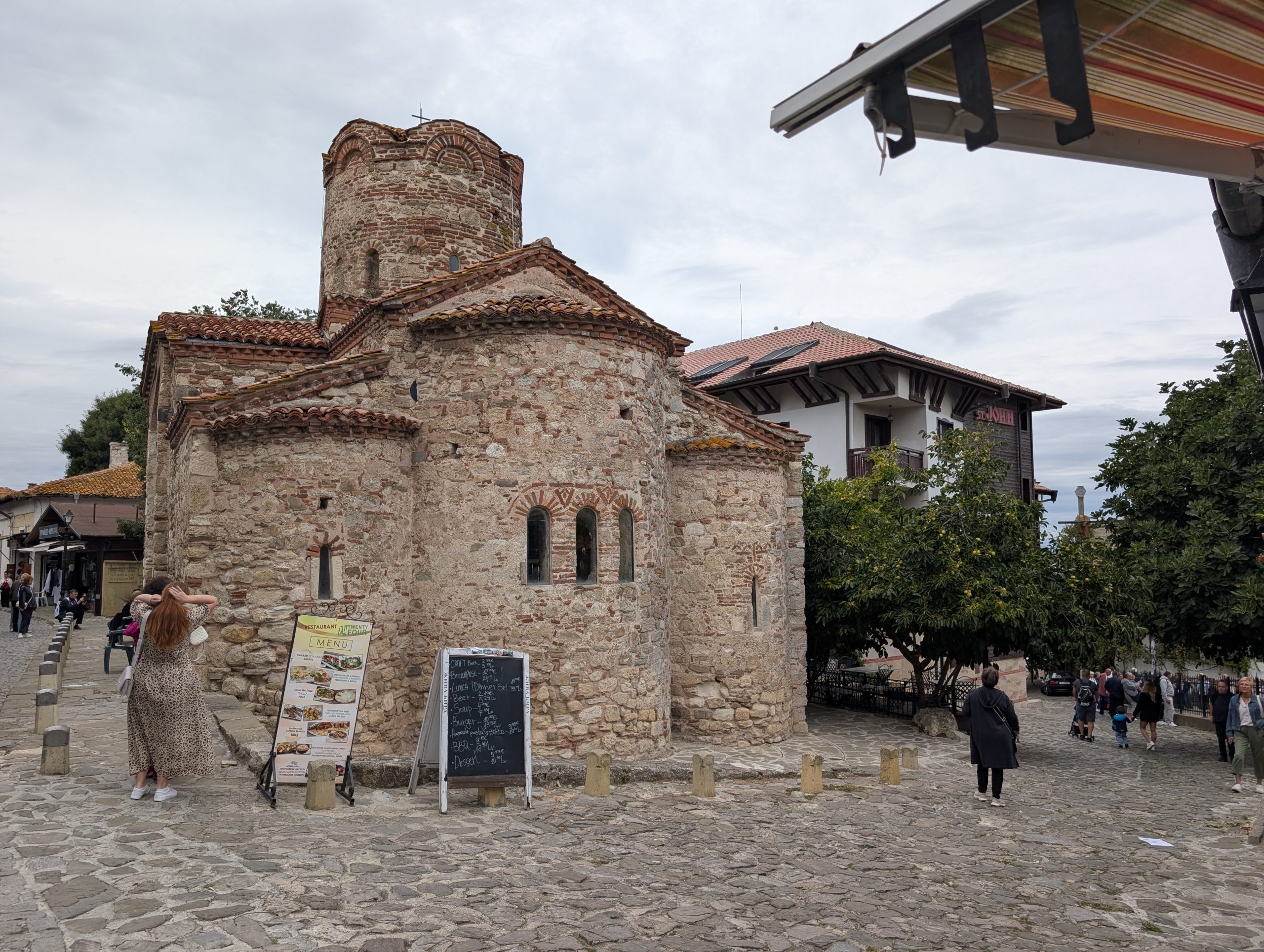
Our time in the old town of Nessebar was just lovely. Georgi took us on a tour and then we had free time to explore the many viewpoints, do some shopping and visit churches from the 5th to 15th century, some in ruins and some intact. The town is known as the City of Churches. There were as many as 40 churches at tone time – now there are maybe 11. The town sits on a peninsula – part of peninsula sunk in earthquakes in 1926 and 1978. There is great diving in the remains of the sunken town in shallow water.
The new town is miles and miles of resort facilities as was the entire drive from Burgas – not appealing to me from the road.
Nessebar was conquered by the Thracians, then the Greeks and Romans. In the 9th century it became part of the First Bulgarian Kingdom and became a powerful city-state in the 13th and 14th centuries. Now it is busy tourist destination.
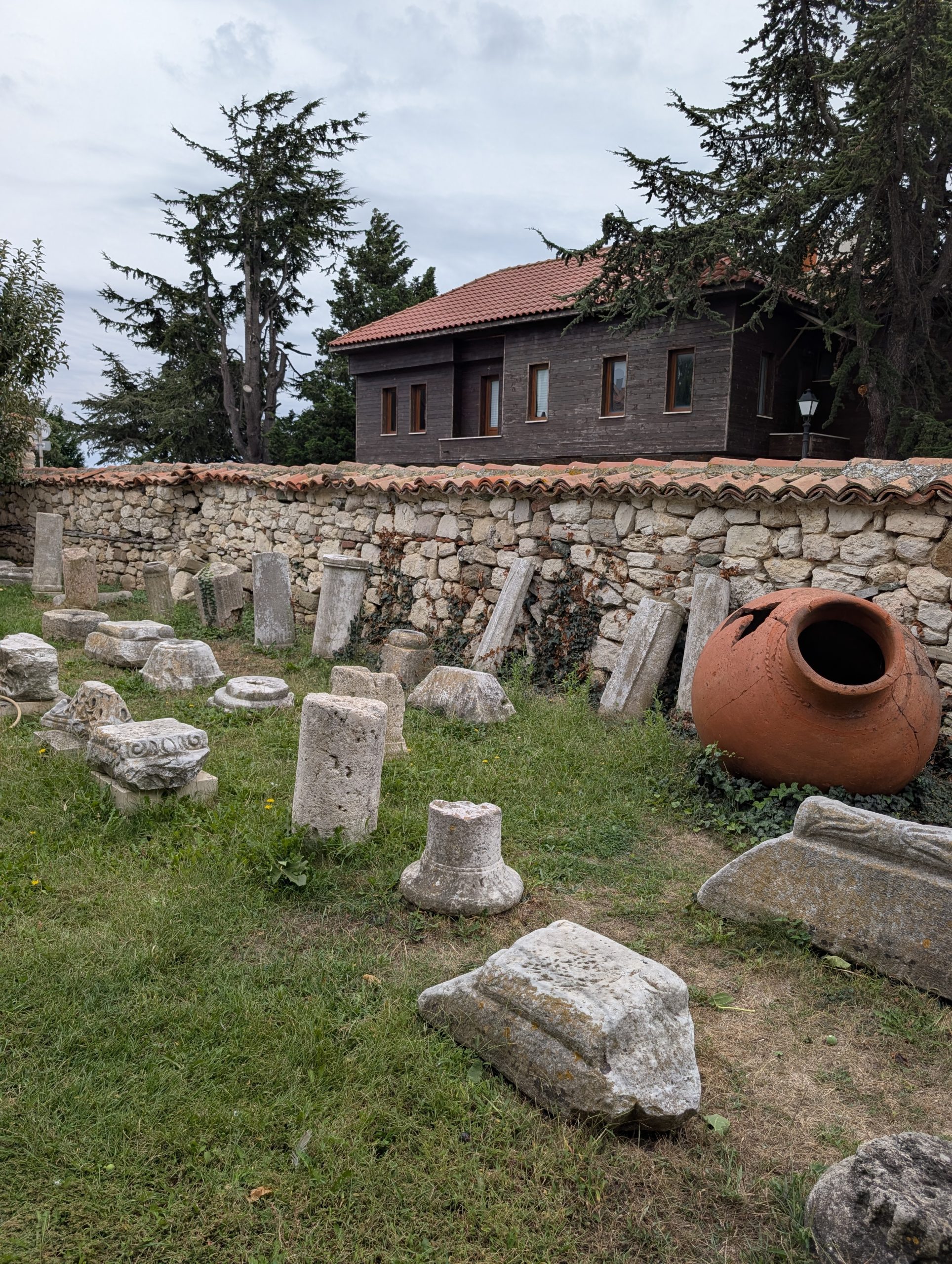
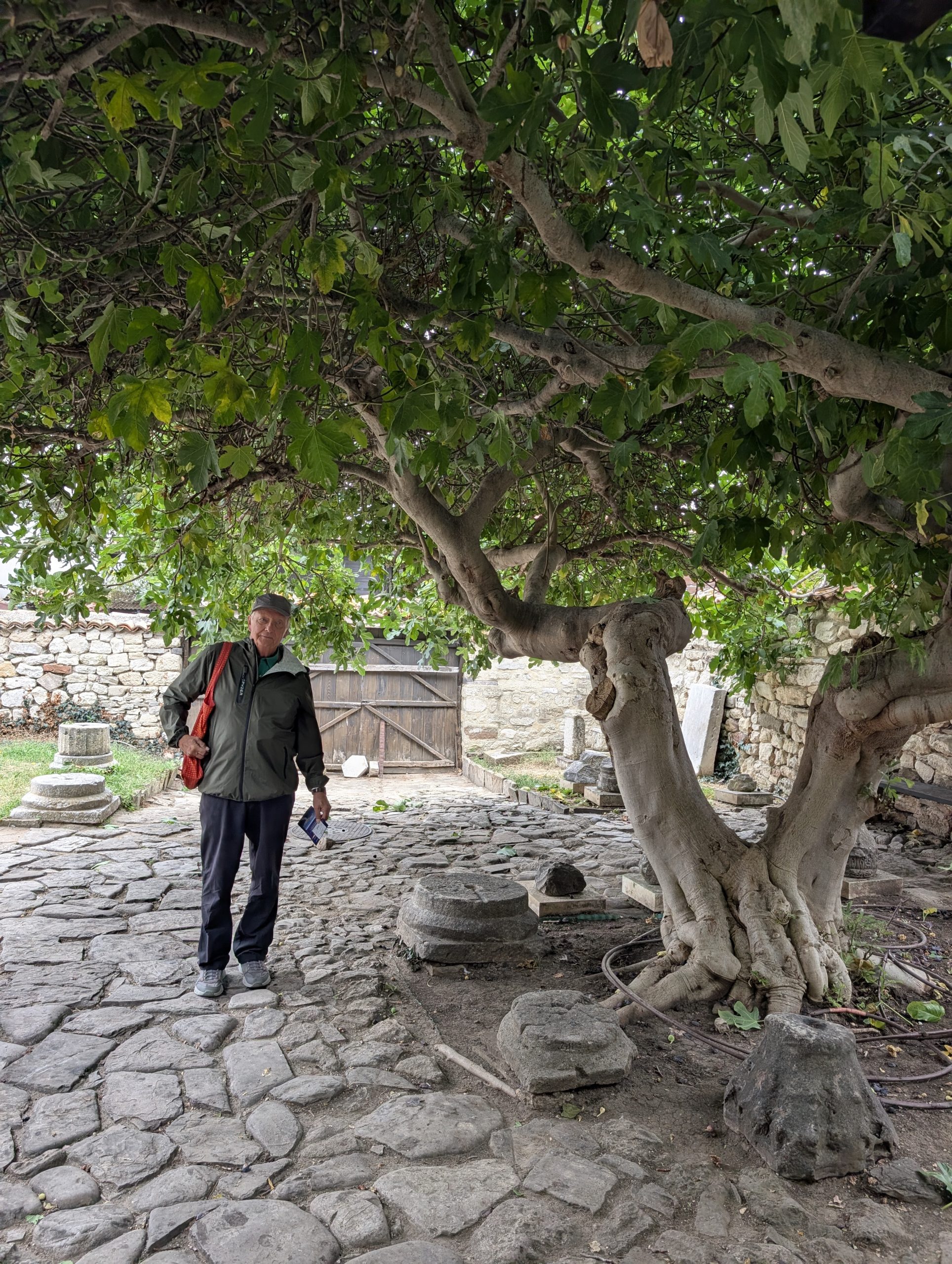
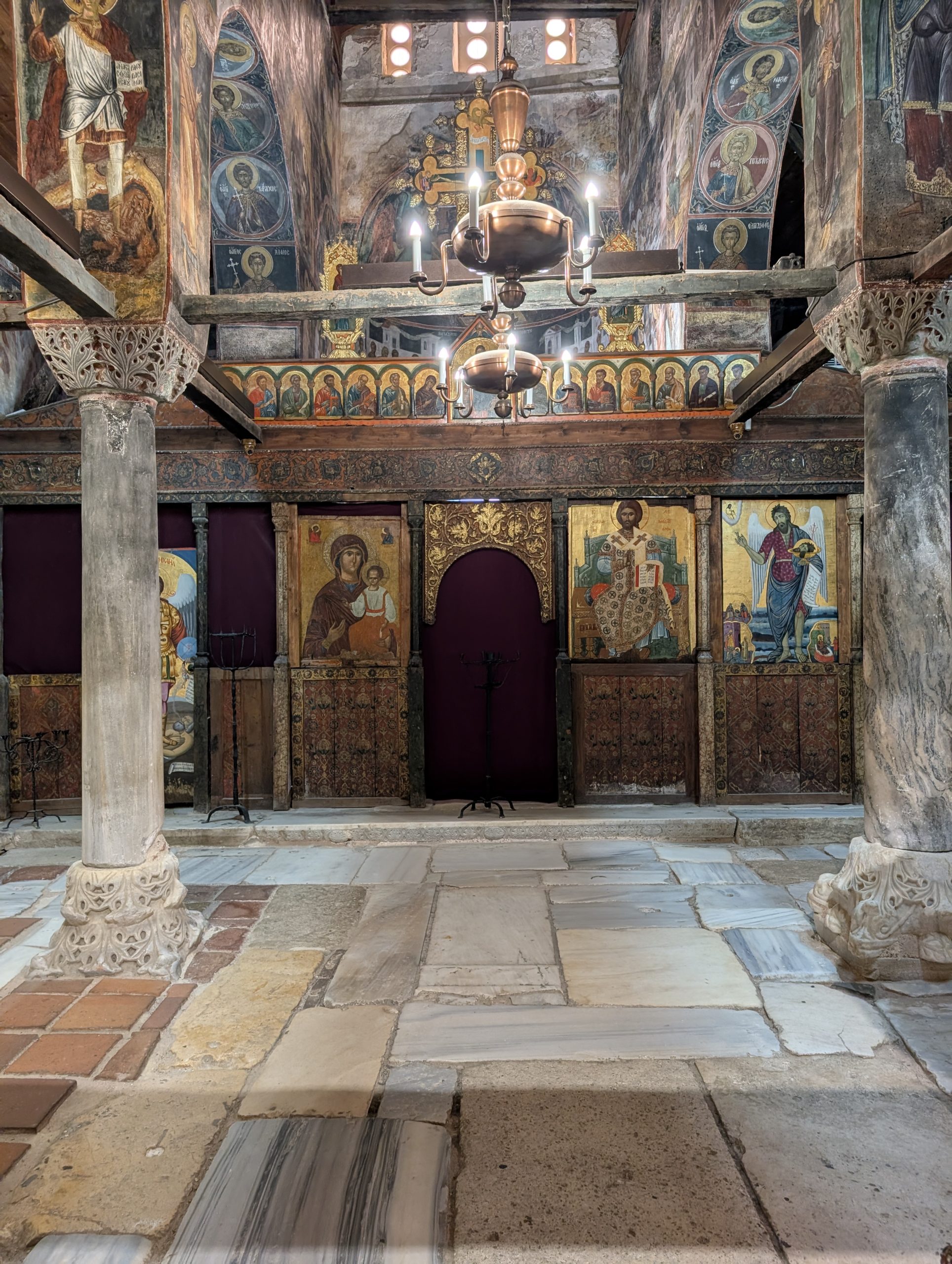
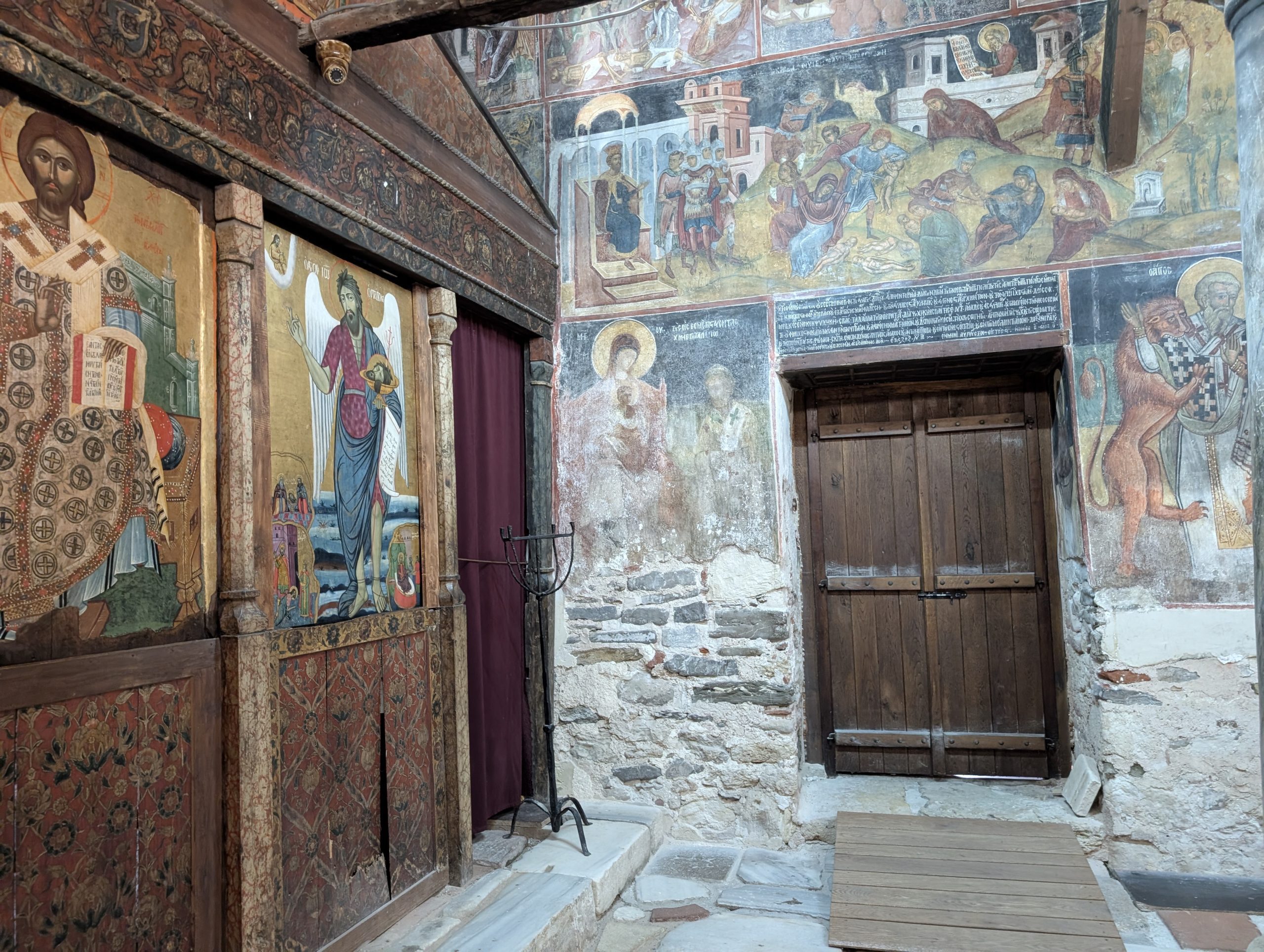
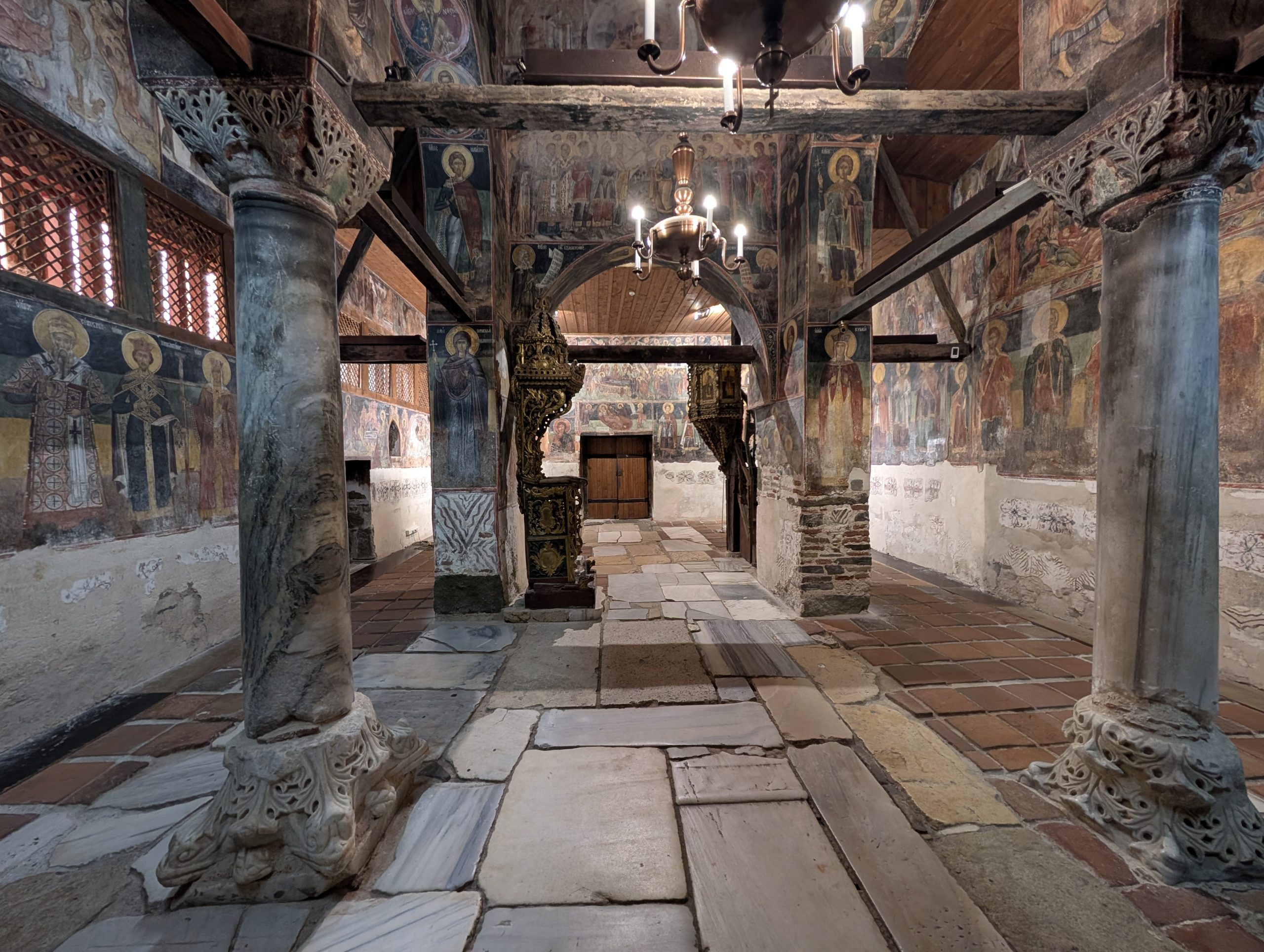
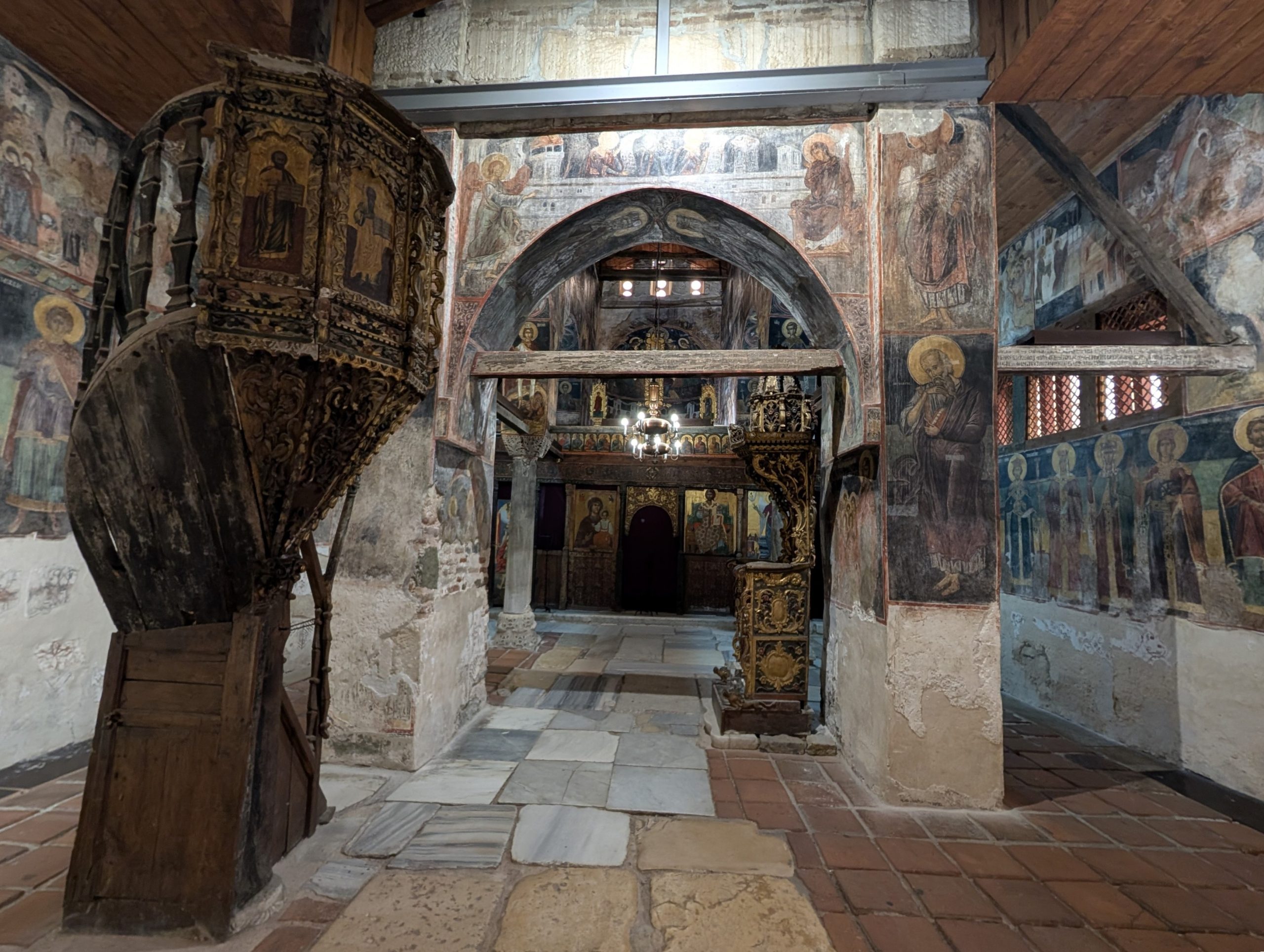
Our two favorite church/museums were the 5th century ruins of Saint Sofia located in the center of town and Saint Stephen church/museum with its stunning 16th century frescoes. The church yard was scattered with ancient marble pieces. St. Stephan church was first built in the 11th century with renovations in the 16th and 19th centuries.
There are many shops and kiosks trying to extract money from the visitors. We bought a beautiful hand painted icon of the Archangel Michael for our newly baptised grandson from the artist. She said it was a copy of an icon by a 15th century russian iconographer. To see some beautiful photographs of the Nessebar peninsula, visit this bloggers website at https://www.andrey-andreev.com/en/nessebar-bulgaria/
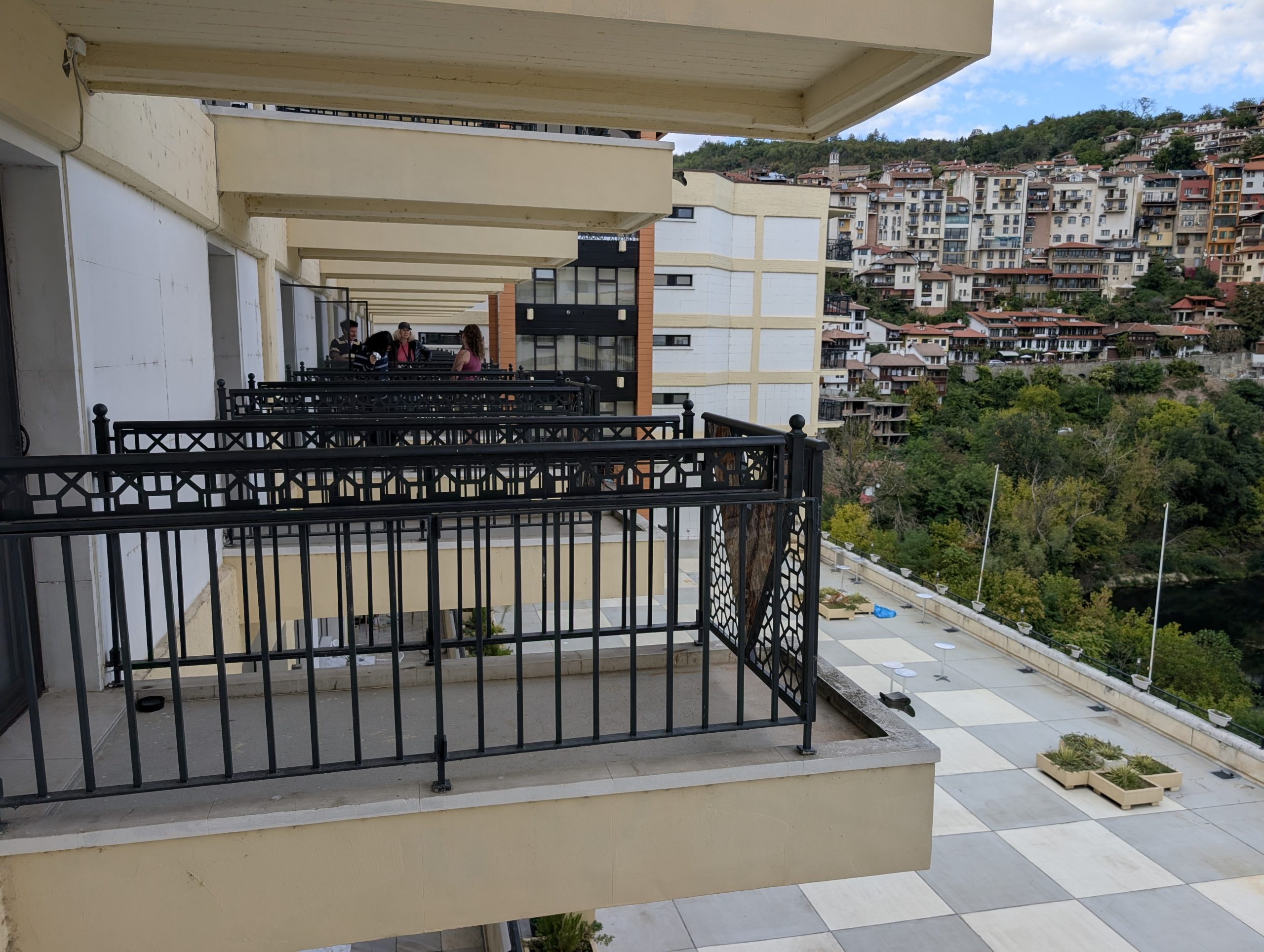
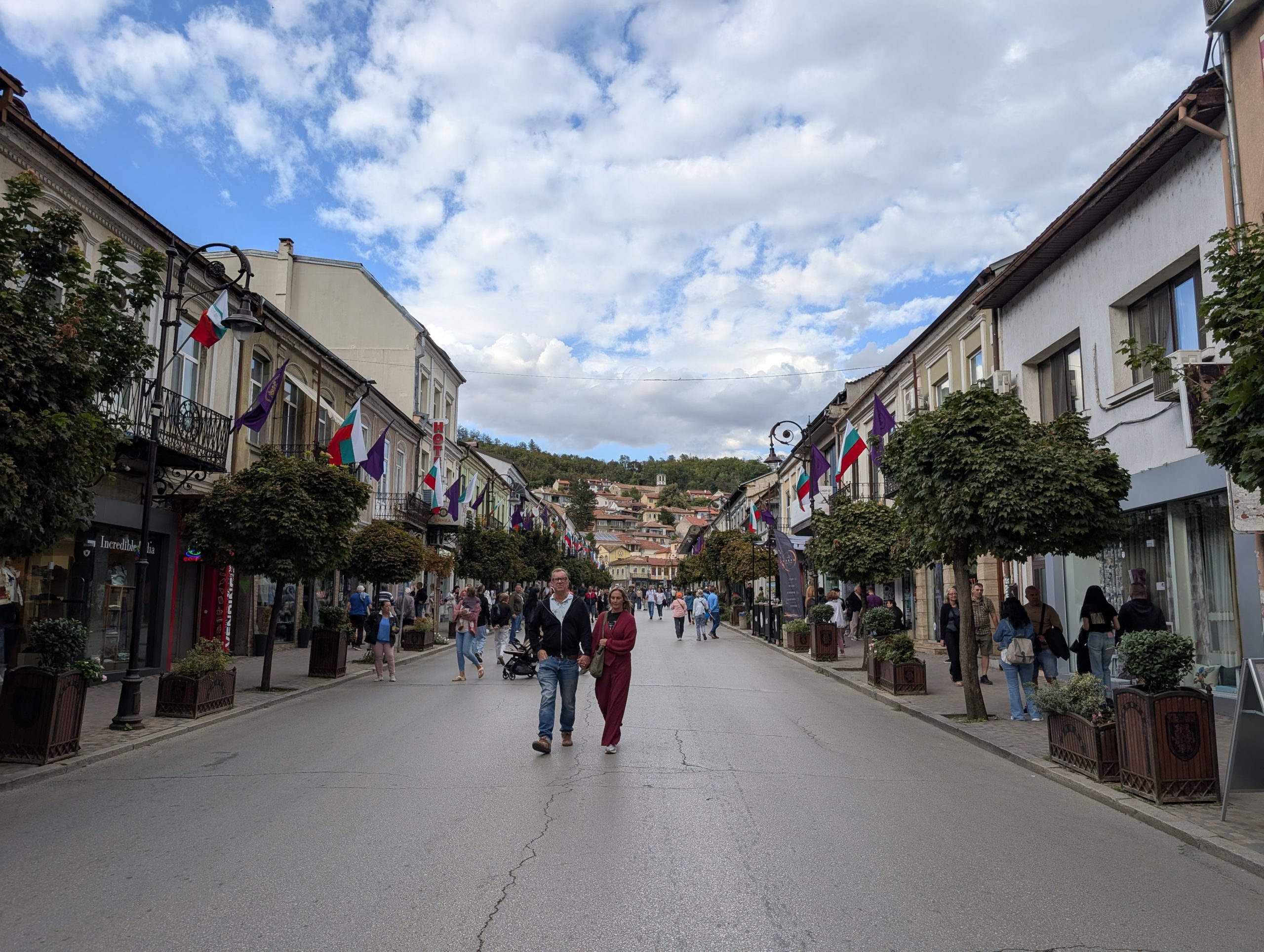
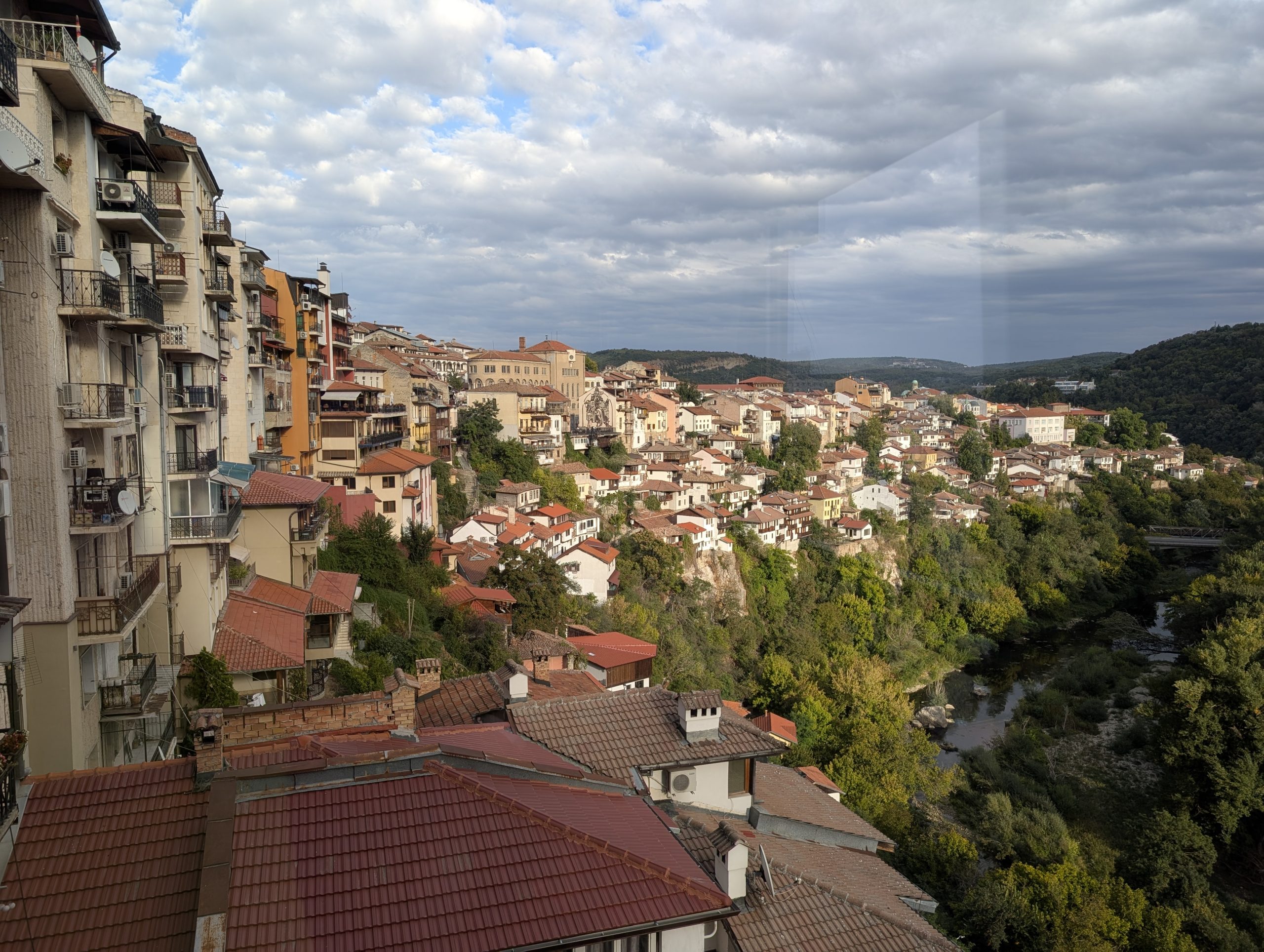
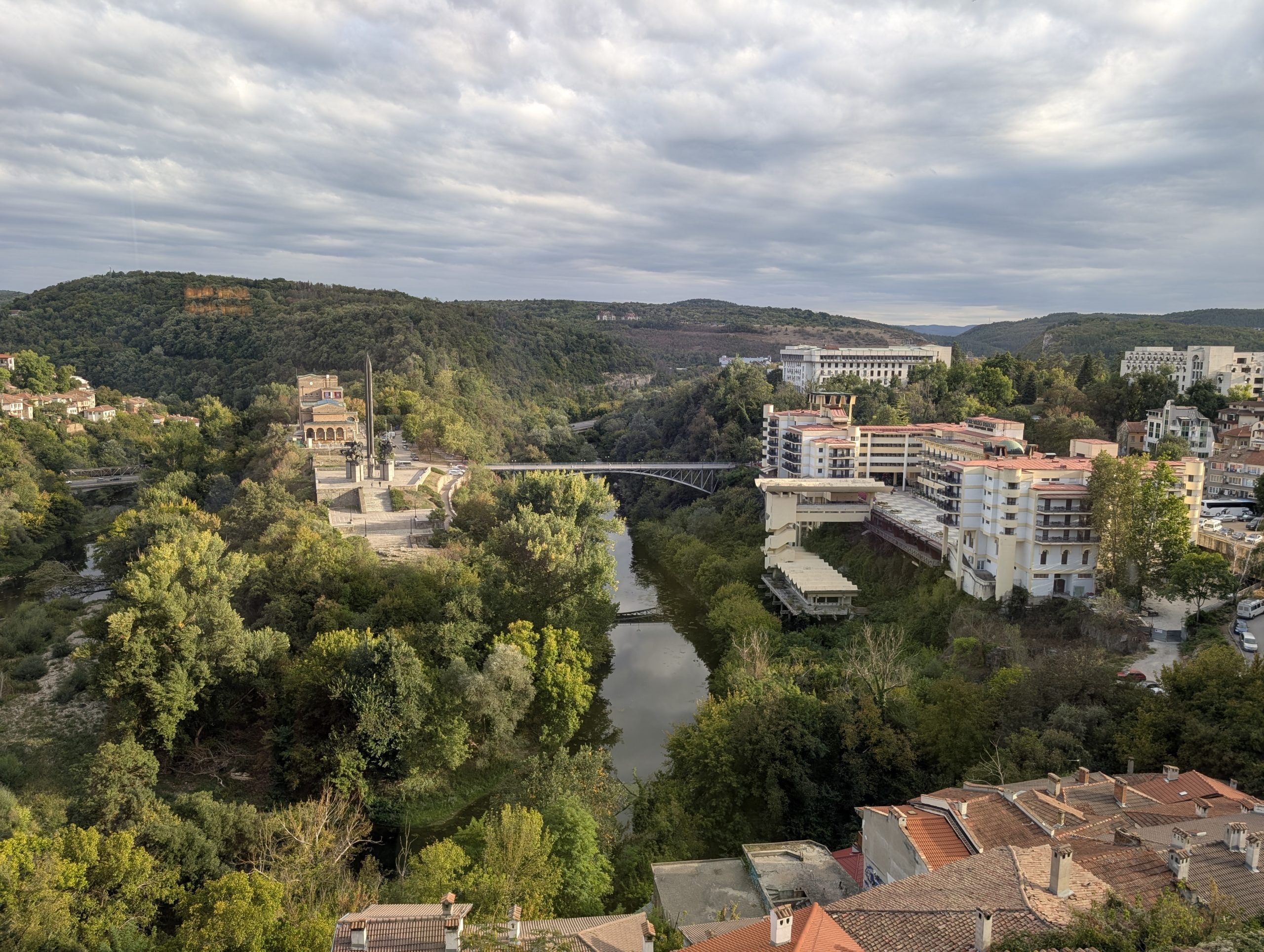
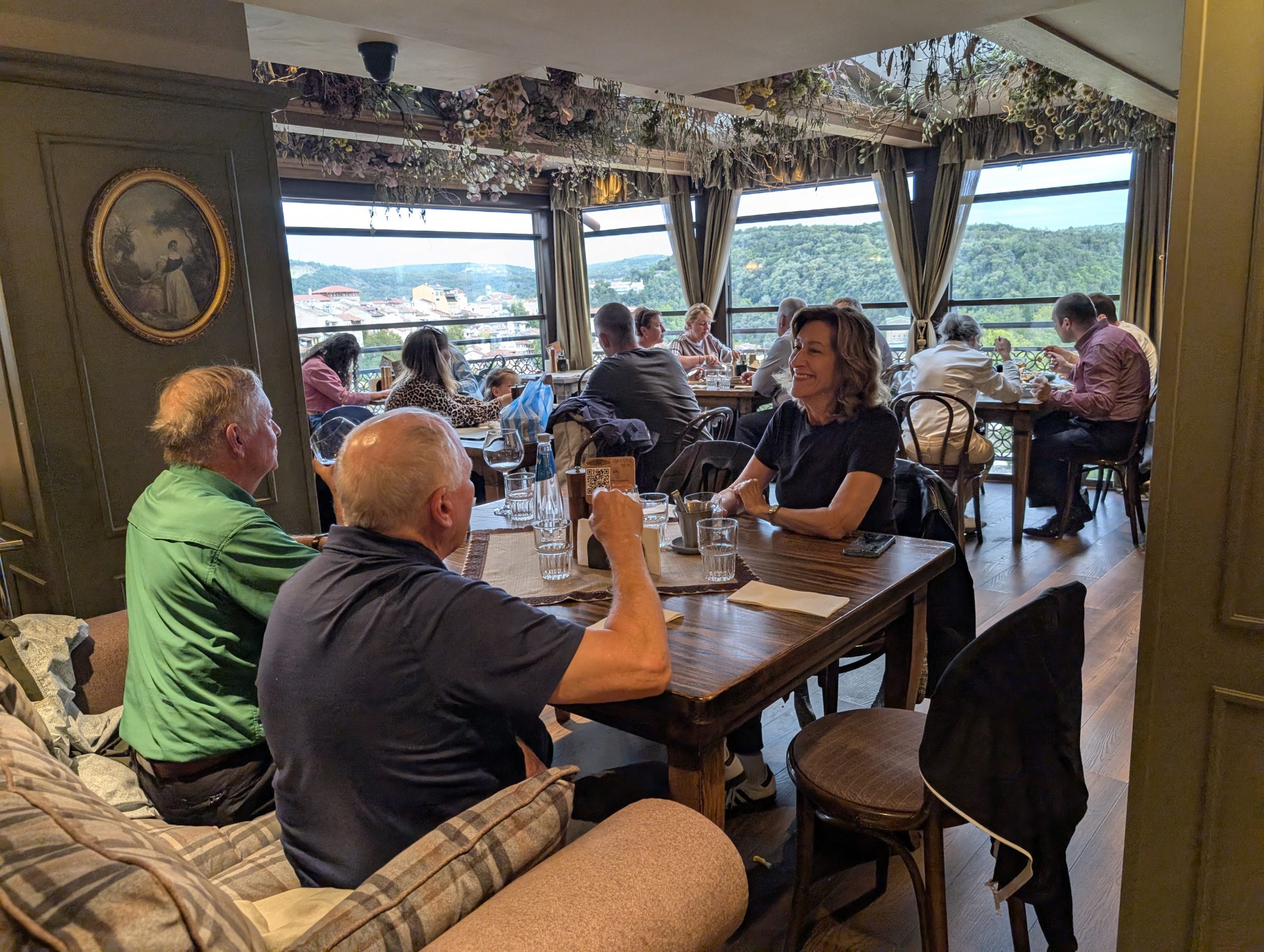
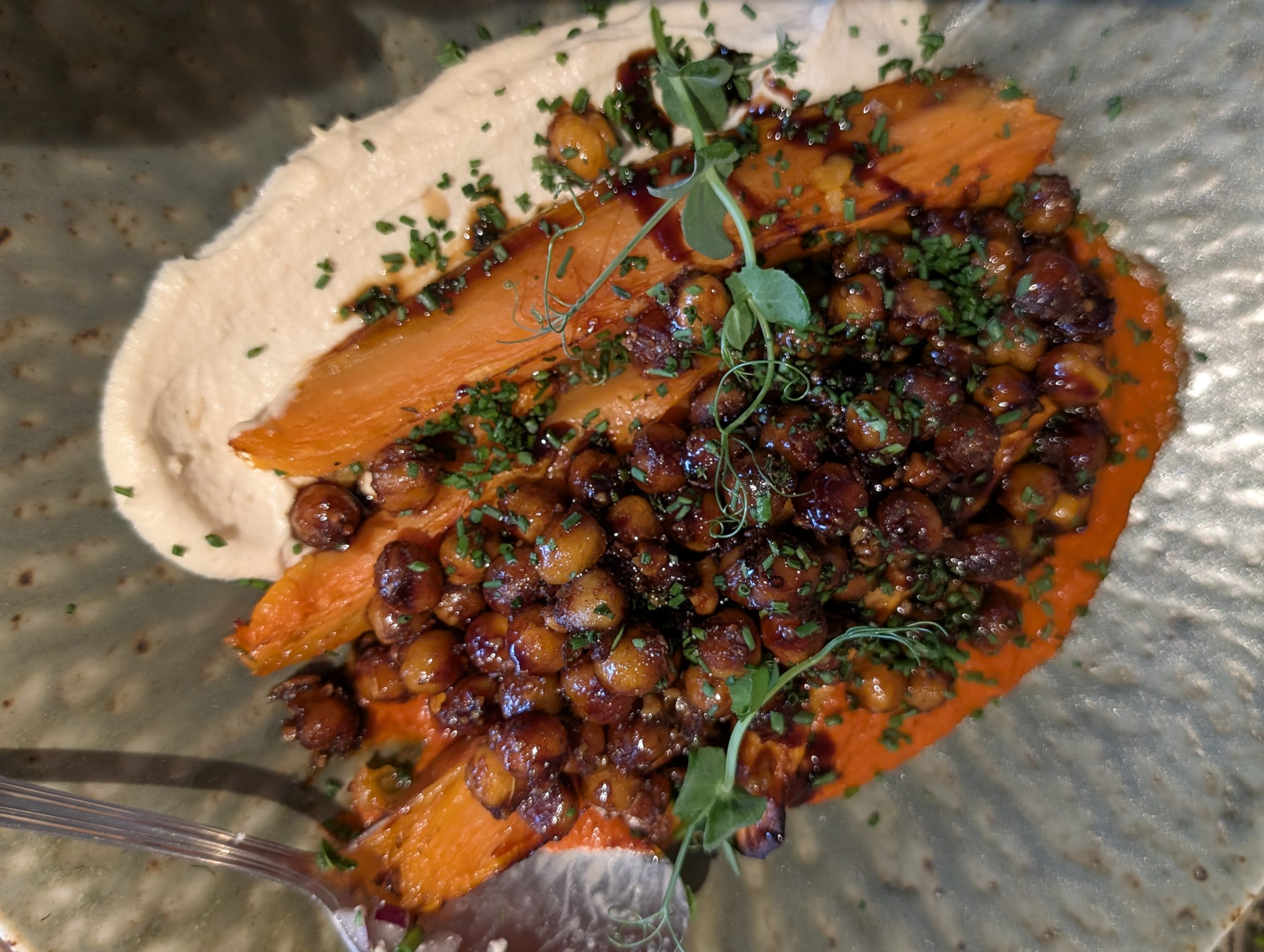
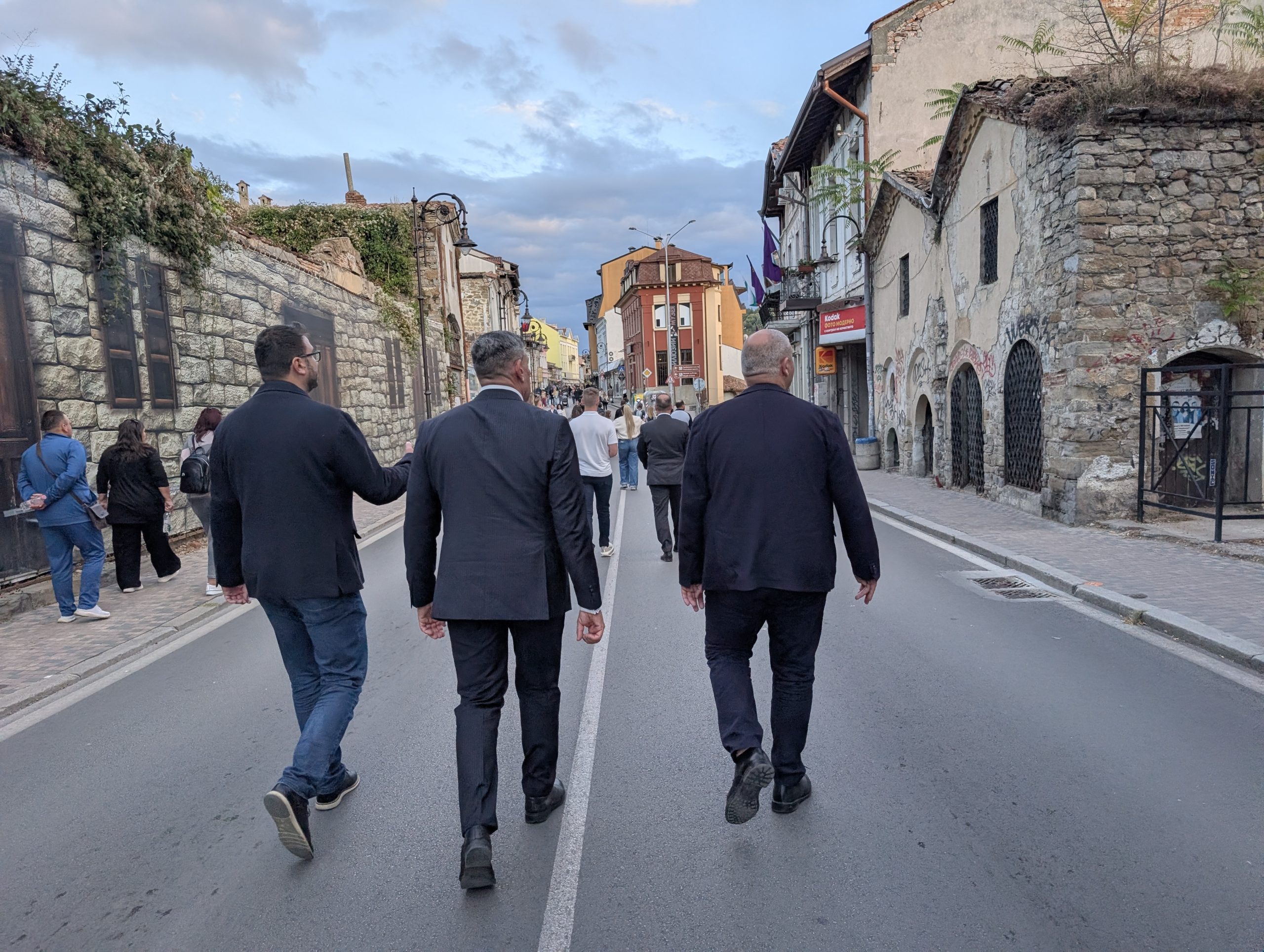
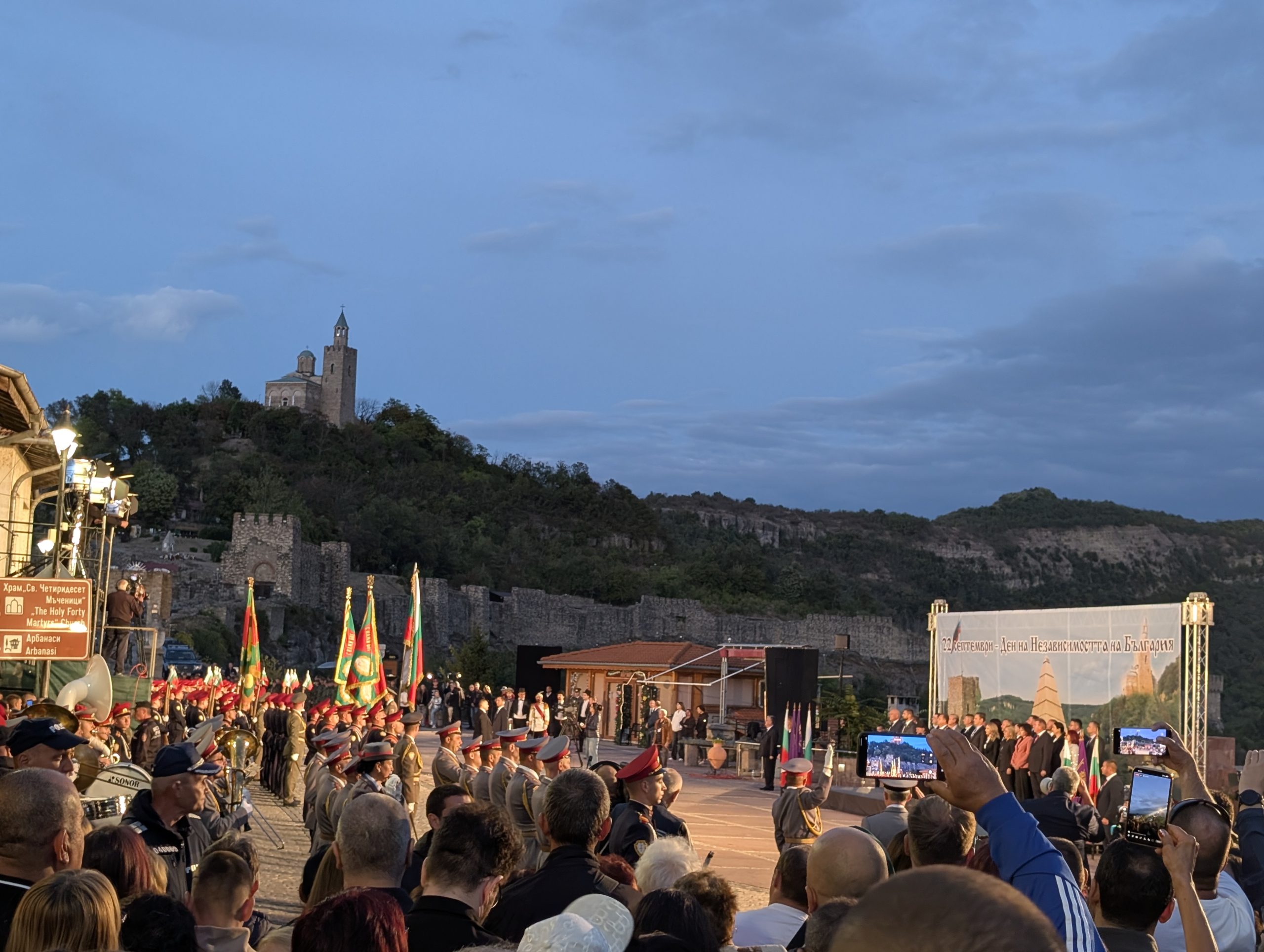
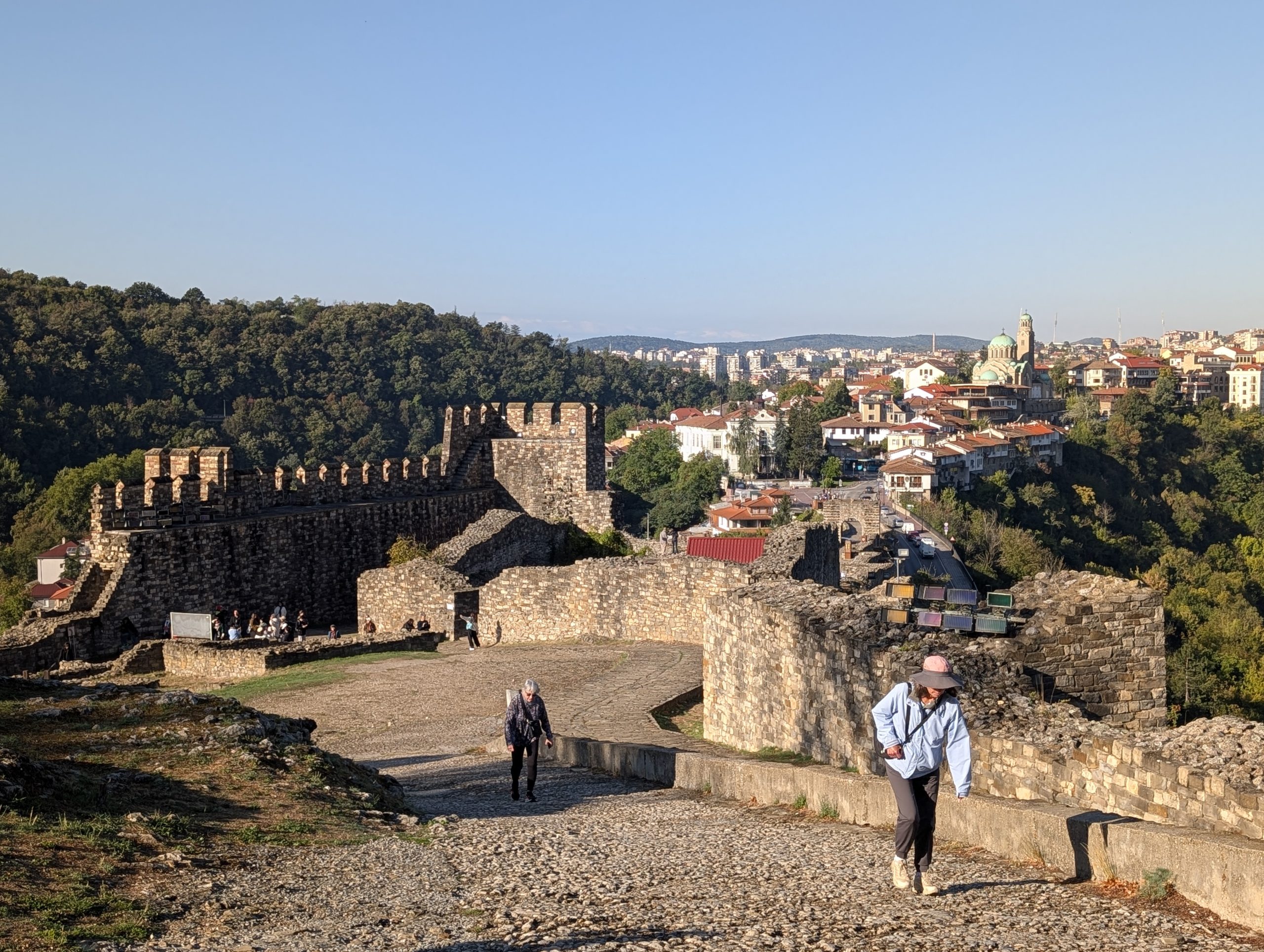
We arrived at our next destination in the afternoon, Veliko Tarnovo to stay at The Grand Hotel. This town turned out to be one of my favorites on this trip. We arrived on Sep 22 – Bulgarian Independence Day. Because the town used to be the capital of Bulgaria, it was the epicenter for politicians and dignataries to celebrate their national day. After a delicious dinner at Shtasliveca, Bill and I walked down the main street following the crowds to watch the celebrations. After passing through security (who let me take my wine opener) we met a lovely local woman who spoke excellent English. She explained to me what was going on with the speeches. At one point we all kneeled on the cobblestone road to remember the national heroes who had died fighting for the country’s liberation.
On Sep 22 1908, Bulgaria declared its independence from the Ottoman Empire. The manifesto was proclaimed by Prince Ferdinand at the church on Tsarevets hill in Veliko Tarnovo. With this act, the country became the Kingdom of Bulgaria and the Prince became a “tsar” or king. The main official ceremonies take place in Velkio and include military parades, concerts and a dramatic light and sound show and a firework display. We were so grateful to be in that town on this day.
Known as the City of the Tsars, Veliko Tarnovo is situated along the Yantra River and is best known as the historical capital of the Second Bulgarian Empire. The old town is spread across three hills—Tsarevets, Trapezitsa, and Sveta Gora.